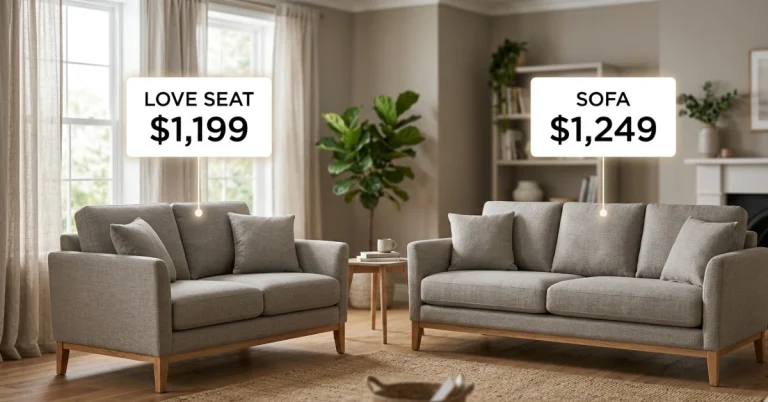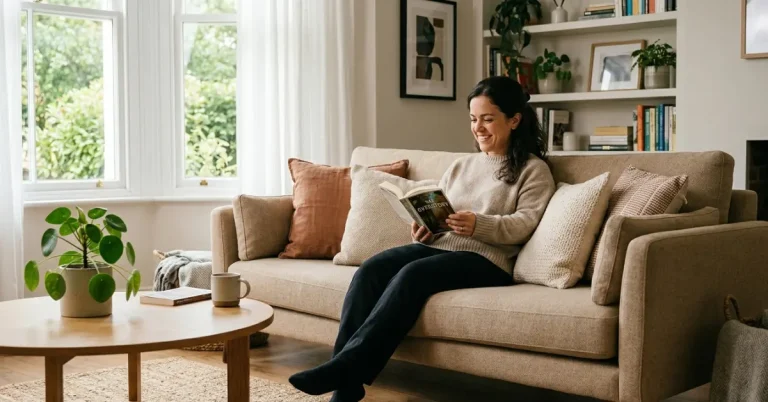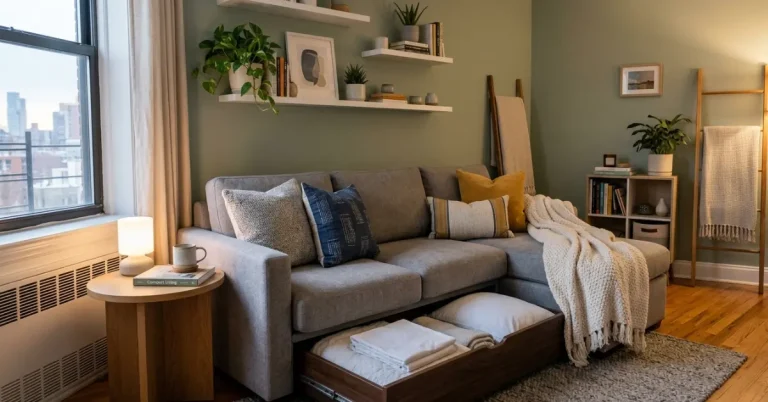
Finding the best sofas for under 5 feet tall is harder than most people expect. Most sofas are built using standard dimensions that assume average height, which leaves shorter users dealing with poor fit and daily discomfort. What looks comfortable in photos often feels completely different once you sit down.
For people under 5 feet, the most common problem starts immediately. Feet don’t reach the floor, seat depth feels too long, and the lower back loses support within minutes. Instead of relaxing, you end up shifting positions, sitting on the edge, or adding extra pillows just to stay comfortable.
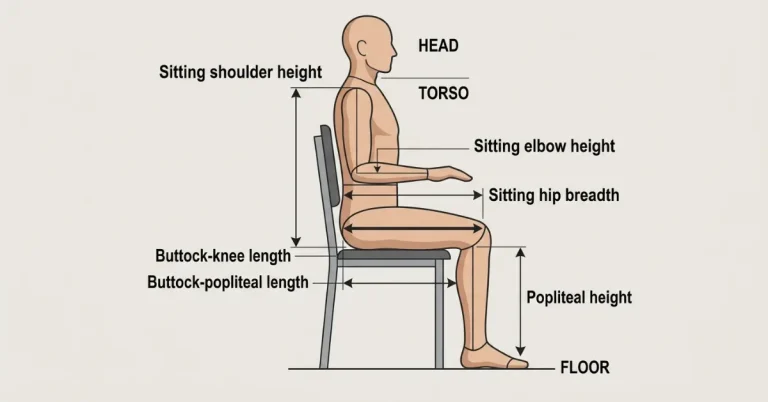
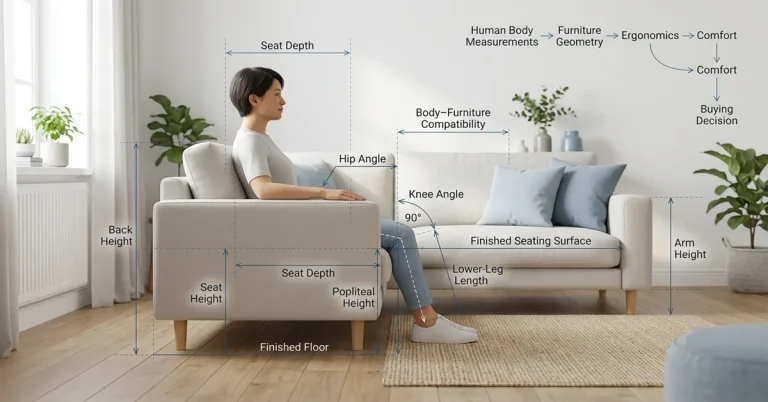
The truth is simple. Comfort has less to do with brand names and more to do with measurements. Seat height, seat depth, and cushion firmness determine whether a sofa works for shorter bodies or creates long-term strain. Even a difference of one inch can change how stable a seat feels.
This guide focuses on sofas that actually fit shorter users. Each option was selected using clear measurement rules, including seat height limits, controlled seat depth ranges, and structured support systems that reduce sinking and improve posture. The goal is not to recommend the most popular sofas, but to identify the ones that match shorter body proportions.
If you’re tired of sofas that feel too tall, too deep, or difficult to get out of, this guide will help you understand what to look for and which models are worth considering.
Master Comparison Table (Full Buyer Specs)
| Product | Category | Seat Height | Seat Depth | Width | Firmness | Best For | Recline Type | Weight Capacity |
|---|---|---|---|---|---|---|---|---|
| EALSON Modular Sectional Sofa | Sectional | 17″ | 22″ | ~78–84″ | Medium-Firm | Best Overall Support | None | ~800–1000 lbs |
| Lilola Home Melrose Modular Sectional Sofa | Sectional | 17.5″ | 20″ | ~84″ | Medium-Firm | Best Depth Comfort | None | ~700–900 lbs |
| KINWELL Barrel Loveseat | Loveseat | 17.7″ | 21.5″ | ~50″ | Medium | Best Compact Spaces | None | ~500–600 lbs |
| Lesofair 67″ Suede Leather 2-Seater Sofa | Standard Sofa | 17″ | 21″ (verify) | 67″ | Medium | Best Standard Sofa | None | 500 lbs |
| EBELLO Faux Leather Manual Loveseat Recliner | Recliner Loveseat | 18″ | 21″ | 63″ | Medium | Best Budget Recliner | Manual | 350 lbs |
| DEKUHI Modular Cloud Sectional Sofa | Sectional | 17.7″ | 21.65″ | ~80–90″ | Soft-Medium | Best Soft Comfort | None | ~700–900 lbs |
| DancingSwan Modular Sofa Bed | Sleeper Sofa | ~17–18″ | ~21–23″ | ~75–80″ | Medium | Best Sleeper Option | Pull-Out | ~600–800 lbs |
Why Most Sofas Don’t Fit Under 5 Feet
Most sofas are designed around average-height adults. If you’re under 5 feet tall, the standard measurements simply don’t match your body proportions. That mismatch creates several problems that show up within minutes of sitting.
1. Feet Dangling Off the Floor
One of the most noticeable problems is when your feet don’t fully touch the floor.
Many sofas have seat heights between 18 and 20 inches, which may sound small on paper but feels very different in practice. When the seat is too tall, your feet hang slightly in the air instead of resting flat.
This creates pressure under the thighs and behind the knees. Over time, circulation feels restricted, and sitting stops feeling natural. You also lose the grounded feeling that makes a seat feel secure.
When your feet stay flat on the floor, your body feels immediately more stable. When they don’t, discomfort starts quietly and builds over time.
2. Sliding Forward on Deep Seats
Seat depth causes just as many problems as seat height.
Many modern sofas use deep seating designs that measure 23 to 26 inches. For shorter users, this depth makes it difficult to sit all the way back while keeping feet on the floor.
When that happens, the body naturally slides forward. You end up sitting on the edge instead of using the backrest properly.
This forward shift creates two problems:
- The back loses support
- Body weight moves into the hips instead of spreading evenly
That’s why deep sofas often feel comfortable for a few minutes but uncomfortable after longer use.
3. Lower Back Stress Builds Over Time
When the back doesn’t stay supported, the lower spine begins to carry extra strain.
Without proper contact between your back and the cushion, your spine curves forward slightly. At first, this feels minor. But after an hour or more, the lower back muscles start working harder to maintain posture.
That fatigue shows up as:
- Tightness in the lower back
- Frequent shifting positions
- Difficulty staying seated comfortably
For shorter users, this happens faster because the seat depth often pushes them away from the backrest.
4. Loss of Stability Makes Sitting Feel Unnatural
Stability is something most people only notice when it’s missing.
When your feet don’t reach the floor and your back doesn’t stay supported, your body constantly adjusts to stay balanced. That leads to small movements like:
- Scooting forward
- Leaning sideways
- Sitting on the edge
These adjustments may seem minor, but they signal that the sofa doesn’t match your body size.
A properly fitted sofa feels different immediately. Your feet stay grounded, your back stays supported, and your body doesn’t need constant repositioning.
That’s the difference between a sofa that looks good and one that actually works for shorter users.
Before You Buy
The Short Person’s Sofa Fit Guide
A printable height-to-dimensions chart, self-measuring steps, and a shopping checklist — know your exact numbers before you shop.
Get the Guide — $9 →How We Selected These Sofas
Not every sofa marketed as “comfortable” works for shorter users. Many models focus on style or softness rather than physical fit. That’s why each sofa in this guide was evaluated using measurable criteria, not brand claims.
These selection rules are what separate reliable seating from poorly matched designs.
1. Seat Height Criteria (Most Important Factor)
Seat height determines whether your feet stay supported or hang in the air.
For users under 5 feet tall, ideal seat height usually falls between:
15 to 17 inches
Anything above this range increases the chance of feet dangling and reduced stability.
For this guide:
- Tier 1: 15–17 inches (Ideal range)
- Tier 2: 17–18 inches (Acceptable range)
- Above 18 inches: Used only when other factors compensate
Sofas outside these ranges were removed from consideration unless they offered strong structural advantages.
2. Seat Depth Limits (Controls Posture Comfort)
Seat depth determines whether your back stays supported.
If the seat is too deep, shorter users cannot sit fully back without losing foot contact with the floor. That leads to sliding forward and poor posture.
For this guide:
- 19–22 inches: Preferred range
- Above 22 inches: Carefully evaluated
- Above 23 inches: Usually excluded
Depth matters because it controls how naturally your body fits into the seating position.
Even a one-inch difference can change comfort significantly.
3. Back Support Checks (Prevents Fatigue)
Back support was evaluated based on cushion structure, not softness alone.
Soft cushions may feel comfortable at first but often allow excessive sinking. That sinking pushes the spine into a curved position.
Preferred support systems included:
- Foam with pocket coil springs
- Medium-density structured foam
- Cushions that maintain shape under pressure
These materials help maintain upright posture instead of encouraging slouching.
4. Stability Testing Logic (Real-World Sitting Behavior)
Comfort isn’t just about numbers. It’s about how the body behaves after sitting for extended periods.
Each sofa was reviewed using stability-focused reasoning, including:
- Whether feet stay grounded during normal sitting
- Whether the hips sink excessively
- Whether standing up feels controlled or difficult
Sofas that required constant shifting or forward sliding were rejected.
Stability is what determines whether a sofa feels usable after hours of sitting, not just during the first few minutes.
What are the Best Sofas for Under 5 Feet Tall (2026)
1. EALSON Modular Sectional Sofa

Best For: Short users under 5 feet who need stable seating and firm posture support for daily sitting.
Seat Height: 17 inches
Seat Depth: 22 inches
Firmness Level: Medium-Firm
Why It Works for Under 5 Feet
Feet Stability
A 17-inch seat height sits right in the ideal range for shorter users. When seat height matches leg length, feet rest more naturally on the floor instead of hanging slightly above it. That grounded foot position improves balance and reduces pressure on the thighs.
Many standard sofas sit closer to 18–19 inches, which causes short users to shift forward. This model avoids that problem by staying within a more usable height range.
Posture Support
The foam and pocket spring support system plays a big role in maintaining posture. Foam alone often compresses too easily, but pocket springs add structure beneath the cushion. That structure helps keep the hips from sinking too deeply, which reduces lower-back rounding.
The 22-inch seat depth sits at the upper edge of the comfortable range. Most short users can sit fully back with light cushion support behind the lower back if needed. This allows the spine to stay upright instead of slouching forward.
Ease of Standing
Standing up becomes harder when sofas are too low or too soft. This model avoids both problems by combining medium-firm cushioning with stable internal support.
Because the seat doesn’t collapse excessively under body weight, users can push off more easily when getting up. This matters during long sitting sessions, where repeated standing can strain the knees and hips.
Potential Drawbacks
Weakness:
The 22-inch seat depth may feel slightly long for users under about 4’10”, especially if they prefer upright sitting without cushions behind their back.
Limitation:
As a sectional design, this sofa takes up more floor space than compact straight sofas. It may not fit comfortably in very small rooms or studio apartments.
Bottom Line
The EALSON Modular Sectional Sofa stands out as a strong overall choice for shorter users who need balanced comfort and reliable support. Its seat height stays within an ergonomic range, and the structured cushion system helps maintain stability during daily use.
Buy this if:
You want a supportive sectional that keeps your feet grounded and posture stable during long sitting sessions.
Avoid this if:
You are under 4’10” or need a very compact sofa for tight spaces.
2. Lilola Home Melrose Modular Sectional Sofa

Best For: Short users under 5 feet who struggle with deep sofas and want a seating position that keeps their back supported without constant shifting.
Seat Height: 17.5 inches
Seat Depth: 20 inches
Firmness Level: Medium-Firm
Why It Works for Under 5 Feet
Feet Stability
A 17.5-inch seat height sits slightly above the ideal 17-inch mark but still remains within a comfortable working range for shorter users. Most people under 5 feet will be able to place their feet flat or nearly flat on the floor without needing to sit forward.
That grounded foot position reduces pressure behind the knees and improves overall sitting balance. When feet stay supported, the body naturally feels more stable and less tense during longer sitting sessions.
Posture Support
The 20-inch seat depth is one of the strongest advantages of this sofa. Many sofas today exceed 23 inches in depth, which forces short users to sit forward or slouch. A 20-inch depth keeps the back closer to the backrest, allowing proper contact with lumbar support.
Combined with a foam and pocket coil support structure, the seat maintains its shape instead of collapsing inward. That firmness helps keep hips level and prevents the rounded lower-back posture that often leads to fatigue.
This depth-to-height balance is one of the main reasons this model fits shorter users better than typical oversized sectionals.
Ease of Standing
Standing from a sofa becomes difficult when cushions sink too deeply. The medium-firm structure of this model creates resistance when pushing upward, which helps reduce strain on the knees and hips.
Because the seat height stays within an accessible range, users won’t feel trapped in a low position. That makes standing up feel smoother, especially after sitting for long periods.
Potential Drawbacks
Weakness:
The sectional layout can feel bulky in tighter living spaces, especially in rooms where floor area is limited.
Limitation:
At 17.5 inches seat height, extremely petite users under about 4’9″ may still need a small footrest to maintain full foot contact with the floor.
Bottom Line
The Lilola Home Melrose Modular Sectional Sofa is one of the best options for shorter users who want a sectional without dealing with overly deep seating. Its shorter seat depth makes upright sitting more natural and reduces the need to constantly reposition.
Buy this if:
You want a sectional that keeps your back supported and avoids the deep-seat discomfort common in modern sofas.
Avoid this if:
You have a very small room or need an ultra-compact sofa that takes up minimal space.
3. KINWELL Barrel Loveseat

Best For: Short users under 5 feet who need a compact loveseat that fits small rooms while keeping their feet supported during normal sitting.
Seat Height: 17.7 inches
Seat Depth: 21.5 inches
Firmness Level: Medium
Why It Works for Under 5 Feet
Feet Stability
A 17.7-inch seat height sits slightly above the ideal 17-inch level but still stays within a usable range for most short users. Many people under 5 feet will be able to place their feet close to flat on the floor, especially when sitting fully back in the seat.
Because the loveseat frame is compact, shorter users are less likely to feel oversized seating pressure compared to large full-size sofas. Smaller furniture often creates a more stable sitting position simply because proportions are closer to body size.
Posture Support
The 21.5-inch seat depth provides enough space for comfort without forcing the body too far forward. Short users often struggle with overly deep sofas, but this depth stays within a manageable range that allows contact with the backrest.
The curved barrel-style back also helps keep the upper body supported along the sides. That slight wrap-around design encourages an upright posture instead of leaning or slouching sideways.
Medium firmness cushioning supports the hips without letting them sink too deeply, which helps maintain a neutral spine position during longer sitting sessions.
Ease of Standing
Standing up from compact loveseats is usually easier than standing from large sectionals. The moderate seat height reduces the effort needed to push upward, especially for users with shorter legs.
Because the cushion is not overly soft, it maintains its shape when weight is applied. This prevents the body from sinking too far into the seat, which makes standing feel more controlled and less stressful on the knees.
Potential Drawbacks
Weakness:
The 21.5-inch seat depth may still feel slightly long for very petite users under about 4’9″, especially if they prefer a fully upright sitting position.
Limitation:
This loveseat is designed for two-person seating, so it may not be suitable for larger households or users who want full-length lounging space.
Bottom Line
The KINWELL Barrel Loveseat is a practical option for shorter users who need a compact seating solution without sacrificing stability. Its manageable height and moderate depth make it easier to sit comfortably compared to oversized standard sofas.
Buy this if:
You want a small loveseat that fits tight spaces while keeping your sitting position stable and supported.
Avoid this if:
You need a full-size sofa for lounging or require seating that accommodates more than two people.
4. Lesofair 67″ Suede Leather 2-Seater Sofa

Best For: Short users under 5 feet who want a compact standard sofa that fits small living rooms while keeping their feet supported during everyday sitting.
Seat Height: 17 inches
Seat Depth: 21 inches
Firmness Level: Medium
Why It Works for Under 5 Feet
Feet Stability
A 17-inch seat height is one of the strongest features of this sofa. This height falls directly within the ideal ergonomic range for shorter users, allowing feet to rest naturally on the floor instead of hanging above it.
When feet stay planted, body weight distributes more evenly across the thighs and hips. That reduces pressure behind the knees and prevents the forward sliding that happens on taller sofas.
Because this model is also narrower than large sectionals, the overall sitting position feels more proportionate to smaller body frames.
Posture Support
The 21-inch seat depth provides enough space to sit comfortably without forcing shorter users to lean forward. Deep sofas often push short users away from the backrest, but this depth allows the lower back to stay in contact with the cushion.
That contact matters because it supports the natural curve of the spine. When the lower back stays supported, muscles don’t need to compensate, which helps reduce fatigue during long sitting sessions.
The medium-density foam cushion offers balanced resistance. It allows light contouring without collapsing under body weight, which helps maintain an upright posture instead of a slouched one.
Ease of Standing
Standing from a sofa depends heavily on seat height and cushion firmness. With a 17-inch height and moderate cushion resistance, this sofa makes standing movements more controlled.
Users don’t need to push as hard compared to deep or low-profile sofas. That reduces strain on the knees and hips, especially after sitting for extended periods.
The compact frame also allows users to position their feet directly under their body, which improves leverage when standing.
Potential Drawbacks
Weakness:
The seating depth may feel slightly long for extremely petite users under 4’9″, especially if they prefer sitting fully upright without additional back cushions.
Limitation:
This is a two-seat compact sofa, so it may not provide enough lounging space for families or users who prefer stretching out across a wider surface.
Bottom Line
The Lesofair 67″ Suede Leather 2-Seater Sofa is a strong standard sofa option for short users who need a compact, everyday seating solution. Its 17-inch height supports proper foot placement, and the moderate depth helps maintain better posture compared to oversized couches.
Buy this if:
You want a compact standard sofa that supports stable sitting and fits well in small living spaces.
Avoid this if:
You need wide lounging space or prefer extra-deep seating for stretching out.
5. EBELLO Faux Leather Manual Loveseat Recliner

Best For: Short users under 5 feet who want a simple reclining loveseat with manageable seat depth and controlled back support.
Seat Height: 18 inches
Seat Depth: 21 inches
Firmness Level: Medium
Why It Works for Under 5 Feet
Feet Stability
An 18-inch seat height sits at the upper edge of what shorter users can handle comfortably. While slightly taller than ideal, many users under 5 feet can still keep their feet close to the floor, especially when sitting fully back in the seat.
This height works better than many recliners that exceed 19 or 20 inches. Taller recliners often force shorter users to sit forward, but this model stays within a usable height range that allows better balance.
When feet stay closer to the floor, body weight distributes more evenly, reducing pressure under the thighs and lowering the risk of sliding forward.
Posture Support
The 21-inch seat depth plays a major role in keeping posture stable. Many reclining loveseats use deeper seats that push short users away from the backrest. This depth keeps the back closer to the support cushion, which helps maintain a more upright sitting position.
Medium-density foam cushions provide enough resistance to hold body weight without collapsing. That prevents excessive sinking, which often leads to slouched posture and lower-back fatigue.
Because the recliner operates manually, the back angle changes gradually. This allows users to control positioning more precisely instead of being forced into fixed recline angles.
Ease of Standing
Standing from recliners can be difficult when seats are too deep or too soft. This loveseat performs better than many recliners because the cushion structure stays reasonably firm under pressure.
Although the 18-inch height requires slightly more effort than lower seating, it still allows most short users to push upward without excessive strain.
Manual reclining also helps here. Without heavy electric mechanisms changing seat position automatically, the seating base remains predictable and stable during standing movements.
Potential Drawbacks
Weakness:
The 18-inch seat height may feel slightly tall for very petite users under 4’9″, especially if their feet cannot stay fully flat on the floor.
Limitation:
Reclining loveseats are generally heavier and bulkier than standard sofas, which makes them harder to reposition once placed in a room.
Bottom Line
The EBELLO Faux Leather Manual Loveseat Recliner is a practical reclining option for short users who want adjustable comfort without oversized seating dimensions. Its moderate depth and controlled cushioning make it more usable than many tall recliners.
Buy this if:
You want a reclining loveseat that offers adjustable comfort without extremely deep or oversized seating.
Avoid this if:
You are very petite or need a low-height recliner that allows perfectly flat foot placement without assistance.
6. DEKUHI Modular Cloud Sectional Sofa

Best For: Short users under 5 feet who prefer softer seating comfort but still want manageable seat depth and stable everyday support.
Seat Height: 17.7 inches
Seat Depth: 21.65 inches
Firmness Level: Soft-Medium
Why It Works for Under 5 Feet
Feet Stability
A 17.7-inch seat height stays within a usable range for most shorter users. While slightly above the ideal 17-inch level, it still allows many people under 5 feet to keep their feet close to flat on the floor.
Feet stability improves when the seat height does not exceed leg length by too much. When feet remain supported, pressure behind the knees decreases, and the body feels more grounded during longer sitting sessions.
Compared to many oversized cloud-style sectionals that sit higher than 18 inches, this height keeps the seating position more accessible.
Posture Support
The 21.65-inch seat depth falls within the safe depth range for shorter users. That depth allows the hips to sit far enough back to make contact with the backrest, which supports the lower spine.
Soft-medium foam cushioning provides surface comfort while still offering enough resistance to prevent full collapse under body weight. This matters because overly soft cushions can allow the hips to sink too deeply, which causes the spine to curve forward.
Although softer than structured spring sofas, this model maintains enough shape to keep the body supported during moderate sitting periods.
Ease of Standing
Standing from softer sofas usually requires more effort because cushions compress under weight. This model performs reasonably well because the foam maintains some structure rather than flattening completely.
The moderate seat height also helps users push upward without needing extreme knee flexion. While it may not feel as firm as spring-supported seating, most users can still stand comfortably without feeling trapped in the cushion.
For shorter users, that balance between softness and structure is important.
Potential Drawbacks
Weakness:
The soft-medium cushioning may allow more sinking than firm sofas, which can gradually lead to slouching during long sitting sessions.
Limitation:
As a modular sectional, this sofa requires more floor space than compact loveseats or standard two-seat sofas, making it less suitable for very small rooms.
Bottom Line
The DEKUHI Modular Cloud Sectional Sofa is a suitable choice for short users who prefer softer seating without moving into extremely deep or oversized sectional designs. It offers a comfortable balance between plush comfort and everyday usability.
Buy this if:
You prefer a softer seating feel but still need a sectional that remains manageable for shorter body proportions.
Avoid this if:
You want firm posture support or need a compact sofa that takes up minimal space.
7. DancingSwan Modular Sofa Bed

Best For: Short users under 5 feet who need a multi-purpose sofa bed that supports everyday sitting while still functioning as a guest sleeping space.
Seat Height: 17–18 inches (varies slightly by configuration)
Seat Depth: 21–23 inches (varies depending on module setup)
Firmness Level: Medium
Why It Works for Under 5 Feet
Feet Stability
A 17–18 inch seat height stays within the workable range for shorter users. Most people under 5 feet can keep their feet close to flat on the floor, especially when sitting fully back against the cushion.
This height range helps maintain proper leg positioning. When feet stay supported instead of hanging, body weight spreads more evenly across the hips and thighs. That reduces pressure points and improves comfort during daily sitting.
Because modular sofa beds are often designed for compact apartments, their overall seating proportions tend to feel more manageable than oversized traditional sofas.
Posture Support
The 21–23 inch seat depth sits near the upper boundary of what shorter users can handle comfortably. At the lower end of that range, the back can stay in contact with the backrest without forcing the body forward.
Medium-density cushions provide enough resistance to prevent excessive sinking. This matters because sofa beds often use softer cushions that collapse under weight. When the cushion holds its shape, the hips stay level and the spine remains closer to neutral alignment.
This balance allows the sofa to function for both sitting and occasional sleeping without losing structural support.
Ease of Standing
Standing from sofa beds can sometimes feel difficult due to cushion softness. This model performs better than many sofa beds because the medium firmness gives moderate push-back when rising.
The moderate seat height also helps reduce the effort required to stand. When the knees do not bend excessively, standing movements feel more controlled and less stressful on joints.
Short users benefit from that stability, especially when transitioning from sitting to standing multiple times throughout the day.
Potential Drawbacks
Weakness:
The upper seat depth range (up to 23 inches) may feel too deep for very petite users under 4’9″, especially during upright sitting.
Limitation:
As a modular sofa bed, this model requires more setup space and may feel bulky compared to compact fixed-frame sofas.
Bottom Line
The DancingSwan Modular Sofa Bed is a strong choice for short users who want seating that doubles as a sleeping solution. Its moderate height and structured cushion design make it more usable than many overly deep sofa beds.
Buy this if:
You need a functional sofa that supports everyday sitting and occasional sleeping in small or shared living spaces.
Avoid this if:
You are extremely petite or want a shallow-depth sofa designed strictly for upright sitting comfort.
Seat Height Guide for Under 5 Feet
Seat height is the single most important measurement for shorter users. If the height is wrong, nothing else matters. Even expensive sofas feel uncomfortable when feet don’t stay supported.
Most standard sofas are built for average-height adults. That usually means 18 to 20 inches, which is too tall for many people under 5 feet.
Recommended Seat Height Range for Under 5 Feet
For shorter users, the working range is:
15 to 17 inches — Ideal Range
This range allows:
- Feet to stay flat on the floor
- Knees to remain at a natural angle
- Body weight to distribute evenly
When seat height matches leg length, the body stays stable without needing constant repositioning.
What Happens Above 17 Inches
Once seat height moves past 17 inches, comfort becomes less predictable.
At 17–18 inches, some users can still sit comfortably, but others may notice:
- Feet slightly lifting off the floor
- Pressure behind the knees
- Increased effort when standing
Above 18 inches, problems become more noticeable, especially for users under 4’10”.
Quick Seat Height Reference
Use this as a practical rule:
- 15–16 inches: Very safe for shorter users
- 16–17 inches: Ideal balance of comfort and stability
- 17–18 inches: Acceptable but not perfect
- Above 18 inches: Higher risk of discomfort
This measurement alone explains why many sofas feel uncomfortable even when they look well-designed.
Before You Buy
The Short Person’s Sofa Fit Guide
A printable height-to-dimensions chart, self-measuring steps, and a shopping checklist — know your exact numbers before you shop.
Get the Guide — $9 →What to Look When You Consider Buying The Sofa
Short users benefit most from understanding four core measurements.
1. Seat Height (Primary Fit Factor)
Seat height controls whether your feet stay supported.
If feet don’t touch the floor, your body shifts forward to compensate. That leads to instability and discomfort over time.
Look for:
15–17 inches whenever possible
If the seat height exceeds 17 inches, check:
- Whether cushions compress under weight
- Whether your feet can still reach the floor comfortably
Height affects every part of sitting posture.
2. Seat Depth (Controls Back Support)
Seat depth determines whether your back stays supported.
When seats are too deep, shorter users cannot sit fully back while keeping their feet grounded. This forces forward sitting and reduces lumbar support.
Look for:
19–22 inches seat depth
Avoid:
23 inches or more, unless additional cushions are used to shorten the sitting distance.
Depth affects spinal alignment more than many people realize.
3. Cushion Firmness (Prevents Sinking)
Cushion firmness controls how much your body sinks into the seat.
Very soft cushions may feel comfortable at first but often collapse under body weight. That sinking causes the hips to drop lower than the knees, which leads to slouching.
Look for:
Medium or medium-firm cushions
These provide:
- Stable sitting surface
- Better posture control
- Reduced long-term fatigue
Soft cushions are not always bad, but they require careful evaluation.
4. Ease of Standing (Often Overlooked)
Standing from a sofa requires leverage.
If the seat is too low or too soft, standing becomes harder, especially after long sitting periods.
Check:
- Does the cushion hold shape when you push upward?
- Can your feet stay positioned directly under your body?
- Do you feel resistance when pushing up?
Sofas that collapse too easily create strain on knees and hips over time.
Standing comfort matters just as much as sitting comfort.
Frequently Asked Questions
What sofa seat height is best for under 5 feet?
For users under 5 feet tall, the most comfortable seat height usually falls between 15 and 17 inches. This range allows feet to rest flat on the floor, which improves stability and reduces pressure behind the knees.
Seats taller than 18 inches often cause feet to hang slightly, leading to discomfort during longer sitting periods.
Can short people use deep sofas?
Short people can use deep sofas, but comfort depends on seat depth.
If the depth exceeds 22 inches, shorter users may struggle to sit fully back while keeping their feet grounded. This often leads to sliding forward and poor posture.
Using lumbar cushions can help reduce depth, but shallow seating usually provides better long-term comfort.
Why do my feet hang off sofas?
Feet hang off sofas when the seat height is too tall for your leg length.
Most standard sofas use seat heights above 18 inches, which works for average-height users but often causes instability for shorter people.
When feet don’t stay flat on the floor, pressure builds behind the thighs and reduces circulation. That’s why shorter seat heights feel noticeably more comfortable.
Are loveseats better for short people?
Loveseats are often easier for short people to use because they are typically smaller and less deep than large sectionals.
Compact seating usually fits shorter body proportions better. However, the actual comfort still depends on seat height and depth, not just the size of the furniture.
A poorly sized loveseat can still feel uncomfortable if measurements are incorrect.
What seat depth is best for short people?
Most short users feel comfortable with 19 to 22 inches of seat depth.
This range allows the back to stay supported while keeping the feet on the floor. Depths above 23 inches often create forward sliding and reduce back support.
Choosing the right depth prevents long-term posture problems.
Why do deep sofas cause lower back pain for short people?
Deep sofas push shorter users away from the backrest. Without proper back contact, the spine curves forward slightly.
Over time, the lower back muscles work harder to maintain balance. This leads to fatigue, tightness, and discomfort during long sitting periods.
Reducing seat depth or using additional back cushions usually improves comfort.