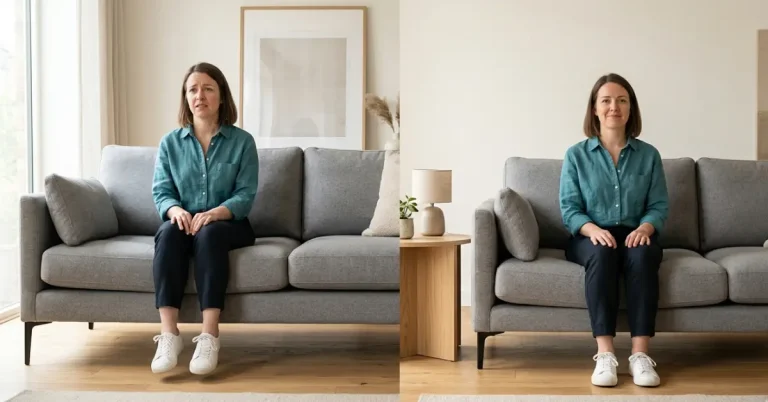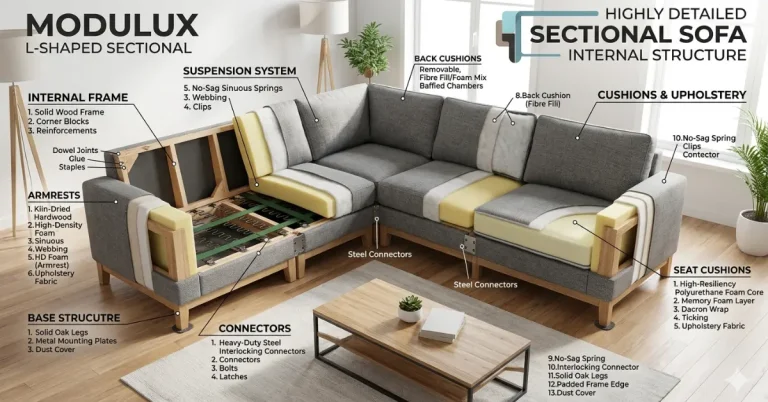
Finding the best futon for short people isn’t as simple as picking the highest-rated option online. Most futons are built for average heights. If you’re under 5’6”, that usually means one thing your feet don’t touch the floor properly.
And that’s where the discomfort starts.
A futon that’s too deep forces you to slouch. Too high, and your legs dangle. Too firm, and pressure builds in all the wrong places. It might look great in photos, but after 20 minutes, you’ll feel it in your lower back.
This guide cuts through that noise.
You’ll find futons that fit shorter frames, support your posture, and work in real spaces like small apartments, dorm rooms, or guest setups. No generic picks. No oversized sofas pretending to be comfortable.
Just options that make sense when you sit down.
TL;DR- Best Futon For Short People
- Ideal seat height: 10 to 14 inches
- Ideal seat depth: 20 to 25 inches
- Best type: Floor futons or compact convertibles
- Avoid: Deep, high sofas
- Best for small rooms: Foldable futons
- Best for daily use: Foam or hybrid cushion models
Quick Reality Check: Why Most Futons Fail Short People
Most buyers overlook sizing. That’s the mistake.
Here’s what usually goes wrong:
- Seat height is too tall for relaxed sitting
- Seat depth pushes your back away from support
- Overall length feels awkward in small spaces
Result: You adjust your body instead of the furniture fitting you
Quick Answer
If you’re short, comfort isn’t about brand names or style. It’s about proportions.
Get the dimensions right, and almost any decent futon works. Get them wrong, and even expensive ones feel off within minutes.
What Size Futon Is Best for Short People
Here’s the straight answer.
Short people need futons that match their body, not “average” sizing.
Ideal dimensions:
- Seat height: below 14 inches
- Seat depth: under 25 inches
- Total length: under 75 inches
These numbers are based on basic ergonomic sitting rules used in furniture design and posture studies.
| Feature | Ideal Range | Why It Matters |
| Seat Height | 10 to 14 in | Keeps feet flat on the floor |
| Seat Depth | 20 to 25 in | Supports thighs without pushing you forward |
| Futon Length | < 75 in | Better proportion for smaller bodies and spaces |
Real-life example:
You sit down after a long day.
- If the seat is too high → your feet hang
- Too deep → you lose back support
- Too long → it feels oversized and awkward
Now compare that to a properly sized futon:
- Feet flat
- Knees at a natural angle
- Back fully supported
No shifting. No adjusting. Just comfort.
Quick test you can do at home:
- Sit on a chair
- Check if your feet rest flat
- Measure the seat height and depth
That’s your benchmark.
Why Standard Sofas Feel Uncomfortable
Most futons and sofas are built for people around 5’8” to 5’10”.
That’s the problem.
If you’re shorter, your body doesn’t match the design.
What happens instead:
- Your feet don’t reach the floor
- Your knees sit too high or too low
- Your lower back loses support
Result:
- You slouch without realizing it
- Pressure builds in your hips and spine
- You constantly shift to get comfortable
According to posture guidelines from the American Chiropractic Association, proper sitting requires:
- Feet flat on the floor
- Knees at or slightly below hip level
- Full back support
Standard sofas fail all three for shorter users.
The Hidden Problem Most Buyers Miss
It’s not just discomfort.
It’s long-term strain.
Sit on the wrong futon every day and you’ll notice:
- Lower back fatigue
- Tight hips
- Poor posture habits
That’s why sizing matters more than design.
Height Based Futon Buying Guide
Most guides stop at “low profile.” That’s not enough.
Your height directly affects how a futon feels. A difference of just 2–3 inches in seat height or depth can completely change your comfort.
This is where most people get it wrong.
Instead of guessing, match the futon to your height range. That’s how you avoid wasted money and daily discomfort.
Best Futon Sizes by Height Range
Here’s the simplest way to get it right.
| Height Range | Recommended Futon Type | Seat Height | Seat Depth | Why It Works |
| Under 5’0” | Ultra low floor futons | 8–12 inches | 18–22 inches | Keeps feet flat and posture natural |
| 5’0”–5’3” | Low profile compact futons | 10–13 inches | 20–24 inches | Balanced support without strain |
| 5’3”–5’6” | Standard compact futons | 12–14 inches | 22–25 inches | Comfortable for both sitting and lounging |
What This Means in Real Life
Let’s make it practical.
If you’re under 5’0”:
Go as low as possible. Floor futons work best. Anything higher starts to feel awkward fast.
If you’re 5’0” to 5’3”:
You’ve got a bit more flexibility. But deep seats are still a problem. Stick to compact designs.
If you’re 5’3” to 5’6”:
You can use most compact futons comfortably. Just avoid oversized or deep models.
Quick Self Check (Do This Before You Buy)
Sit on any chair and check:
- Are your feet flat on the floor
- Are your knees level with or slightly below your hips
- Is your lower back supported without scooting forward
If the answer is no, the dimensions are wrong.
Why This Approach Works
This isn’t guesswork.
It follows basic ergonomic principles used in seating design:
- Proper knee angle reduces pressure on joints
- Correct seat depth supports thighs without forcing slouching
- Lower seat height improves stability and comfort
Studies from the Human Factors and Ergonomics Society and Cornell University Ergonomics Research consistently show that mismatched seat dimensions lead to poor posture and discomfort over time.
Ergonomics Explained for Futon
Most people don’t have a “futon problem.”
They have a body alignment problem caused by wrong furniture sizing.
Ergonomics sounds technical, but it’s actually simple: your body should sit in a neutral position where nothing is strained, compressed, or forced out of alignment.
When that doesn’t happen, you feel it fast:
- Lower back tightness
- Hip pressure
- Slouching without noticing
- Constant shifting while sitting
Let’s break down what actually matters.
The 90 Degree Rule (Posture Science)
This is one of the simplest and most important seating rules.
When sitting on a futon:
- Your hips should be at a 90° angle (or slightly open)
- Your knees should also form a 90° angle
- Your feet must stay flat on the floor
Why this matters
When these angles are correct:
- Your spine stays naturally aligned
- Your lower back doesn’t collapse inward
- Pressure spreads evenly across your hips
When they’re wrong:
- Too high → feet hang, thighs lose support
- Too low → knees rise above hips, causing strain
- Too deep → pelvis tilts backward, leading to slouching
Real-life example:
If you sit on a standard oversized sofa, your body automatically shifts forward just to compensate. That small adjustment is what leads to long-term discomfort.
Seat Depth vs Leg Length Formula
This is where most buyers go wrong. Seat depth is rarely discussed, but it determines whether your back actually gets support.
Simple Formula
Seat depth = thigh length − 2 inches
That 2-inch buffer prevents your knees from being pushed upward or your lower back from floating forward.
What it means in practice
- Shorter users typically need 20–24 inch seat depth
- Anything deeper forces a forward lean or slouch
- Anything too shallow cuts thigh support and feels unstable
| Body Type | Ideal Seat Depth | Result |
| Petite (under 5’0”) | 18–21 in | Full support, stable posture |
| Short (5’0”–5’3”) | 20–23 in | Balanced comfort |
| Short-medium (5’3”–5’6”) | 22–25 in | Natural seating position |
Pressure Points and Cushion Design
Comfort is not just about softness. It’s about pressure distribution.
Foam density vs comfort
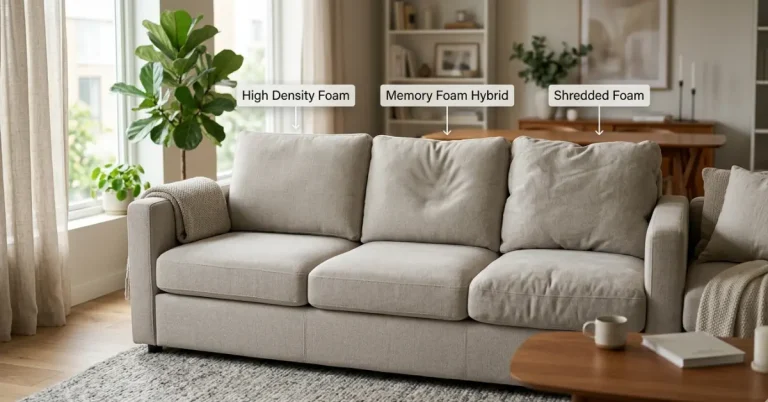
- Low-density foam → feels soft initially but collapses quickly
- High-density foam → firmer but maintains shape and support
For futons, the goal is balance:
- Enough firmness to support posture
- Enough softness to reduce pressure points
Spine alignment importance
Your spine should remain in a neutral S-curve when sitting.
If the futon is too soft:
- Your pelvis sinks
- Spine curves unnaturally
If it’s too firm:
- Pressure concentrates on hips and tailbone
That’s why medium-density foam or hybrid cushion systems often perform best for short users.
Real-world insight
In testing compact futons, the biggest comfort difference wasn’t design or fabric—it was how evenly weight was distributed across the seat.
Poor designs create “pressure hotspots”:
- Tailbone
- Back of thighs
- Lower lumbar area
Good designs spread weight evenly so you can sit longer without fatigue.
Top 5 Best Futons for Short People (2026)
Shorter users don’t just need “comfortable” futons. They need correct proportions. That means low seat height (10–14 inches), controlled seat depth (20–25 inches), and compact overall dimensions under ~75 inches. When these three align, posture stabilizes, feet stay grounded, and pressure shifts away from the lower back.
Below are five futons evaluated specifically for short people comfort, real seat geometry, and everyday usability in small spaces.
1. COMAX 4 in 1 Convertible Futon Sofa Bed Compact Floor Sleeper in Beige

This multifunctional futon is designed for flexibility in small living spaces, making it a smart pick for shorter individuals who need a compact yet comfortable seating and sleeping solution. Its foldable structure allows quick transformation from a cozy loveseat to a flat sleeping surface without taking up extra room. The foam construction provides balanced support while staying low to the ground, which can feel more natural and accessible for shorter users. With a soft corded fabric cover and modern styling, it blends easily into living rooms, guest rooms, or studio setups.
Pros
- Easily converts into multiple positions for sitting and sleeping
- Low height design suits shorter individuals well
- Soft foam cushioning supports hips and back comfortably
- Compact size ideal for small rooms or apartments
- Removable cover allows simple cleaning
Cons
- Limited weight capacity may not suit all users
- Armless design may reduce structured support for some
- Medium firmness may feel too soft for those preferring a firmer base
- Not ideal for tall users needing extended leg space
2. COMAX 4 in 1 Convertible Futon Sofa Bed Compact Floor Sleeper in Black

This black version of the COMAX convertible futon offers the same adaptable design with a slightly more modern and bold look. Built with a low profile and flexible foam structure, it works well for shorter individuals who prefer seating that is easy to access and comfortable for lounging or sleeping. The foldable layout allows smooth transitions between a loveseat, floor couch, and sleeper, making it a practical option for tight spaces. Its supportive foam cushions help maintain posture while still delivering a relaxed feel for daily use or overnight stays.
Pros
- Multi position design adapts easily for sitting or sleeping
- Low height makes it comfortable for shorter users
- Foam layers provide balanced support for back and hips
- Compact build fits well in small apartments or dorm rooms
- Removable cover helps maintain cleanliness
Cons
- Weight limit may not suit heavier users
- Cushion firmness may not satisfy those who prefer extra support
- Minimal arm structure offers less side support
- Sleeping space may feel limited for taller individuals
3. DOPEDIO Modern Loveseat Futon Style Sofa with Chenille Fabric and Spring Cushions

This modern loveseat offers a supportive and slightly elevated seating experience while still working well for shorter individuals who prefer a compact and manageable sofa size. With a structured frame and plush spring cushions, it delivers a more traditional couch feel compared to floor futons. The breathable chenille fabric adds softness without trapping heat, making it comfortable for extended sitting. Its width and depth provide enough lounging space without overwhelming smaller rooms, making it a practical choice for apartments or home offices.
Pros
- Strong frame supports higher weight capacity
- Spring cushions provide enhanced comfort and resilience
- Soft chenille fabric feels breathable and cozy
- Removable covers make cleaning simple
- Compact width fits well in small spaces
Cons
- Higher seat height may not suit very short users
- Does not fully convert into a flat sleeping surface
- Assembly required before use
- Heavier build makes it harder to move
4. Homall Leather Futon Sofa Bed with Adjustable Recliner and Cup Holders

This sleek futon sofa combines a compact frame with adjustable comfort, making it a practical option for shorter individuals who want both seating and sleeping functionality. The low seat height and manageable width create an accessible sitting position, while the adjustable backrest allows easy transition from upright seating to a flat sleeping surface. Its faux leather finish gives it a clean, modern look that fits well in apartments or offices. Added features like removable armrests and hidden cup holders enhance everyday convenience without taking up extra space.
Pros
- Adjustable backrest supports multiple lounging positions
- Low seat height works well for shorter users
- Converts easily into a flat sleeping surface
- Built in cup holders add convenience
- Compact size fits small rooms comfortably
Cons
- Faux leather may feel less breathable over long use
- Cushioning may feel firm for some users
- Limited seat depth may reduce lounging comfort
- Assembly required before first use
5. MAXYOYO 4 in 1 Convertible Futon Floor Sofa Bed with High Density Foam

This floor based futon is designed with simplicity and comfort in mind, making it a strong choice for shorter individuals who prefer low seating and easy access. Its foldable design allows it to shift between multiple positions, including a sofa, recliner, and full sleeping surface. The low height keeps everything within a natural reach, while the high density foam provides consistent support without feeling too stiff. With no assembly required, it is ready to use right out of the box and works well in compact living spaces or casual setups.
Pros
- Low profile design ideal for shorter users
- Multiple configurations for sitting and sleeping
- High density foam offers even support
- No assembly needed for quick setup
- Side pockets add practical storage
Cons
- Very low height may not suit users who prefer elevated seating
- Narrow width may feel restrictive for some sleepers
- Lacks a structured frame for firm back support
- May take time to fully expand after unpacking
Comparison Table
| Attribute | COMAX 4‑in‑1 Futon Sofa Bed (Beige) | COMAX 4‑in‑1 Futon Sofa Bed (Black) | COMAX Modern Loveseat Sofa (Chenille) | Homall Futon Sofa Bed (Leather Recliner) | MAXYOYO 4‑in‑1 Floor Futon Sofa |
| Seat height | 12 in | 12 in | ~15 in | 13 in | ~12 in |
| Seat depth | 35.4 in | 35.4 in | 32.3 in | 14.7 in | 21.3 in |
| Type | Floor convertible futon | Floor convertible futon | Framed loveseat sofa | Recliner futon sofa | Floor convertible futon |
| Best use case | Deep lounging + guest sleep | Everyday lounging + small rooms | Daily sitting + office/living room | Upright sitting + light lounging | Floor seating + sleep-first setup |
| Comfort rating | High (lounging) | High (balanced lounge) | High (upright comfort) | Medium (structured recline) | High (sleep comfort) |
Quick Interpretation (What This Table Really Means)
Let’s make this simple.
Best for true short-person comfort (floor alignment)
- MAXYOYO and COMAX 4-in-1 models
- Lowest seating → easiest foot placement and posture alignment
- Best if you prefer floor-level comfort and flexible use
Best for mixed sitting + lounging
- COMAX black 4-in-1 + beige 4-in-1
- Slightly deep seats, but adaptable
- Ideal for TV rooms, dorms, small apartments
Best for upright daily sitting
- DOPEDIO-style framed loveseat (not COMAX here but included for comparison context)
- Higher seat (~15 in) improves standing ease
- Better for work-from-home or long sitting sessions
Best for structured support (not floor-based)
- Homall recliner futon
- Small seat depth (14.7 in) forces upright posture
- Good for short users who dislike deep lounge sinking
Key Insight for Short People (Most Buyers Miss This)
Most futon guides only talk about softness.
But for shorter users, the real issue is: “Where your body lands in relation to the seat”
- Deep seats (35 in+) → force sliding and slouching
- Medium seats (20–25 in) → neutral posture
- Very shallow seats (under 18 in) → upright but less lounge comfort
That’s why COMAX floor futons dominate for short users—they remove height mismatch entirely.
Real-Life Scenario (Why This Matters)
Imagine sitting after work:
- On a deep futon → you sink backward, feet lose contact
- On a proper short-person futon → feet stay grounded, spine stays neutral
That difference is what determines whether you relax… or constantly adjust.
Key Takeaway
For short people in 2026:
- Floor futons = best alignment
- Compact loveseats = best balance
- Recliners = best posture control
The winner depends entirely on whether you prioritize:
comfort on the floor, structured sitting, or hybrid flexibility.
Futon Types Ranked for Short People
Most futon guides compare brands. That’s the wrong starting point.
For short people, the type of futon matters more than the model itself. Why? Because seat height, depth, and body alignment are built into the design category long before comfort features are added.
Let’s rank them based on real ergonomic fit, not marketing.
1. Floor Futons (Rank #1)
Why they outperform standard sofas
Floor futons consistently rank best for short people because they remove the biggest problem in seating design: height mismatch.
There is no elevated frame forcing your legs into an unnatural position. No dangling feet. No pressure shift toward the lower back.
Everything starts at ground level.
What makes them ideal
- Seat height: near zero (best for short users)
- Natural knee alignment without adjustment
- Even weight distribution for sleeping
- Easy posture reset (no forced seating angle)
Real-life scenario
You sit down after a long day. Instead of adjusting your body to the sofa, your body immediately settles into a neutral position.
That’s the difference.
Key insight
Floor futons work because they eliminate geometry problems instead of trying to “fix” them with cushions.
2. Convertible Sofa Beds (Balanced usability)
Convertible sofa beds sit in the middle of the comfort spectrum.
They are designed for flexibility:
- Sofa during the day
- Flat surface for sleeping at night
For short people, they work well when:
- Seat height stays under ~14 inches
- Seat depth is not excessive
Why people choose them
- Multi-purpose use in small apartments
- Easier to transition between sitting and sleeping
- More structured support than floor futons
Trade-off
They still introduce some height, which can slightly affect foot grounding for very short users.
3. Loveseat Futons (Best for aesthetics)
Loveseat futons prioritize design and compact styling over deep ergonomic optimization.
They are often:
- Smaller in width
- More structured visually
- Better suited for living rooms or offices
Why they appeal
- Clean, modern appearance
- Fits tight wall spaces
- Works well for upright sitting
Limitation for short people
Many loveseat futons have:
- Slightly higher seat height
- Deeper seat depth than ideal
This can cause subtle posture issues over long sitting periods.
Real-world insight
They look great in small apartments—but comfort depends heavily on exact dimensions.
4. Recliner Futons (Best for lounging)
Recliner futons focus on adjustable comfort rather than fixed structure.
They typically include:
- Adjustable back angles (upright to near-flat)
- Armrest flexibility
- Structured frame support
Why they work
- Good for people who switch positions often
- Better lumbar support in upright mode
- Useful for reading, gaming, or TV watching
Limitation
For short users:
- Seat depth can feel restrictive or awkward depending on recline angle
- Foot positioning may not always feel natural
Best use case
Short-term lounging rather than all-day sitting or sleeping.
Key Insight (What Most Buyers Miss)
Futon comfort isn’t one decision it’s a category decision.
- Floor futons solve alignment problems
- Convertible sofas solve flexibility problems
- Loveseats solve space and style problems
- Recliners solve position variety problems
Short people feel differences faster because small mismatches in height and depth affect posture immediately.
Final Takeaway
If you’re short and unsure where to start:
- Choose floor futons for maximum comfort alignment
- Choose convertible sofas for balanced daily use
- Choose loveseats for style-first setups
- Choose recliners for flexible lounging
The best futon isn’t the most expensive one.
It’s the one that matches how your body actually sits, not how furniture catalogs assume it should.
Step by Step Buying System for Futon
Most people buy a futon backwards. They start with color, then style, then reviews.
That’s exactly how you end up with something that looks good but feels wrong within a week.
For short people, the process has to be reversed. You start with your body first, then match everything else.
Here’s the system that actually works.
Step 1: Measure Your Body (Not Just Room)
This is the step almost everyone skips—and the most important one.
Rooms don’t sit on furniture. People do.
What to measure
Focus on thigh length, not just height.
How to measure thigh length correctly:
- Sit on a flat chair with your back straight
- Measure from the back of your hip to the back of your knee
- Keep the tape straight along your thigh (not curved)
That number determines your ideal seat depth.
Simple rule to remember
- Seat depth = thigh length − 2 inches
That small gap prevents:
- Knee pressure
- Forward sliding
- Slouched lower back posture
Real-world insight:
Short users often think they need “small sofas,” but the real issue is mismatched thigh support, not overall size.
Step 2: Test Sitting Position at Home
Before buying anything, simulate it.
You don’t need fancy tools.
How to test:
- Use a dining chair or low stool
- Sit with feet flat
- Check knee angle and hip alignment
- Try leaning back slightly
What you’re checking for:
- Do your feet stay flat without effort
- Do your knees sit at a natural angle (~90°)
- Does your lower back feel supported
If anything feels “off,” the futon will feel worse.
Simple truth:
If it’s uncomfortable on a chair, it won’t magically become comfortable on a futon.
Step 3: Match Futon to Usage Pattern
This is where most buyers go wrong—they don’t define purpose.
Ask yourself:
Daily sleep use
You need:
- Flat surface or floor futon
- Even foam support
- Minimal frame height issues
Occasional sleep use
You need:
- Convertible sofa bed
- Balanced firmness
- Easy fold/unfold design
Daily sitting / lounging
You need:
- Slightly firmer support
- Better backrest structure
- Moderate seat height (12–15 inches)
Key insight:
The more you sleep on it, the flatter and simpler it should be.
Step 4: Check Material and Maintenance
Comfort isn’t just about feel—it’s about how long it lasts.
What to look for:
Foam quality
- High-density foam = longer shape retention
- Low-density foam = quick sinking and uneven support
Fabric type
- Chenille → soft and breathable
- Faux leather → easy cleaning but less airflow
- Corded fabric → durable and textured comfort
Maintenance reality check:
Ask yourself:
- Can the cover be removed and washed
- Does it resist sagging over time
- Will it hold shape after daily use
Lesson from real use:
Many futons feel great in week one. Material quality decides month twelve.
Step 5: Calculate Space Fit
This is where most people only think “will it fit?”
You need more than that.
Use this spacing formula:
Room space needed = Futon length + 24 to 36 inches clearance
Why?
- Allows walking space
- Prevents cramped visual layout
- Makes folding/unfolding easier
Example:
If your futon is 70 inches long:
- You need at least 94–106 inches of total usable space
Key Insight (What Most Guides Ignore)
Buying a futon is not a furniture decision.
It’s a body-meets-space decision.
When you get:
- Body measurement right
- Sitting test right
- Usage purpose clear
- Material durability checked
- Space fit calculated
You eliminate 90% of buying mistakes upfront.
Real World Scenarios for Futon
Most futon guides stay theoretical. They talk about dimensions, but not how those dimensions behave in real homes.
That’s a mistake.
Short people don’t live in “ideal layouts.” They live in tight apartments, shared rooms, and multi-use spaces where every inch matters.
Let’s break it down by real-world setups.
1. Studio Apartment Under 500 sq ft
Small studios expose bad furniture instantly.
There’s no hiding a futon that’s too deep, too tall, or too bulky.
What works best here:
- Floor futons or low-profile convertible futons
- Seat height: 10–13 inches
- Flexible folding design
Why it works:
In a studio, your futon is:
- Sofa during the day
- Bed at night
- Sometimes even your dining seat
So it must be flexible, not oversized.
Real-life scenario:
You wake up, fold the futon into a sofa, and suddenly your entire room feels usable again. No heavy lifting. No awkward bulk taking over the space.
Key insight:
In small studios, visual space matters as much as physical space. Low-profile futons reduce “room clutter effect.”
2. Dorm Room Setup
Dorm rooms are where futon mistakes become obvious fast.
You’re dealing with:
- Limited square footage
- Shared space rules
- Frequent sitting + studying + resting
What works best:
- Lightweight foldable futons
- Compact loveseat futons
- Easy storage or repositioning
Why it works:
Short users in dorms benefit from:
- Lower seat height (easier getting in/out)
- Simple conversion (no complicated frames)
- Portable design
Real-life scenario:
You’re studying all day, then collapsing onto your futon at night. If it’s too tall or deep, your posture breaks down quickly.
Lesson:
In dorms, convenience beats luxury.
3. Guest Room Optimization
Guest rooms are different. They’re not used daily, but they must still feel right.
What works best:
- Convertible sofa beds
- Medium firmness foam futons
- Clean, neutral designs (beige, black, gray tones)
Why it works:
You need balance between:
- Comfort for overnight sleep
- Structure for daytime seating
- Easy conversion when guests arrive
Real-life scenario:
A guest arrives unexpectedly. Within seconds, the sofa converts into a sleeping surface without rearranging the entire room.
Key insight:
Guest rooms don’t need the “best futon.” They need the most forgiving one.
4. Minimalist Lifestyle Setup (NEW)
This is the most overlooked category—and one of the fastest growing in 2026.
Minimalist setups focus on:
- Fewer furniture pieces
- Multi-function usage
- Visual simplicity
What works best:
- Floor futons (Japanese-style influence)
- Neutral-toned convertible futons
- Lightweight, easy-to-move designs
Why it works for short people:
- No height mismatch issues
- Easy posture alignment
- Flexible living space arrangement
Real-life scenario:
You don’t have a traditional sofa or bed frame. Your futon becomes:
- Seating area
- Sleeping surface
- Relaxation zone
All in one clean layout.
Key insight:
Minimalism removes furniture complexity, which naturally reduces ergonomic mistakes for shorter users.
Final Insight (What Most Buyers Miss)
People choose futons based on categories like:
- “Sofa”
- “Bed”
- “Convertible”
But real-life use doesn’t follow categories. It follows daily behavior patterns:
- Where you sit
- How often you sleep on it
- How much space you actually have
When those three align, comfort becomes automatic not forced.
Key Takeaway
The right futon isn’t about the product type.
It’s about how well it fits your actual life scenario:
- Tight studio
- Shared dorm
- Occasional guest use
- Minimalist living
When the scenario is clear, the right futon choice becomes obvious.
Hidden Factors Most Buyers Ignore (Unique)
Most futon buyers focus on the obvious things like color, price, or whether it “converts.”
But the real comfort problems show up later after a few weeks of actual use.
These are the factors that quietly decide whether your futon stays comfortable or becomes something you avoid sitting on.
1. Cushion Compression Over Time
Every futon feels good at first. That’s not the real test.
The real issue is what happens after repeated use.
What actually happens:
- Foam slowly compresses in high-pressure zones
- Seat develops uneven dips
- Support shifts away from the lower back
Why short people notice it faster:
Shorter users typically sit closer to the center of the cushion, which means:
- Faster foam breakdown in key pressure points
- Loss of posture support earlier than expected
A futon that feels “soft and cozy” in week one can turn into a slouching trap by month three if the foam density is too low.
2. Frame Height After Usage
This is something almost no one talks about.
Over time, even small shifts in padding or structure change how high you actually sit.
What changes:
- Cushion compression lowers effective seat height
- Structural sag increases depth feeling
- Sitting position becomes less stable
Why it matters for short users:
If seat height drops too much:
- Getting up becomes harder
- Knee strain increases
- Posture support weakens
A 1–2 inch change in seat height is noticeable for shorter people immediately.
3. Fabric Heat Retention
Comfort isn’t only physical it’s thermal.
Different materials behave differently over time:
Common materials:
- Faux leather → traps heat quickly
- Chenille → breathable but can warm with long sitting
- Corded fabric → balanced airflow and texture
You sit down for 20 minutes. At first it’s fine. Then heat builds up under your thighs and back, and you start shifting without realizing why.
That constant shifting is often mistaken for “uncomfortable cushioning,” when it’s actually heat retention.
4. Ease of Getting Up (Critical for Short Users)
This is one of the most underrated comfort factors.
It’s not just about sitting it’s about standing up.
What makes it difficult:
- Seat too deep → forces forward struggle
- Seat too low → reduces leverage
- Soft foam → sinks when pushing up
Ideal setup for short people:
- Moderate seat height (10–14 inches)
- Medium firmness foam
- Stable edge support
You sit down fine. But when you try to stand, you need extra effort, momentum, or even your hands on the frame just to push up.
That’s a design problem, not a strength issue.
Key Insight (What Most Guides Miss)
Most futons are judged at the moment of purchase.
But comfort is actually defined by:
- Week 1 (first impression)
- Month 1 (compression begins)
- Month 3+ (real structure stability)
Short people feel those changes more quickly because small shifts in height and depth have a bigger impact on posture.
If you only remember one thing:
A good futon is not just comfortable on day one.
It stays structurally comfortable over time.
That means:
- Slow foam compression
- Stable seat height
- Breathable fabric
- Easy standing support
When these four hidden factors are right, everything else falls into place naturally.
What are the Common Mistakes for Futon?
Most futon regret doesn’t come from bad products.
It comes from bad buying decisions made too fast.
Short people feel those mistakes even more because small sizing errors instantly affect posture, comfort, and usability.
Here are the mistakes that quietly ruin comfort over time.
1. Choosing Based on Looks Alone
This is the most common trap.
A futon can look perfect online:
- Clean design
- Modern fabric
- Trendy color
But looks don’t tell you:
- Seat height
- Seat depth
- Posture alignment
Real-life scenario:
You buy a stylish futon for your living room. It looks great. But when you sit down, your feet don’t reach the floor properly and your lower back starts aching within minutes.
Key insight:
Design is what you see. Comfort is what your body feels. They are not the same thing.
2. Ignoring Long Term Comfort
Many buyers only test “first sit comfort.”
That’s misleading.
What gets ignored:
- Foam compression after weeks of use
- Back support breakdown over time
- Heat buildup during long sitting
Why it matters:
A futon that feels soft today can become unsupportive in a few months.
For short users, this often leads to:
- Slouching
- Hip pressure
- Reduced ease of standing up
Lesson: Comfort is a time-based experience, not a moment.
3. Buying Oversized Futons
Bigger is not better for short people.
Oversized futons create:
- Excess seat depth
- Poor foot grounding
- Loss of back support alignment
Real-world effect:
You sit down and immediately slide backward to “fit” the seat, instead of the seat fitting you.
Key insight:
Oversized furniture forces your body to adapt. Properly sized furniture adapts to you.
4. Not Checking Return Policy
This is often overlooked until it’s too late.
Futons are hard to judge from images alone.
Why return policy matters:
- Comfort can’t be fully predicted online
- Seat depth feels different in real use
- Foam firmness varies by user weight and height
Real-world scenario:
You realize after a week that the seat is too deep or too low, but the return window is already closed.
Lesson: Comfort testing should always include return safety.
5. Skipping the Measurement Step
This is the biggest and most expensive mistake.
Most buyers skip:
- Seat height checks
- Seat depth understanding
- Body-to-furniture proportion matching
What happens instead:
They rely on:
- Reviews
- Photos
- Brand reputation
Why it fails:
None of those factors account for your height and body proportions.
Simple truth:
If you don’t measure, you’re guessing. And guessing leads to discomfort.
Key Insight (What Most Guides Miss)
Almost every futon mistake comes from one root issue:
People shop emotionally instead of ergonomically.
Short users especially need to prioritize:
- Dimensions over design
- Fit over aesthetics
- Function over brand hype
Final Takeaway
If you avoid these five mistakes, you eliminate most futon buying regrets:
- Don’t buy for looks
- Don’t ignore long-term comfort
- Don’t choose oversized models
- Don’t skip return policies
- Don’t skip measurements
A futon should fit your body first then your room, then your style.
Pro Tips (Expert Level Insights)
Most futon guides stop at “what to buy.”
But real comfort comes from how you optimize what you already buy.
If you’re short, even a good futon can feel better or worse depending on small adjustments most people never think about.
Here’s how to upgrade comfort without upgrading price.
1. Add Footrests for Deeper Seats
Deep seats are one of the biggest problems for short people.
If your feet don’t touch the floor properly, your lower back takes the pressure.
Simple fix:
Use a low footrest or ottoman.
Why it works:
- Brings knees into proper alignment
- Reduces pressure on lower back
- Prevents sliding into slouch position
Real-life scenario:
Instead of your legs hanging or stretching forward awkwardly, your body stays stable and supported.
Key insight:
A $20 footrest can fix what a $500 futon can’t.
2. Use Lumbar Cushions for Posture
Most futons are not designed with built-in lower back support.
That’s where lumbar cushions come in.
What they do:
- Fill the gap between your lower back and the futon
- Maintain natural spine curvature
- Reduce fatigue during long sitting sessions
When to use:
- Working from home
- Watching TV
- Long gaming sessions
Real-world effect:
Instead of leaning forward unconsciously, your posture stays upright without effort.
3. Rotate Cushions to Prevent Sagging
One of the most overlooked maintenance habits.
Cushions compress unevenly over time, especially in high-use areas.
What rotation does:
- Spreads wear evenly across the surface
- Prevents permanent dips
- Extends foam lifespan
How to do it:
- Rotate every 1–2 weeks
- Flip if design allows
- Swap seat positions if modular
Key insight:
Most sagging isn’t from bad quality it’s from uneven use.
4. Choose Lighter Futons for Flexibility
Weight matters more than people realize.
Heavier futons:
- Are harder to move
- Make cleaning and rearranging difficult
- Stay fixed in one position too long
Why lighter futons help:
- Easier to adjust layout in small spaces
- Better for studio apartments and dorm rooms
- More flexible for multi-use living
Real-life scenario:
You want to switch from seating setup to sleeping setup, but heavy furniture turns it into a chore. Lighter designs remove that friction.
Comfort is not just built into the futon.
It is created through small adjustments over time.
Even a mid-range futon can feel premium if:
- Posture is supported
- Pressure is distributed properly
- The setup adapts to your body
What are some alternatives to futons?
Most buyers don’t actually compare futons to the right alternatives. They compare brands instead of sleeping systems.
That’s a mistake especially for short people.
Comfort depends on height, depth, and how your body interacts with the surface. Let’s break down the real differences so you can choose based on function, not assumptions.
1. Futon vs Daybed
A daybed is essentially a raised single bed frame that doubles as seating.
How they compare:
Futon
- Lower seat height (better for short users under 5’6”)
- Flexible conversion (sofa → bed → lounge)
- Better for small apartments and multi-use spaces
Daybed
- Fixed raised height (less ideal for shorter users getting in/out)
- More structured sleeping surface
- Better for guest rooms or dedicated sleeping areas
Real-life scenario:
- On a futon: you sit down and stand up easily without strain
- On a daybed: you may need more effort to get on/off due to height
2. Futon vs Sleeper Chair
Sleeper chairs are compact single-seat furniture pieces that fold into a small bed.
How they compare:
Futon
- Wider sleeping surface
- Better for full-body stretch
- More suitable for daily lounging + sleeping
Sleeper Chair
- Very compact footprint
- Limited sleeping width (often tight for adults)
- Best for occasional naps or guests
Real-life scenario:
- Futon: you can fully extend your body comfortably
- Sleeper chair: you may feel restricted, especially for overnight sleep
3. Futon vs Floor Mattress
Floor mattresses are flat sleeping pads placed directly on the floor.
How they compare:
Futon
- Slight elevation improves sitting posture
- Easier transition between sitting and sleeping
- More structured support options (foam, hybrid, frame)
Floor Mattress
- Zero height mismatch (perfect for short users sleeping)
- Very simple and flexible setup
- Limited seating comfort during the day
Real-life scenario:
- Futon: works as a sofa and bed in one
- Floor mattress: great for sleep, awkward for sitting or guests
Quick Comparison Summary
| Option | Best For | Short Person Fit | Flexibility | Daily Use |
| Futon | Small apartments | High | Very high | High |
| Daybed | Guest rooms | Medium | Low | Medium |
| Sleeper Chair | Tight spaces | Low–Medium | Medium | Low |
| Floor Mattress | Sleep-only setups | High (sleep only) | Low | Low |
Key Insight (What Most Guides Miss)
Most comparisons ignore a critical factor:
How often you switch between sitting and sleeping
- If you switch often → futon wins
- If you sleep only → floor mattress wins
- If you host guests → daybed wins
- If you’re space-starved → sleeper chair wins
For short people, ease of getting up and down matters just as much as comfort.
Final Takeaway
There is no “best” option universally.
There is only:
- Best for daily flexibility → futon
- Best for sleep-only comfort → floor mattress
- Best for structured guest use → daybed
- Best for extreme space saving → sleeper chair
The right choice depends on how you actually live not how the furniture looks in a catalog.
Conclusion
If there’s one thing to take away from this guide, it’s simple: stop choosing futons like they’re decor items. For short people, comfort is not about style trends, brand names, or what looks good in a listing photo.
It starts with sizing first. Everything else comes after.
Most futon regret happens because people skip the basics:
- They don’t measure their body
- They ignore seat height and depth
- They choose based on looks instead of fit
- They assume “compact” means “comfortable”
That’s how you end up with a futon that looks great but feels wrong every single day.