I remember sitting on my first “nice” sofa and thinking something felt off.
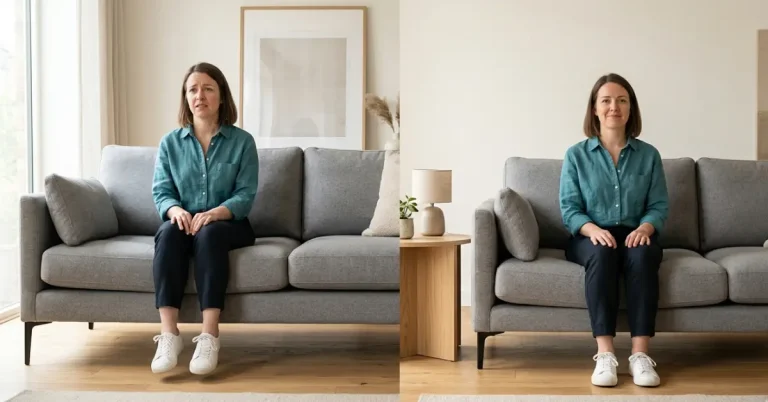
My feet didn’t touch the floor.
Not slightly off. Completely dangling.
At first, it didn’t seem like a big deal. But after 10 minutes, the discomfort kicked in. Pressure behind my knees. Legs getting tired. Constant shifting just to feel normal.
That’s when I realized something important.
Most sofas are not designed for people under 5 feet.
They’re built for average heights. Which means if you’re shorter, the proportions work against you. The seat is too high. The depth is too deep. Your posture collapses without you even noticing.
You end up sitting awkwardly. Slouching. Using pillows just to compensate.
And here’s the frustrating part.
You can’t tell any of this just by looking at a sofa online.
That’s why this guide exists.
I’m going to show you exactly what actually works.
- The ideal sofa seat height for under 5 feet
- The correct seat depth so you don’t slide back
- Full sofa dimensions that support your body properly
- A practical buying guide so you don’t waste money
- Real sofa examples you can look for while shopping
No guesswork. No vague advice.
Just clear numbers and real-world comfort.
Why Do Standard Sofas Feel Uncomfortable for People Under 5 Feet?

Most sofas are not made for you.
They are designed around average body proportions. Think people around 5’4″ and above. That assumption is built into the seat height, seat depth, and overall structure.
If you are under 5 feet, those numbers stop working.
The seat height is too high
This is the first problem you notice.
You sit down and your feet don’t fully touch the floor. Or they barely do.
That creates a constant strain on your legs.
- Your thighs carry more pressure
- Your legs feel unsupported
- You keep adjusting your position
It doesn’t feel stable. And over time, it gets uncomfortable.
The seat depth is too deep
Now it gets worse.
Most modern sofas have deeper seats. They are designed for lounging, not for shorter users.
When the seat is too deep:
- You can’t sit all the way back comfortably
- Your lower back loses support
- You start slouching without realizing it
So what do most people do?
They add pillows behind their back just to make the sofa usable.
That’s a sign the dimensions are wrong.
The real problem is poor body alignment
When seat height and depth don’t match your body, your posture breaks down.
- Knees are not at a natural angle
- Feet are not grounded
- Back is not supported properly
This leads to:
- Pressure behind the thighs
- Lower back discomfort
- Constant shifting while sitting
It doesn’t matter how expensive the sofa is.
If the dimensions don’t fit your height, it won’t feel comfortable.
That’s why understanding the right seat height and depth is not optional. It’s the difference between a sofa that looks good and one you actually enjoy using every day.
What Is the Ideal Sofa Seat Height for Under 5 Feet?
Let’s get straight to it.
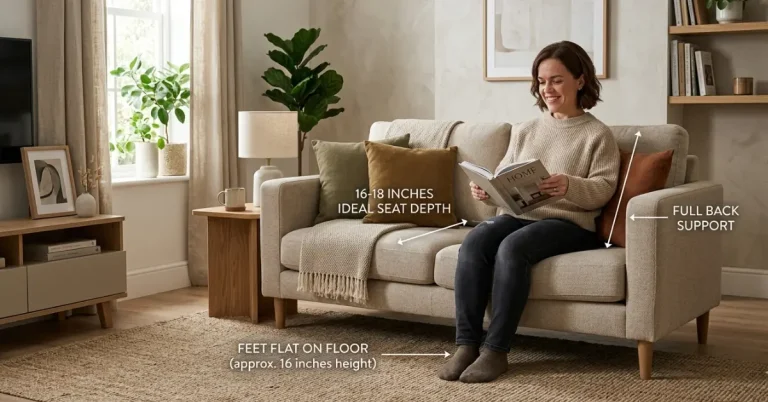
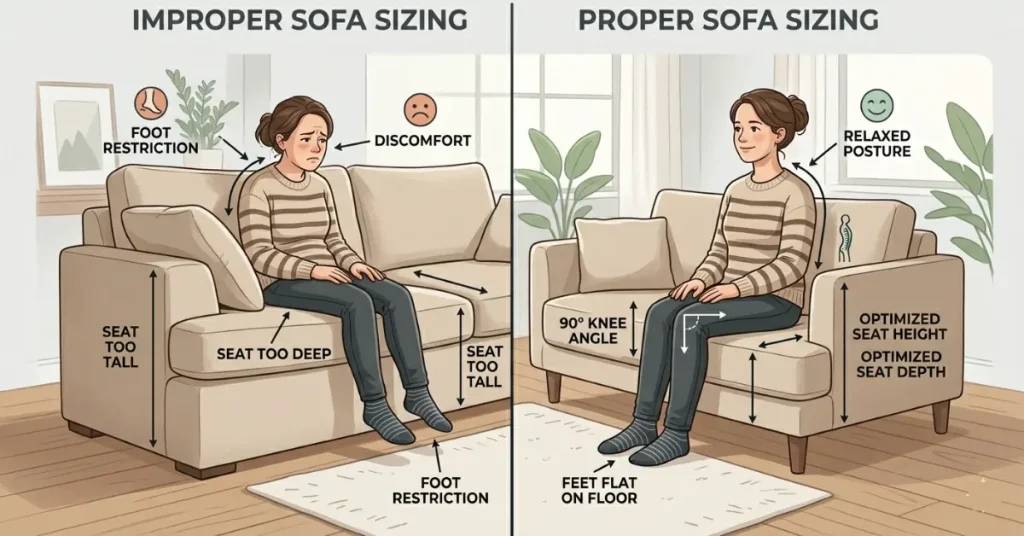
The ideal sofa seat height for someone under 5 feet is 16 to 18 inches.
This is the range where comfort actually starts to make sense for a shorter frame. Anything outside this range usually creates problems.
Why 16 inches works better for shorter users
At 16 inches, your body feels more supported.
- Your feet are more likely to rest flat on the floor
- Your legs feel stable instead of hanging
- Pressure on your thighs is reduced
This height gives you a grounded sitting position. It feels natural, not forced.
If you’ve ever sat on a low chair and instantly felt more relaxed, this is why.
When 18 inches still works
18 inches is slightly higher, but still within a comfortable range for most people under 5 feet.
- Easier to sit down and stand up
- Works well if you prefer a slightly elevated seat
- Still manageable if seat depth is not too deep
But here’s the catch.
At 18 inches, everything else needs to be right. If the seat is also deep, you might still feel your feet lifting slightly.
The rule most people ignore
Forget brand names. Forget design trends.
Focus on this:
- Feet flat on the floor
- Knees bent at about a 90 degree angle
If this doesn’t happen, the sofa is not the right height for you.
According to general ergonomic seating posture guidelines, maintaining a neutral 90-degree knee angle reduces pressure on the lower back and improves long-term comfort.
Quick reality check when shopping
When you’re looking at sofas online or in-store, don’t assume “standard height” will work.
Check the product specs. Look for seat height first.
If it’s above 18 inches, be cautious.
That’s where most shorter users start losing comfort without realizing it.
This one measurement decides how the sofa feels every single day.
What Is the Ideal Sofa Seat Depth for Under 5 Feet?
Seat height gets all the attention. Seat depth is where comfort usually breaks.
For someone under 5 feet, the ideal sofa seat depth is 21 to 23 inches.
This range keeps you supported without forcing your body into awkward positions.
What happens when the seat is too deep?
This is a common problem with modern sofas.
You sit down and immediately feel like you’re sinking back.
- Your lower back loses contact with the backrest
- You slide forward to compensate
- Your posture collapses into a slouch
Now combine that with a slightly high seat height.
Your feet barely touch the floor and your back isn’t supported. That’s not comfort. That’s compromise.
What about seats that are too shallow?
Going too shallow doesn’t fix the problem either.
- You feel pushed forward
- There’s not enough thigh support
- Sitting for longer periods becomes tiring
It might feel okay for a few minutes. Not for an evening.
Why 21 to 23 inches works
This range gives you balance.
- You can sit back without losing support
- Your lower back stays aligned
- Your posture stays upright without effort
It works for both relaxed sitting and normal daily use.
Simple way to test it
Sit all the way back against the sofa.
Now check:
- Can your back rest comfortably without sliding forward?
- Do your knees stay naturally bent?
If yes, the depth is working.
If you need a pillow behind your back, the seat is too deep.
What most buyers miss
They focus on style or fabric and ignore depth completely.
That’s why so many sofas look great in photos but feel wrong in real life.
If you’re under 5 feet, seat depth is not optional. It’s a deciding factor for everyday comfort.
Before You Buy
The Short Person’s Sofa Fit Guide
A printable height-to-dimensions chart, self-measuring steps, and a shopping checklist — know your exact numbers before you shop.
Get the Guide — $9 →What Are the Ideal Sofa Dimensions for Under 5 Feet?
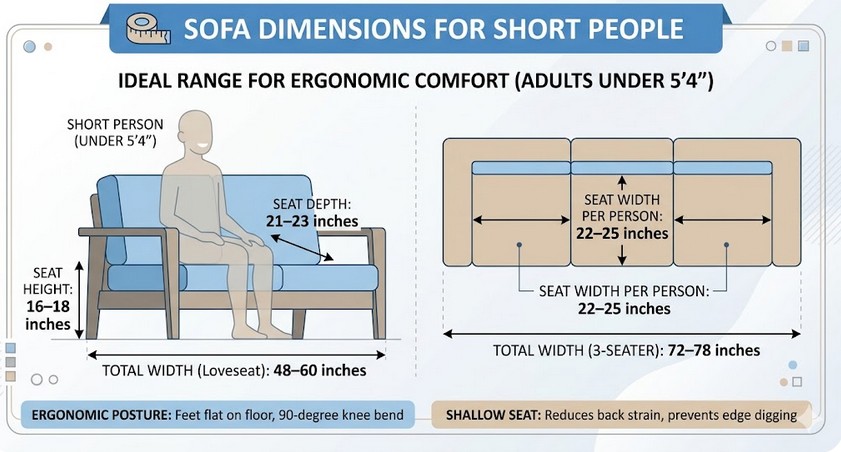
You don’t need dozens of measurements.
You need the right few.
If you stay within these ranges, your chances of getting a comfortable sofa go way up.
Quick reference for the right sofa dimensions
- Seat height: 16 to 18 inches
- Seat depth: 21 to 23 inches
- Seat width per person: 22 to 25 inches
- Back height: Medium height for proper support
Why these numbers actually matter
Each of these dimensions solves a specific problem.
- Seat height keeps your feet grounded
- Seat depth controls whether you sit upright or slouch
- Seat width gives you enough space without feeling cramped
- Back height supports your posture without forcing you backward
Ignore any one of these, and comfort drops fast.
How to use this when shopping
Don’t just scroll through images.
Open the product details and check the specs.
Focus on:
- Seat height first
- Then seat depth
- Then overall proportions
If a sofa matches all four, it’s worth considering.
If it misses even one, think twice.
Simple buyer mindset
You are not buying a sofa based on looks.
You are buying based on fit.
And for someone under 5 feet, these dimensions are what make that fit work.
How Do Sofa Dimensions Compare for Under 5 Feet vs Standard Users?
Most people assume a sofa is comfortable if it’s labeled “standard.”
That assumption breaks quickly if you’re under 5 feet.
Under 5 feet vs standard sofa design
Standard sofas usually come with a seat height between 18 and 21 inches.
That range works fine for average height users. Not for shorter ones.
Here’s what typically happens:
- Your feet don’t fully touch the floor
- Your legs feel unsupported
- Pressure builds behind your thighs
You end up shifting your position every few minutes just to stay comfortable.
It’s not a minor issue. It affects how long you can actually sit and relax.
16–18 Inches vs 19–21 Inches: What Actually Feels Better?
This is where most buying mistakes happen.
16 to 18 inches
- Feet stay closer to the floor
- Sitting feels stable
- Posture stays more natural
This is the range that works with your body, not against it.
19 to 21 inches
- Feet start to lift or barely touch the ground
- Legs feel unsupported
- You lose that grounded feeling
It might not seem like a big difference on paper. In real use, it’s very noticeable.
A couple of inches can completely change how a sofa feels.
How Seat Height and Seat Depth Work Together
Most buyers look at these separately. That’s a mistake.
They work as a combination.
Worst case scenario for shorter users
- High seat height
- Deep seat depth
This creates two problems at once:
- Your feet don’t touch the floor properly
- Your body slides back into the seat
Now your posture collapses and your legs feel unsupported at the same time.
What works better
- Lower seat height within 16 to 18 inches
- Moderate seat depth within 21 to 23 inches
This combination keeps:
- Your feet grounded
- Your back supported
- Your sitting position stable
Quick reality check
If a sofa feels “off,” it’s usually not one issue.
It’s the wrong combination of height and depth.
Fix both, and comfort improves immediately.
How to Choose the Right Sofa for Under 5 Feet (Step-by-Step Buying Guide)
Most people buy a sofa based on looks first.
That’s why they end up uncomfortable later.
If you’re under 5 feet, you need a different approach. Focus on fit first. Everything else comes after.
Step 1: Measure your sitting leg length
Start here.
Sit on a chair where your feet are flat on the floor. Measure from the floor to the back of your knee.
This gives you a rough idea of your ideal seat height.
- If your measurement is closer to 16 inches, go lower
- If it’s closer to 18 inches, you have more flexibility
This step removes guesswork.
Step 2: Check seat height first
This is the most important number.
Always.
Look for sofas within 16 to 18 inches.
If it’s above that range, be careful.
That’s where feet start lifting off the floor and comfort drops.
Step 3: Check seat depth next
Once height is right, move to depth.
Stay within 21 to 23 inches.
- Too deep and you’ll slide back
- Too shallow and it feels stiff
Depth controls how you sit. Don’t ignore it.
Step 4: Test the foot placement rule
This is your final check.
Sit properly and look at your posture.
- Feet flat on the floor
- Knees bent around 90 degrees
- Back resting naturally
If you need to adjust, shift, or add a pillow, something is off.
Step 5: Always check the return policy
This matters more than people think.
Even if the dimensions look perfect, comfort can vary slightly.
When buying online:
- Choose sellers with easy returns
- Avoid final sale items
- Give yourself room to test at home
Simple buyer mindset
Don’t trust how a sofa looks.
Trust how it fits your body.
If it matches the right height and depth, you’ll feel the difference immediately.
What Are the Best Sofas for Under 5 Feet? (By Budget)
This is where most guides get vague.
They tell you what to look for, but don’t connect it to real buying decisions.
Let’s fix that.
Below are practical sofa types and what to search for based on your budget. Focus on dimensions first. Then look at style.
Budget Sofas ($500–$800)
If you’re buying your first sofa or furnishing a small space, this range makes sense.
You won’t get luxury materials, but you can still get good proportions.
What to look for
- Compact 2-seater or small 3-seater sofas
- Apartment-size designs
- Seat height around 16 to 17 inches
- Firm cushions that don’t sink too much
Why this works
Smaller sofas are usually better for shorter users.
They tend to have:
- Lower profiles
- Less seat depth
- More upright seating
All of that helps keep your feet grounded and posture stable.
Mid-Range Sofas ($800–$1500)
This is where comfort starts improving.
Better materials. Better support. More balanced designs.
What to look for
- Structured cushions with good back support
- Seat height within 16 to 18 inches
- Seat depth close to 21 to 23 inches
- Modular or sectional options with controlled depth
Why this works
You get more ergonomic designs in this range.
That means:
- Better weight distribution
- Less sinking over time
- More consistent support across the seat
This is the sweet spot for most buyers.
Premium Sofas ($1500+)
If you care about long-term comfort, this is where things get serious.
You’re not just buying a sofa. You’re buying fit and durability.
What to look for
- Customizable seat depth options
- High-density foam or hybrid cushions
- Seat height clearly listed in specs
- Adjustable or modular configurations
Why this works
Premium sofas often let you control the dimensions.
That’s a big advantage if you’re under 5 feet.
Instead of adapting to the sofa, the sofa adapts to you.
How to Use This Section When Buying
Don’t just click the first product you see.
Open the details and check:
- Seat height
- Seat depth
- Cushion firmness
If those numbers match your range, then consider the design.
If they don’t, skip it.
Simple rule
A good-looking sofa with the wrong dimensions will always feel wrong.
A simple sofa with the right dimensions will feel right every day.
What Mistakes Should You Avoid When Buying a Sofa Under 5 Feet?
Most people don’t buy the wrong sofa on purpose.
They just miss a few key details.
Those small mistakes turn into daily discomfort.
Buying based on looks only
This is the biggest trap.
A sofa can look perfect in photos and still feel completely wrong.
- Stylish design does not guarantee comfort
- Modern shapes often hide deep seats
- Low arms and soft cushions can be misleading
If you don’t check dimensions, you’re guessing.
And guessing usually fails here.
Ignoring seat depth
Many buyers focus only on seat height.
That’s not enough.
If the seat is too deep:
- You’ll slide back
- Your lower back loses support
- You’ll end up using pillows to compensate
That’s not a small issue. It affects how you sit every day.
Choosing deep lounge-style sofas
These look comfortable. They’re not always practical for shorter users.
Deep lounge sofas are designed for stretching out, not sitting upright.
For someone under 5 feet:
- Your back won’t reach the backrest properly
- Your legs won’t stay supported
- You’ll feel swallowed by the sofa
It might feel cozy for a few minutes. Not for daily use.
Not testing your sitting posture
This is where everything comes together.
You can read all the specs. But if you don’t check how your body feels, you’re missing the point.
Always think in terms of posture:
- Are your feet flat on the floor?
- Are your knees naturally bent?
- Is your back supported without effort?
If the answer is no, something is off.
Final thought
Comfort is not about price or brand.
It’s about fit.
Avoid these mistakes, and you’ll avoid most of the frustration people face after buying the wrong sofa.
Before You Buy
The Short Person’s Sofa Fit Guide
A printable height-to-dimensions chart, self-measuring steps, and a shopping checklist — know your exact numbers before you shop.
Get the Guide — $9 →Frequently Asked Questions
What is the ideal sofa seat height for under 5 feet?
The ideal range is 16 to 18 inches.
This height keeps your feet closer to the floor and helps maintain a natural sitting position. It reduces pressure on your legs and makes everyday sitting more comfortable.
If the seat is higher than this, comfort usually drops.
Is an 18 inch seat height good for short people?
Yes, but with a condition.
18 inches can work well if:
- Your feet still touch the floor comfortably
- The seat depth is not too deep
If the sofa is both tall and deep, you may still feel your legs lifting slightly. That’s where discomfort starts.
What seat depth is best for short users?
The ideal seat depth is 21 to 23 inches.
This range allows you to:
- Sit back properly
- Keep your lower back supported
- Maintain a stable posture
Anything deeper can push you into a slouched position.
How do I know if a sofa is too deep for me?
Simple test.
Sit all the way back against the sofa.
Now check:
- Are you forced to slide forward?
- Do you need a pillow behind your back?
- Does your lower back lose support?
If yes, the seat is too deep.
A good sofa should support your back without any adjustments.
Final Thoughts: Choose Fit Over Looks
If you remember only two things, make it these:
- Seat height: 16 to 18 inches
- Seat depth: 21 to 23 inches
These two numbers decide whether a sofa feels right or wrong.
Everything else is secondary.
Before you buy:
- Measure your sitting position
- Check the product dimensions carefully
- Don’t assume standard sizes will work
Take a few extra minutes here. It saves you from long-term discomfort.
What to do next
Start browsing sofas with these dimensions in mind.
Look at your preferred furniture stores. Open the specs. Check the numbers first.
Then choose the design.
Browse sofas that match these dimensions and you’ll feel the difference immediately.