Disclosure: This article may contain affiliate links. If you purchase through these links, we may earn a small commission at no extra cost to you. We only recommend products we believe can genuinely help solve the problems discussed in this article.
A deep sofa looks inviting. It promises lounge-level comfort. But if it doesn’t fit your body, it quickly turns into a daily annoyance.
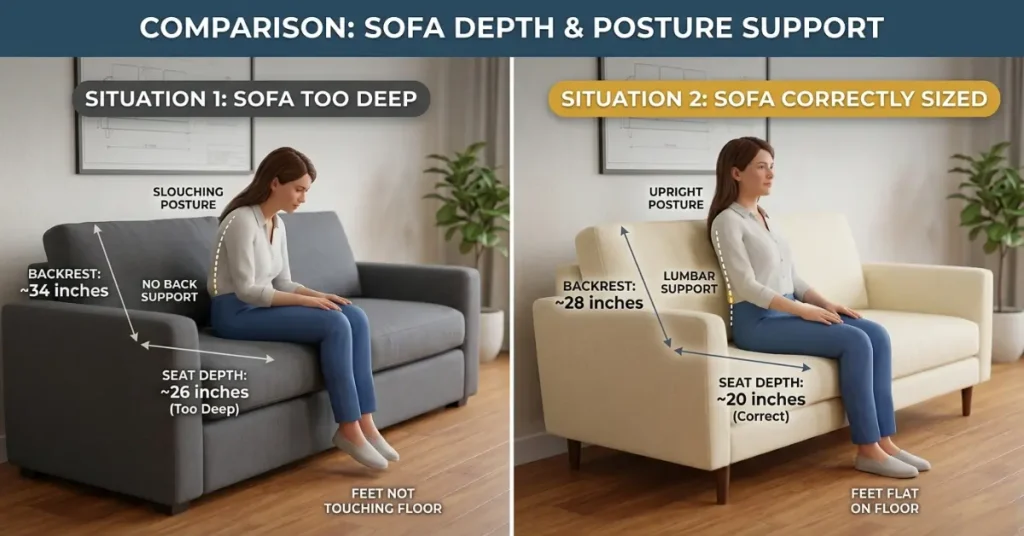
You sit down. Your legs dangle. Your lower back floats away from the backrest. Now you’re slouching, shifting, or stacking random pillows just to feel okay.
Depth is not just a design choice. It directly affects posture, circulation, and long-term comfort. Especially if you have shorter legs or prefer upright sitting.
This is where most buyers get it wrong. They focus on style and ignore seat depth. Then they regret it.
Quick Answer
A sofa is too deep if your back cannot touch the backrest while your feet stay flat on the floor.
Fix it by adding firm back cushions, raising seat height, or using a footrest.
Ideal seat depth for short legs: 20–22 inches (50–56 cm).
Proper posture = knees at 90°, feet flat, back fully supported.
For standard sofa sizing reference visit dimensions.com
How to Know Instantly If Your Sofa Is Too Deep
You don’t need tools or a tape measure to figure this out. Your body already knows.
If you constantly shift, tuck your legs, or reach for pillows, something is off. A sofa should support you without effort. Not force you to adapt every time you sit down.
1. 5-Second Self-Test (Highly Snippet-Friendly)
Sit like you normally would. No adjustments. No props.
- Sit fully back
- Check foot contact
- Measure knee gap (2–3 fingers)
If your feet don’t stay flat or your knees extend too far forward, the seat depth is working against you.
That “almost comfortable” feeling is the red flag most people ignore.
2. Visual Body Alignment Checklist
Look at how your body lines up. This tells you more than any product description.
- Ankles under knees
- Hips touching backrest
- No forward sliding
If you fail even one of these, your sofa is likely too deep for your frame.
Real-world sign: you sit for 10 minutes and start leaning forward or slouching. That is your body compensating.
3. Measurement Formula (Unique Addition)
There is a simple way to get precise.
Ideal seat depth = Your thigh length – 2 inches
Measure from your lower back to the back of your knees. Subtract 2 inches. That gap prevents pressure behind the knees and keeps circulation comfortable.
Most standard sofas range between 21 to 24 inches deep. That works for average to taller users. Not everyone.
If you’re shopping or comparing models, check actual dimensions, not just labels like “deep seat” or “lounger style.”
Buy based on fit, not looks. Your back will notice the difference immediately.
Why Deep Sofas Fail for Short People (Science-Based)
Deep sofas are not universally comfortable. They are built around average or taller body dimensions. If you are shorter, the mismatch shows up fast.
You slide forward. Your lower back loses support. Your feet struggle to stay planted. That is not a preference issue. It is a fit problem.
The Role of Anthropometry
Anthropometry is the study of human body measurements. Furniture should follow it. Most mass-produced sofas do not.
- Furniture must match body proportions
- Seat depth should reflect thigh length, not just design trends
- One-size-fits-all rarely works in real homes
If your thighs are shorter, a deep seat pushes you out of proper alignment. You either lean back with dangling feet or sit forward with no back support. Both are flawed positions.
This is why “extra deep” often feels luxurious in a showroom but frustrating at home.
Biomechanics of Sitting
Your body is not passive when you sit. It constantly adjusts to maintain balance and support.
- Spine curves
- Pelvic tilt
- Pressure distribution
A proper seat supports the natural S-curve of your spine. A deep sofa breaks that. Your pelvis tilts backward. Your lumbar support disappears.
Now pressure shifts to the wrong areas. Instead of being evenly distributed, it concentrates on your hips and lower back.
Real-life scenario. You sit to relax, but after a few minutes, you are repositioning. That is your body trying to fix poor ergonomics.
Hidden Health Effects Competitors Miss
Most guides stop at comfort. They ignore what happens over time.
- Reduced circulation behind knees
- Long-term posture adaptation
- Increased fatigue from micro-adjustments
When the seat edge presses into the back of your knees, blood flow is restricted. You may feel numbness or tingling.
Poor posture becomes a habit. Sit like that every day and your body adapts in the wrong way.
The constant small adjustments also drain energy. You do not notice it immediately. But over longer sitting sessions, it adds up to real fatigue.
If you want to understand proper sitting posture and body alignment, see the proper posture.
Comfort should feel effortless. If your sofa demands constant correction, it is not built for you.
Fast Fixes Ranked by Effectiveness (Actionable + Practical)
You don’t always need a new sofa. Most depth problems can be fixed in minutes. The key is choosing the right fix, not just throwing random cushions on it.
Some solutions look good but do very little. Others change how the sofa feels instantly.
#1 Back Cushion Method (Best Overall Fix)
This is the most reliable fix. It directly reduces usable seat depth.
- Ideal thickness: 4–6 inches
- Use high-density foam
Firm cushions push your body forward into proper alignment. Soft pillows collapse and fail.
Real-life result. Your back finally touches support while your feet stay flat. That alone fixes most discomfort issues.
If you only try one solution, make it this.
Recommended Fix: High-Density Foam Insert
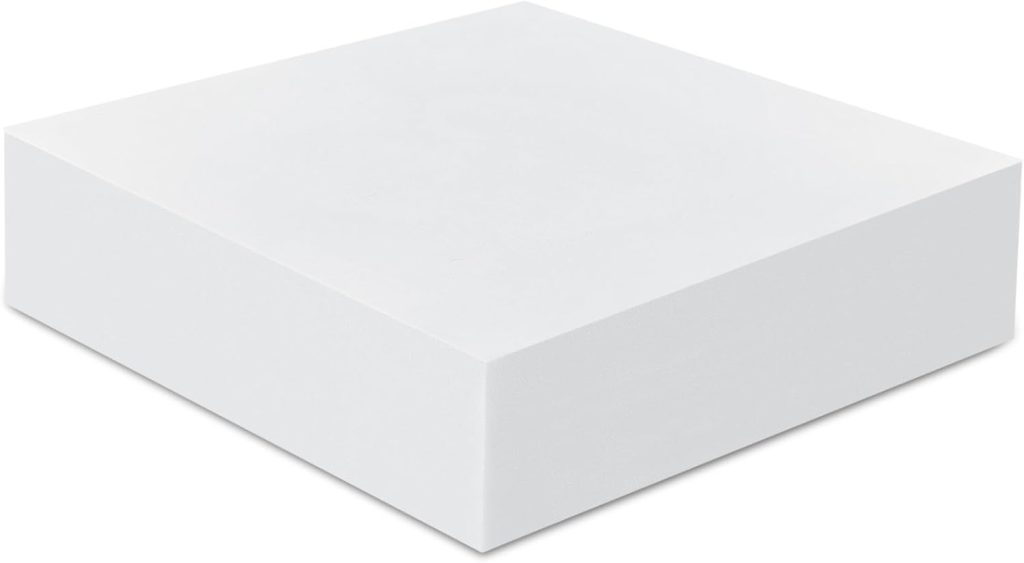
If regular pillows keep flattening out, a high-density foam insert can create a more permanent solution. Unlike soft cushions, firm upholstery foam maintains its shape and effectively reduces usable seat depth.
Recommended option: Frienda 5″ High-Density Upholstery Foam
#2 Seat Height Boost (Underrated Fix)
Most people ignore height. That is a mistake. Depth and height work together.
- Raises knee angle
- Works when depth + height mismatch
If your seat is low and deep, you sink and slide. Raising the seat changes your leg position and improves posture instantly.
Simple options include adding a firm seat pad or switching to higher legs if possible.
This fix is subtle but powerful when proportions are off.
#3 Foot Support Strategy
If your feet don’t reach the floor comfortably, you will never sit right.
Options vary based on your setup.
- Ottoman for full leg support
- Footrest for targeted elevation
- DIY solutions like a firm box or stacked cushion
Ottomans encourage lounging. Footrests support upright sitting better. Choose based on how you actually use your sofa.
The goal is simple. Keep your feet supported so your body stops compensating.
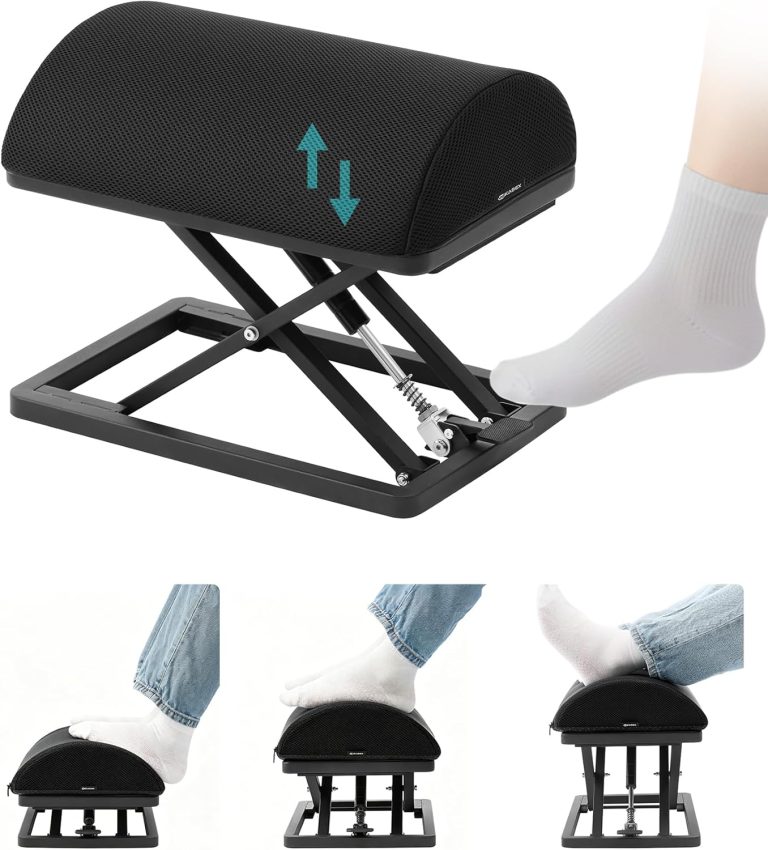
Recommended Fix: Adjustable Footrest
If your feet don’t comfortably reach the floor while sitting fully back. An adjustable footrest can improve knee angle and reduce pressure behind the legs.
Recommended option: Wikabex Height Adjustable Footrest
#4 Anti-Slouch Setup (NEW Insight)
This is where most people fail. They fix one problem and create another.
Combine support elements instead of relying on a single cushion.
- Combine lumbar + back cushion
- Prevents sliding forward
The back cushion reduces depth. The lumbar cushion maintains spine support. Together, they lock your posture in place.
Without lumbar support, you still collapse into a slouch.
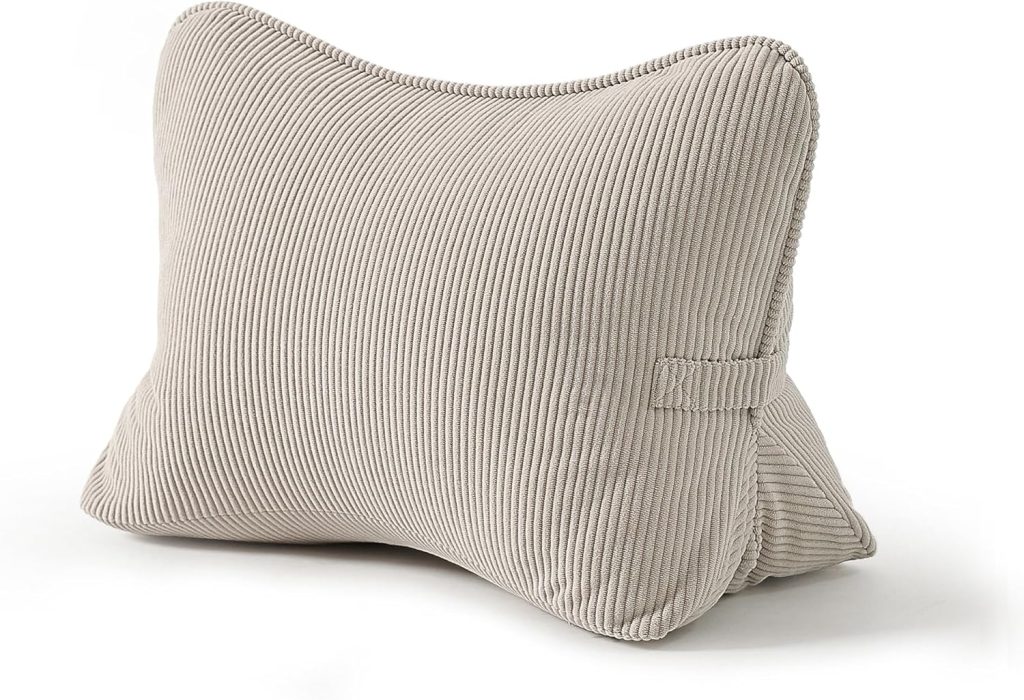
Recommended Fix: Lumbar Support Pillow
A lumbar support pillow helps fill the gap between your lower back and the sofa, making it easier to maintain a natural sitting posture without constantly readjusting.
Recommended option: Ailuteie Lumbar Support Back Pillow
Before vs After Setup (Visualization Section)
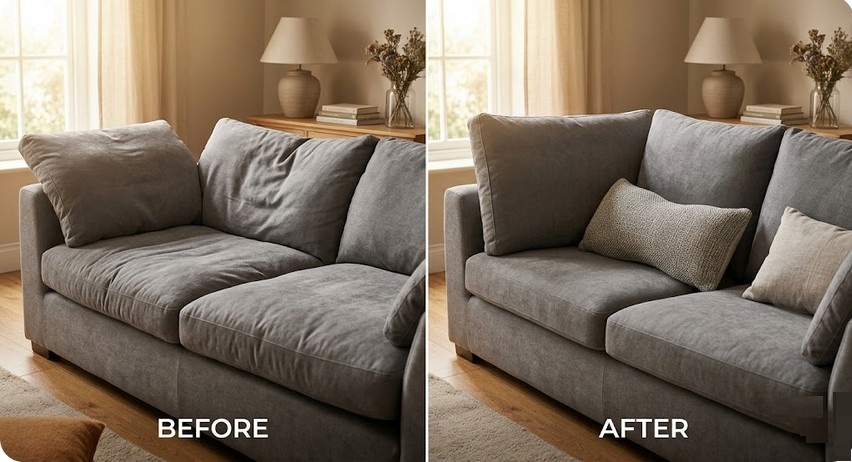
Before
You sit down and slide forward.
Your lower back floats.
Your feet barely stay planted.
You adjust every few minutes.
After
Your hips stay against the backrest.
Your spine holds a natural curve.
Your feet rest flat or supported.
You sit longer without thinking about it.
That is the difference between forcing comfort and actually having it.
Small adjustments. Big payoff.
The Cushion Physics Most Guides Ignore
Most advice stops at “add a pillow.” That is lazy guidance. Cushion behavior matters more than cushion count.
What you feel when sitting is not just surface softness. It is how the material compresses under your weight. That compression changes seat depth in real time.
Ignore this, and every fix becomes temporary.
Why Soft Cushions Make Depth Worse
Soft feels good for five minutes. Then the problem shows up.
- Compression increases effective depth
You sit down. The cushion sinks. Your body moves backward and downward at the same time. Now the seat is effectively deeper than its listed measurement.
That is why deep sofas with plush cushions feel even deeper than they look.
Real-life scenario. You start upright. Ten minutes later, you are slouched with your hips sliding forward. The cushion caused it.
Foam Density Guide (Unique + Practical)
Density decides whether a cushion supports you or disappears under you.
- Low density = sinking
- High density = support
Low-density foam compresses quickly. It cannot hold your posture. It exaggerates depth issues.
High-density foam resists compression. It keeps your position stable and reduces how far back you sink.
For most adults, medium to high density foam works best for back support fixes. It gives structure without feeling rock hard.
If a cushion loses shape after a few uses, it is not solving anything. It is part of the problem.
Cushion Stack Strategy
One cushion rarely does the job. Smart layering does.
- Layering firm + soft for balance
Place a firm cushion at the back. This sets your position and reduces depth. Add a softer layer in front if you want comfort without losing support.
This combination gives you structure and comfort at the same time.
Think of it like this. The firm layer does the work. The soft layer improves the feel.
If you stack only soft cushions, you just create a deeper, less stable seat.
For a deeper look at foam types and performance, see foamonline.
Control the material, and you control the comfort.
Semi-Permanent Fixes Without Buying a New Sofa
If your sofa feels too deep every day, temporary cushions are only half a solution. At some point, you need upgrades that actually change how the sofa behaves.
These fixes cost more effort than stacking pillows, but they give you stable, long-term comfort without replacing the entire piece of furniture.
Custom Foam Inserts (Best ROI Fix)
This is the most practical upgrade if you want real change without buying new furniture.
A custom foam insert reduces usable seat depth by physically reshaping the seating area.
- Cut-to-size high-density foam works best
- Targets exact depth mismatch in your sofa
- Prevents sinking and sliding over time
You place the insert at the back of the seat. It pushes your body forward into a healthier sitting position. No constant adjustment needed.
Real-world result. You stop “fighting” the sofa and start sitting normally again.
This is especially effective for oversized sectionals where standard cushions fail to fix proportion issues.
Replacing Back Cushions with Structured Support
Most factory cushions are too soft. They look good but collapse under weight.
Swapping them changes everything.
- Choose structured, high-resilience foam
- Avoid overly plush or fiber-filled cushions
- Look for firm lumbar support built into the shape
Structured cushions hold your spine in place instead of letting you sink backward. That directly reduces the feeling of excessive depth.
Buyer mistake: assuming softer equals more comfort. In deep sofas, it usually does the opposite.
A firmer back cushion often makes the whole sofa feel “smaller” and more controlled in a good way.
Upholstery Modifications to Reduce Depth
This is the most permanent non-replacement solution. It changes the actual seating geometry.
Options include:
- Adding internal foam padding to the seat frame
- Rebuilding cushion inserts with reduced depth profiles
- Adjusting webbing tension underneath cushions
These changes reduce how far back your body can sink. You are no longer compensating with pillows or posture corrections.
It is not a quick DIY job. But it is cheaper than replacing a full sofa, especially for high-quality frames worth keeping.
At this stage, you are no longer “fixing comfort.” You are correcting design mismatch at the structural level.
How to Choose the Right Sofa (Data-Driven Guide)
Most sofa purchases fail for one simple reason. People judge by looks, not body fit. That leads to deep seats, awkward posture, and daily discomfort that shows up only after delivery.
If you want a sofa that actually works for your body, you need to focus on proportions first. Style comes after that.
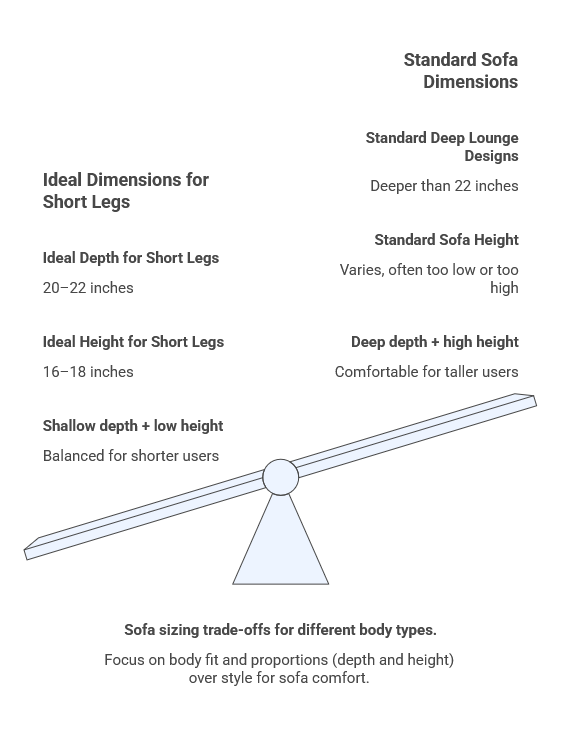
Ideal Dimensions for Short Legs
Shorter leg length changes everything about seating comfort. Standard “deep lounge” designs often overshoot what your body can handle.
- Depth: 20–22 inches
- Height: 16–18 inches
These ranges keep your feet grounded and your knees naturally aligned. Anything deeper starts pushing you into slouching or forward sliding.
Seat height matters just as much as depth. Too low and you sink. Too high and your feet dangle. Both break posture quickly.
The “2–3 Finger Rule” Explained Clearly
This is a simple in-store test most buyers overlook. It tells you more than showroom comfort impressions.
Sit all the way back. Then check the space behind your knees at the seat edge.
- 2–3 finger gap = ideal fit
- No gap = seat too shallow
- More than 3 fingers = seat too deep
If you exceed the gap, your legs are not supported properly. That leads to pressure behind the knees and constant shifting.
It is a quick filter. Not perfect, but reliable enough to avoid bad purchases.
Seat Depth vs Seat Height Matrix (NEW)
Depth alone does not decide comfort. Height changes how depth feels. You need both working together.
Here is how combinations actually behave in real use:
- Shallow depth + low height = stable but slightly upright sitting
- Shallow depth + high height = firm posture, good for short use sessions
- Deep depth + low height = worst case, causes sinking and slouching
- Deep depth + high height = lounge feel, better for taller users
The most common mistake is mixing deep seats with low height. That creates the “stuck in sofa” feeling people complain about later.
Good design balances both, not just one measurement.
If you want to compare real sofa sizing standards across models, this reference helps clarify typical ranges.
At the end, the right sofa is not about trend labels like “deep seating.” It is about whether your body can sit without effort or correction.
The Short Person’s Sofa Fit Guide
Want your exact seat depth and height numbers, not just general ranges? Grab the printable Sofa Fit Guide.
Get the Guide →Best Sofa Types for Short People (With Clear Recommendations)
Not all sofas are built the same, and this is where most buyers get misled. Marketing pushes “deep comfort,” but body fit tells a different story.
If you have shorter legs or struggle with standard seat depth, the right sofa type matters more than fabric or style.
Shallow-Seat Sofas
This is the most straightforward choice. No tricks, no adjustments needed.
Shallow-seat sofas typically stay in the 20–22 inch depth range, which keeps your body aligned naturally.
- Easier foot placement on the floor
- Better lower back support without extra cushions
- Less slouching over time
They are not flashy, but they work. That is the point.
If you want a sofa that behaves well every day without constant fixing, this is the safest option.
Apartment-Size Sofas
These are designed with space efficiency in mind, but they also happen to suit shorter users well.
- Narrower seat depth by design
- Compact frame improves posture alignment
- Easier to sit upright without sliding
They fit smaller rooms, but the real advantage is proportion control. You are not fighting oversized seating geometry.
In real use, they feel more “contained,” which helps maintain proper sitting position naturally.
Modular Sofas with Adjustable Depth
This is the most flexible category. It solves the problem through adaptability instead of fixed design.
- Adjustable seat sections let you change depth
- Moveable cushions help fine-tune posture
- Can switch between lounge and upright modes
This is ideal if multiple people use the same sofa with different body sizes.
The key advantage is control. You are not locked into one seating depth that only works for one type of body.
Just avoid overly soft modular sets. Flexibility only works when the base support is firm enough to hold shape.
Avoid: Extra-Deep Lounge Sofas
This is where most comfort complaints start.
Extra-deep sofas are designed for lounging, not structured sitting.
- Forces slouching for shorter users
- Feet often do not reach the floor properly
- Encourages constant repositioning
They look luxurious in showrooms because they invite sinking. That is exactly the problem in daily use.
Unless your primary goal is lying down, not sitting, these designs work against proper posture.
A good sofa should support how you actually live, not how a showroom wants you to feel for five minutes.
Real-Life Scenarios
Most sofa guides talk about measurements. Very few connect those numbers to how people actually live. That’s where things break down. A sofa that works for one lifestyle can fail completely in another.
Let’s map real usage patterns, not just showroom assumptions.
If You Work From the Sofa
If your sofa doubles as a work spot, posture becomes non-negotiable. Comfort without structure will slowly wreck your back.
- Prioritize lumbar + upright posture
- Avoid deep seats that force reclining
You need a setup that keeps your pelvis stable and your spine supported for longer sessions. A slightly shallower seat with firm back support works far better than a soft lounge-style design.
Real-world reality: if you keep sliding forward while working, your sofa is not a workstation. It is a relaxation trap.
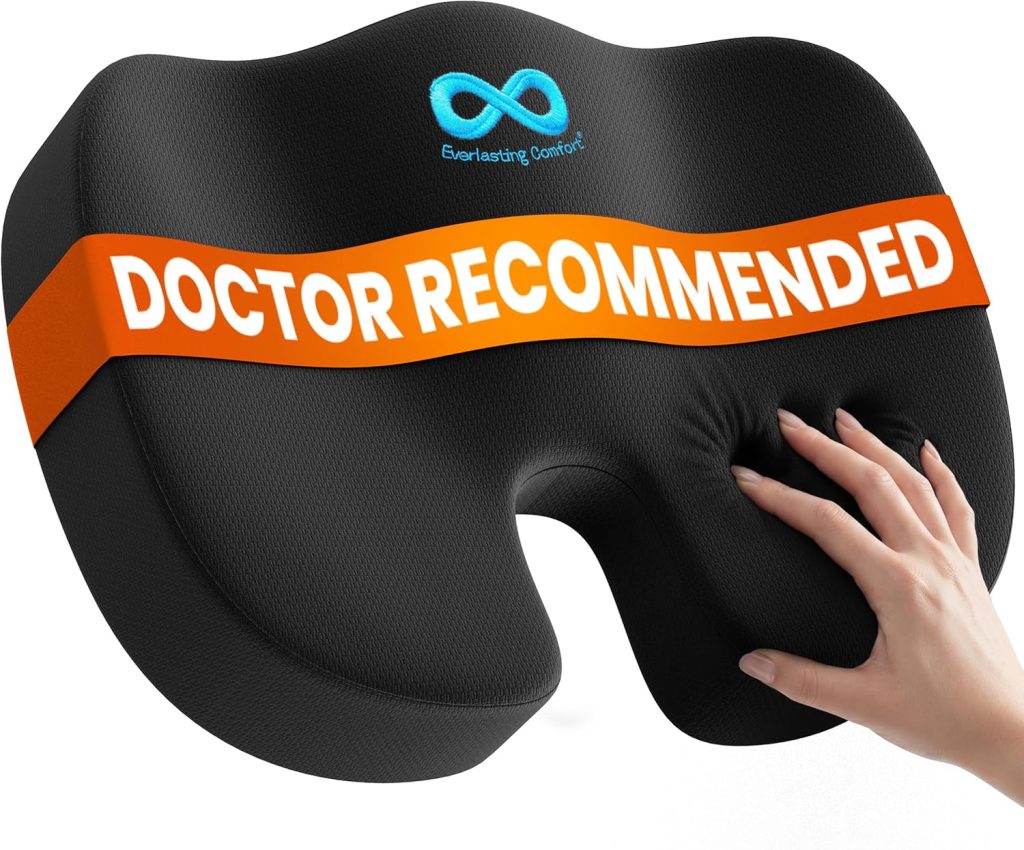
If you regularly work from your sofa, adding a supportive seat cushion can improve sitting posture during longer sessions.
Recommended option: Everlasting Comfort Memory Foam Seat Cushion
If Multiple People Use the Sofa
This is where compromise matters. One-size comfort rarely exists in shared furniture.
Different body types create different seating needs. A deep sofa might suit one person and completely fail another.
- Compromise setups are necessary
- Modular solutions work best
Modular sofas let you adjust depth or reposition cushions depending on who is using them. That flexibility reduces daily frustration in shared spaces.
If adjustment is not possible, the safest middle ground is moderate depth with firm support. Not too deep, not too shallow.
If You Like Lounging vs Sitting Upright
Your sitting style determines everything about sofa depth preference. Most people mix both, but usually lean toward one.
- Lounging needs deeper seats
- Upright sitting needs shallower seats
If you mostly lie sideways, stretch out, or curl up, a deeper seat makes sense. It supports relaxed positioning.
If you sit to read, work, or talk for long periods, deeper seats become a problem. You end up constantly shifting to stay aligned.
The mistake is buying for “occasional lounging” and then using the sofa as a daily seat. That mismatch is what causes discomfort over time.
Understanding how you actually use your sofa matters more than any single dimension chart.
Measuring Your Body for a Perfect Fit (Highly Actionable)
Most people measure sofas. Very few measure themselves. That is the real mistake. Furniture does not change. Your body is the reference point that should guide everything.
If you skip this step, you are guessing. And guessing usually ends in a sofa that looks right but feels wrong every single day.
How to Measure Thigh Length Correctly
This is the most important measurement for seat depth fit. It tells you how far you can sit back without losing support.
Do it like this:
- Sit on a flat chair with feet flat on the floor
- Measure from the back of your hip to the back of your knee
- Keep the tape straight, not curved
That number is your baseline for seat depth decisions.
Then apply a simple adjustment. Subtract 2 inches for proper clearance. That prevents pressure behind the knees and keeps circulation normal.
If your thigh length is short, deep sofas will always feel oversized. No cushion fix can fully correct that mismatch.
DIY Sofa Fit Test at Home
You can test any sofa before buying or adjusting it. No tools needed beyond your body.
- Sit all the way back against the sofa
- Check if your feet stay flat on the floor
- See if your lower back stays supported without effort
Now add one more check most people miss.
Try sitting for 10 minutes without adjusting your position.
If you start sliding forward or shifting constantly, the fit is off. That is your body reacting to poor geometry.
A good sofa feels stable immediately and stays stable over time.
Matching Body Ratios to Furniture Dimensions
Comfort is not just one number. It is the relationship between height, leg length, and seat geometry.
- Shorter legs need shallower seat depth
- Lower seat height requires better foot support
- Longer thighs can handle deeper seating
Think in ratios, not isolated measurements. A 22-inch seat depth can feel perfect for one person and completely wrong for another depending on leg length.
Here is the simple logic:
If your feet don’t stay flat and your back cannot rest naturally, the proportions are wrong.
Once you understand your own body ratios, furniture shopping stops being guesswork.
Mistakes That Lead to Buying the Wrong Sofa
Most bad sofa purchases do not happen because of low quality. They happen because of poor judgment at the buying stage. The sofa is fine. The choice is not.
These are the mistakes that quietly ruin comfort for years.
Prioritizing Style Over Ergonomics
This is the most common trap. It looks harmless in the showroom, but it always shows up later at home.
People pick sofas based on fabric, color, or “modern look.” Then they assume comfort will follow. It does not.
- Deep lounge designs look premium but often break posture
- Low-profile frames can reduce support for shorter users
- Soft, overstuffed seating hides poor structural fit
Real-life result: you sit down for comfort and end up constantly adjusting your position instead.
Style should support ergonomics, not replace it.
Ignoring Depth Specs Online
This is where most online buyers go wrong. They skip the numbers completely or assume all “standard sofas” feel the same.
Seat depth is the key metric, not just width or overall size.
- A 24+ inch depth often pushes shorter users into slouching
- Product photos rarely show real posture impact
- Descriptions like “deep seating” are not always a benefit
The mistake is trusting visuals instead of measurements. A sofa can look compact online and still be too deep in real use.
Always check seat depth before anything else. It decides how your body will actually sit, not how the sofa looks in a staged photo.
Testing Sofa Incorrectly (Huge Gap Fix)
Most people “test” a sofa the wrong way in stores. They sit casually for a few seconds and make a decision. That is not testing. That is guessing.
There are two correct ways to evaluate fit:
- Sitting edge vs full-back test
First, sit at the edge. Notice posture and foot placement. Then sit all the way back and check spinal support and knee angle.
If both positions feel unstable or forced, the sofa is not a match.
A proper test should include at least a few minutes of still sitting. Your body will reveal issues that a quick sit will hide.
A good sofa does not need “adjusting” every time you sit. If it does, it was not the right choice from the start.
Pro Tips: Most Articles Don’t Tell You
Most sofa advice stops at depth and height. That’s only half the picture. Real comfort comes from smaller design details that quietly affect how your body behaves over time.
These are the details buyers usually ignore until discomfort shows up later.
Fabric Grip Affects Sliding (Unique Insight)
This one is overlooked constantly. People blame seat depth when the real issue is surface friction.
- Leather vs fabric friction
Leather is smooth. It reduces grip. That sounds premium, but it often causes subtle sliding forward, especially on deeper seats.
Fabric has more grip. It helps your body stay in place, which supports better posture without constant correction.
Real-life scenario: you sit on leather, relax for five minutes, and slowly start drifting forward without noticing. That is friction working against you.
If your sofa already feels too deep, switching to a higher-grip fabric cushion setup can noticeably improve stability.
Seat Angle Matters
Flat seating looks simple, but it is not always optimal for long-term comfort.
- Slight tilt improves comfort
A very subtle backward tilt helps distribute weight more evenly across your hips and lower back. It reduces pressure buildup in one spot.
Too flat and your body tends to slide. Too steep and you feel like you are being pushed backward.
The goal is a controlled angle that supports natural posture without forcing it. Even a small difference in cushion shape can change how stable you feel.
Armrest Position Impacts Posture
Armrests are not just for resting your arms. They influence how your spine behaves.
If armrests are too low, you lean sideways. If they are too high, your shoulders lift unnaturally. Both lead to tension.
Proper armrest height helps stabilize your upper body and reduces slouching pressure on the lower back.
In deeper sofas, poor armrest positioning can exaggerate the sinking effect because your upper body has no reference point for balance.
When testing a sofa, always check how your shoulders sit relative to the armrest height. It should feel neutral, not forced up or down.
Small geometry details like these often decide whether a sofa feels right for five minutes or five years.
Quick Fix Selector (Interactive-Style Section)
If you don’t want theory and just want results, use this directly. Most sofa problems repeat the same patterns, and each one has a predictable fix.
If your problem is… → Do this:
- Feet dangling → Footrest
- Can’t reach back → Add cushions
- Sliding forward → Lumbar + firm seat
- Knees too high → Increase seat height
This is not about perfect furniture. It is about correcting mismatches fast so your body stops compensating all day.
If one fix helps but does not fully solve it, your sofa likely has a deeper dimension mismatch, not just a cushion issue.
Key Summary
A sofa is too deep if your posture breaks, meaning your feet lift off the floor or your back cannot stay supported against the backrest.
The fastest fix is adding firm back cushions to reduce effective seat depth and restore alignment.
Ideal seat depth for short legs is 20–22 inches, which helps maintain natural knee and spine positioning.
Long-term comfort depends on matching sofa dimensions to your body measurements, not just choosing based on appearance or style.
Before You Buy
The Short Person’s Sofa Fit Guide
A printable height-to-dimensions chart, self-measuring steps, and a shopping checklist — know your exact numbers before you shop.
Get the Guide — $9 →Frequently Asked Questions
1. How do I know if my sofa is too deep?
If your feet don’t touch the floor while your back is against the backrest, the sofa is too deep.
2. What is the best seat depth for short legs?
20–22 inches (50–56 cm) is ideal for most shorter individuals.
3. Can I fix a deep sofa without buying a new one?
Yes. Use firm cushions, seat boosters, or footrests to adjust comfort.
4. Why do I slide forward on my sofa?
This happens due to excessive depth and soft cushions that compress under weight.
5. Is a firm or soft cushion better?
Firm cushions are better because they prevent sinking and reduce effective depth.
6. What’s the fastest fix for a deep couch?
Add a firm back cushion to reduce seat depth immediately.
7. Can a deep sofa affect circulation?
Yes. Pressure behind the knees can restrict blood flow.
8. Should my feet always touch the floor?
Yes. Proper posture requires full foot contact.
9. Are modular sofas better for short people?
Yes. They allow customization of depth and seating configuration.
10. How do I measure the right sofa size?
Measure your thigh length and subtract about 2 inches for ideal seat depth.
11. Why do deep sofas feel comfortable at first?
They feel cozy initially but cause poor posture over time.
12. What’s better: fixing or replacing a deep sofa?
Fixing works short-term, but replacing is better for long-term ergonomic comfort.