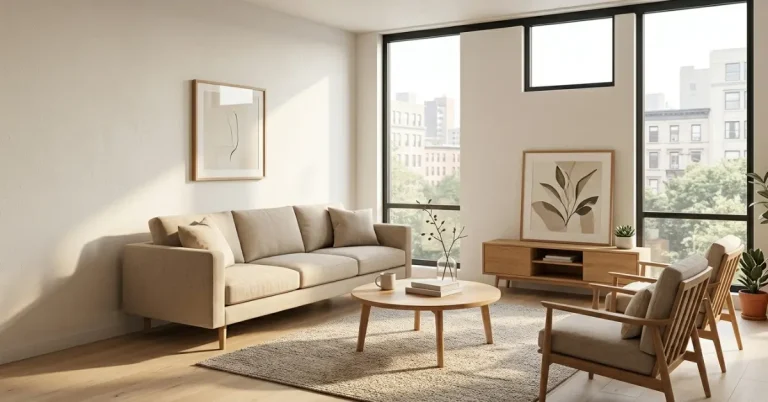
Most sofas are built for average body proportions. A design assumption used in furniture manufacturing to standardize dimensions such as seat height, depth and back support. However, “average” does not fit all users. People with shorter legs often experience poor ergonomic alignment when sitting on standard sofas.
A common issue is feet not resting flat on the floor, which is a key requirement for proper posture. When feet dangle or only partially touch the ground, the body compensates by sliding forward or slouching. This leads to reduced lumbar support (support for the lower back) and uneven weight distribution.
This mismatch is not a minor inconvenience. An improperly sized sofa can cause:
- Poor sitting posture
- Increased pressure on the lower spine
- Muscle fatigue over extended use
- Reduced overall comfort, leading to less frequent use
Over time, a sofa that looks visually appealing may become functionally unusable. This turns a high-cost furniture item into a poor long-term investment.
Choosing the right sofa is a measurable and predictable process. It depends on understanding three key factors:
- Dimensions – Quantitative measurements such as seat height, seat depth, and back height
- Proportions – How those dimensions relate to your body size and leg length
- Design features – Elements like cushion firmness, frame structure, and armrest height
This guide explains how to:
- Evaluate sofa measurements using clear criteria
- Test whether a sofa fits your body correctly
- Select a sofa that supports both ergonomic comfort and room layout
By applying these principles, you can choose a sofa that provides consistent comfort instead of compromise.
Why Standard Sofas Don’t Work for Shorter People

Most standard sofas are designed using average anthropometric data (body measurements used in design), which typically results in deeper seats, higher seat heights, and softer cushions. For people with shorter legs, these design choices reduce support, destabilize posture, and increase discomfort over time.
An ergonomic sofa fit is the alignment between a sofa’s dimensions seat depth, seat height, and cushion support and a user’s body proportions. Proper fit allows feet to rest flat on the floor, maintains spinal alignment, and distributes body weight evenly to support comfort and reduce strain.
Seat Depth: Primary Source of Misalignment
Excessive seat depth prevents shorter users from sitting fully back against the backrest, which disrupts spinal support.
Seat depth (the distance from the front edge of the seat to the backrest) is a critical but often overlooked measurement. Many modern sofas from IKEA, West Elm, and Ashley Furniture feature deeper seats (typically 22–26 inches) to create a lounge-style appearance.
For shorter individuals, this creates a mechanical mismatch:
- Knees cannot bend naturally at the seat edge
- The lower back loses contact with the backrest
- The user must slouch or slide forward to compensate
Why this reduces back support:
- Incomplete contact with the backrest disrupts spinal alignment (the natural curve of the spine)
- The lumbar region lacks consistent support
- Muscle strain increases in the lower back and hips
Comparison of seat depth impact:
| Feature | Standard Sofa | Short-Leg Friendly Sofa |
| Seat Depth | 22–26 inches | 19–21 inches |
| Sitting Position | Reclined or slouched | Upright and supported |
Seat Height: Foot Contact and Stability
If feet cannot rest flat on the floor, the body compensates in ways that reduce stability and increase joint pressure.
Seat height (the distance from the floor to the top of the seat cushion) directly determines foot contact. In Ergonomics, full foot contact is essential for stable posture.
Many sofas have seat heights of 17–19 inches. For shorter users, even a 1–2 inch excess can prevent proper positioning.
Effects of inadequate foot contact:
- Pressure accumulates under the thighs, which can restrict circulation
- The pelvis tilts backward, altering spinal alignment
- Muscles remain engaged to stabilize the body, increasing fatigue
Indicators of proper seat height:
- Feet rest fully flat on the floor
- Knees align at or slightly below hip level
- Body weight is evenly distributed across the seat
Cushion Firmness: Hidden Impact on Fit
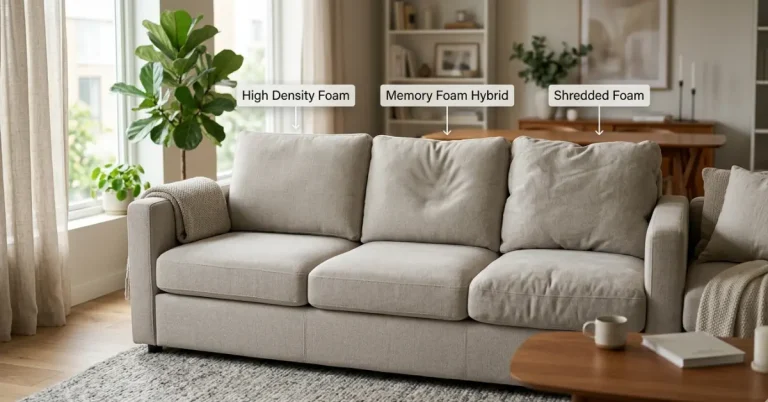
Softer cushions compress under body weight, effectively increasing seat depth and reducing seat height, which worsens posture for shorter users.
Cushion firmness determines how much a seat deforms under load. While soft cushions may feel comfortable initially, they often degrade ergonomic support.
Mechanism of reduced support:
- Compression causes the body to sink deeper into the seat
- Effective seat depth increases beyond its measured value
- Seat height decreases, worsening foot contact
This combination amplifies the issues caused by already deep or high sofas.
Firmness comparison:
| Cushion Type | Effect on Shorter Users |
| Soft | Increases depth and reduces support |
| Medium-Firm | Balances comfort and structure |
| Firm | Maintains posture and stability |
Brands such as La-Z-Boy often provide firmer seating options that maintain structural support and consistent posture.
The Ideal Sofa Dimensions for Short Legs
A sofa that fits shorter legs typically includes a shallower seat depth (19–21 inches), moderate seat height (16–18 inches), a supportive backrest, and correctly positioned armrests. These elements work together to keep feet flat on the floor, maintain spinal alignment, and distribute body weight evenly.
1. Seat Depth: Target Range for Proper Back Contact
Seat depth is the horizontal distance from the front edge of the seat cushion to the backrest. It determines how far a user must sit back to achieve support. A shallower depth allows shorter users to maintain back contact without overextending their legs.
Shorter users typically require a seat depth of 19–21 inches to maintain full back support.
Recommended range:
- 19–21 inches for shorter individuals
- Standard sofas often measure 22–26 inches, which is too deep for proper alignment
Why this range works:
- Enables full contact between the back and backrest
- Keeps knees naturally bent at the seat edge
- Prevents forward scooting and slouching
Some models from Crate & Barrel and Pottery Barn labeled as “apartment-size” or “compact” sofas are more likely to fall within this range.
2. Seat Height: Ensuring Stable Foot Contact
Answer-first: Seat height must allow full foot contact with the floor, which is a core requirement in Ergonomics.
Recommended range:
- 16–18 inches for shorter individuals
Why correct seat height matters:
- Supports even weight distribution
- Reduces pressure under the thighs
- Maintains neutral pelvic position and spinal alignment
Effects of incorrect height:
| Seat Height | Outcome |
| Too High | Feet dangle, increased thigh pressure |
| Ideal | Feet flat, stable and balanced posture |
| Too Low | Knees rise above hips, harder to stand up |
Even small differences (1–2 inches) can significantly affect comfort and posture.
3. Back Height and Lumbar Support
A proper backrest must support the natural curve of the spine, especially the lower back (lumbar region), to maintain comfort over time.
Lumbar support is the structural reinforcement of the lower spine. It preserves the natural inward curve of the lumbar region, reduces muscular strain, and supports healthy posture during seated activities.
Key features to evaluate:
- Support for both lower and mid-back regions
- Slightly upright backrest angle (not excessively reclined)
- Integrated or adjustable lumbar cushioning
Design principles used by Herman Miller demonstrate how consistent lumbar support improves long-duration seating comfort.
4. Armrest Height and Position: Upper Body Alignment
Answer-first: Armrests should align with elbow height to support the arms without elevating the shoulders or forcing lateral leaning.
Why armrest positioning matters:
- Maintains relaxed shoulder posture
- Reduces tension in the neck and upper back
- Contributes to overall sitting balance
What to look for:
- Armrests level with or slightly below elbow height when seated
- Moderate padding that resists excessive compression
- Sufficient width for comfortable positioning without restriction
How to Measure Yourself for the Perfect Sofa Fit
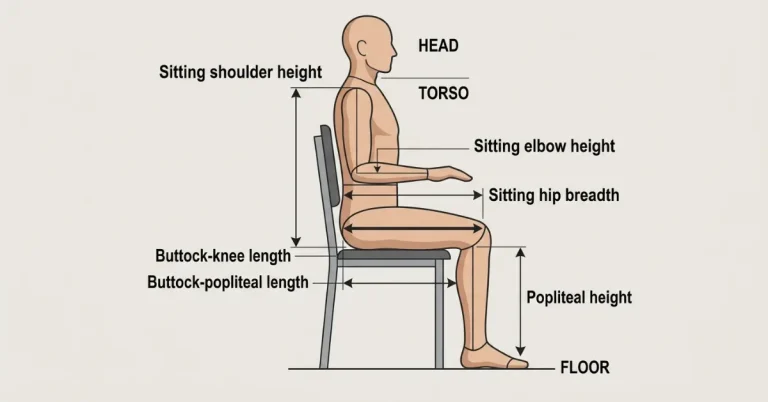
The most reliable way to choose the right sofa is to measure your body first, then compare those numbers to sofa dimensions. This removes guesswork and ensures the seat depth, height, and support align with your proportions not just general sizing.
Body-to-furniture matching is the process of comparing personal body measurements such as leg length and knee height-to furniture dimensions like seat depth and height. This approach, grounded in Ergonomics helps ensure comfort, posture support and long-term usability.
1. Measuring Leg Length (Seat Depth Fit)
This measurement determines whether a sofa’s seat depth will support your back without forcing you to slouch.
What you need:
- A measuring tape (brands like Stanley Tools or Komelon are commonly used)
- A flat chair or wall
Steps:
- Sit upright against a wall or firm surface
- Keep your back fully straight
- Measure from the back of your hips to the back of your knees
Your ideal seat depth:
- Subtract 1–2 inches from this measurement
- This allows space between the seat edge and your knees
Example:
- Your measurement: 22 inches
- Ideal sofa seat depth: 20–21 inches
Why this works:
- Prevents pressure behind the knees
- Keeps your lower back in contact with the backrest
- Supports natural sitting posture
2. Measuring Knee-to-Floor Height
This measurement helps determine the correct seat height so your feet rest flat on the floor.
Steps:
- Sit on a flat surface with your knees at a 90-degree angle
- Measure from the bottom of your foot to the top of your knee
Your ideal seat height:
- Equal to or slightly less than this measurement
- Typically falls between 16–18 inches for shorter individuals
Key principle:
- Feet should be fully flat on the ground
- Knees should not be significantly higher or lower than hips
Why this matters:
- Promotes balance and stability
- Reduces strain on thighs and lower back
- Aligns with ergonomic seating standards
3. Matching Your Measurements to Sofa Specs
Once you have your measurements, the next step is to compare them with product specifications—this is where many buyers make mistakes.
Answer-first: Always prioritize actual dimensions listed in product specs, not visual appearance or labels like “compact” or “deep seat.”
Where to find sofa dimensions:
- Product pages from brands like Wayfair, Article, and CB2
- Specification sheets (often labeled “dimensions” or “details”)
What to compare:
| Your Measurement | Sofa Specification | Goal |
| Hip-to-knee length | Seat depth | Slightly shorter than your measurement |
| Knee-to-floor height | Seat height | Equal or slightly lower |
| Back height preference | Backrest height | Supports lower and mid-back |
Pro tip:
If you’re shopping online, look for:
- “Seat depth” (not overall depth)
- “Seat height” (not total height)
- Cushion type (firm vs soft)
Best Types of Sofas for Shorter People
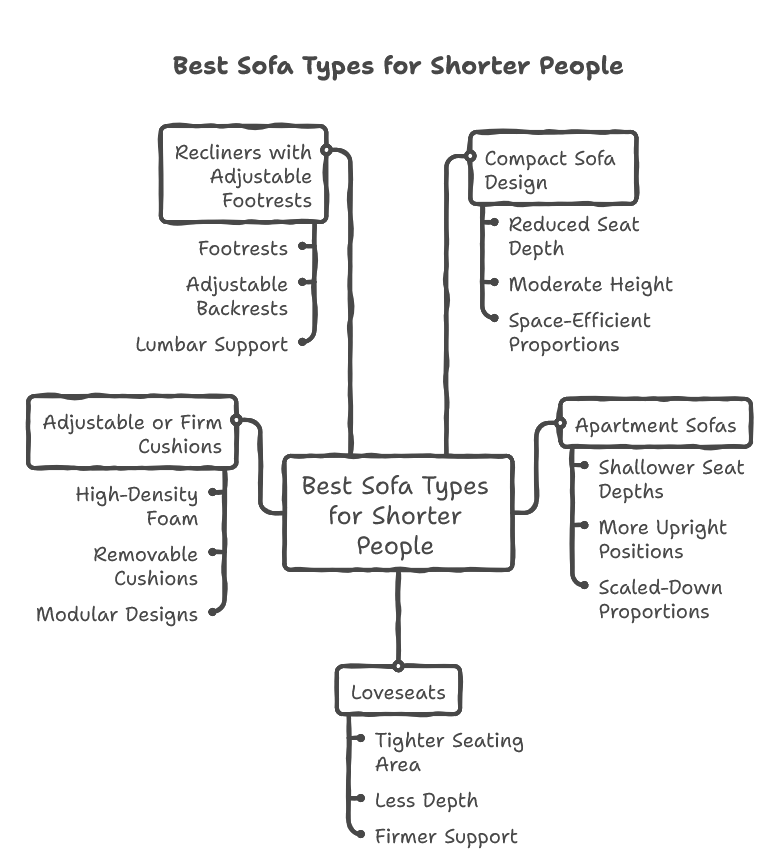
The best sofas for shorter people are those designed with compact proportions, supportive cushions, and adaptable features. Styles like apartment sofas, loveseats, and adjustable recliners naturally align better with shorter leg lengths because they prioritize fit over oversized lounging.
Compact sofa design refers to furniture built with reduced seat depth, moderate height, and space-efficient proportions. These sofas are often intended for smaller rooms but also suit individuals with shorter legs by providing better ergonomic alignment and improved seating comfort.
1. Apartment Sofas and Compact Designs
Apartment sofas are one of the most reliable options because they’re intentionally designed with smaller dimensions.
Why they work:
- Shallower seat depths (often closer to 19–21 inches)
- More upright նստ positions for better back support
- Scaled-down proportions that suit smaller body frames
Brands like IKEA, Article, and CB2 frequently offer compact models labeled as “apartment sofas” or “small-space seating.”
Best for:
- Everyday use
- Small living rooms or apartments
- People who prefer structured, supportive seating
2. Loveseats
Loveseats are naturally shorter in width, but they also tend to have more manageable seat depths compared to full-size sofas.
Why they work:
- Tighter seating area encourages proper posture
- Less depth compared to oversized couches
- Easier to find models with firmer support
When to choose a loveseat:
- If you live alone or with one other person
- If your space is limited
- If you prioritize fit over maximum seating capacity
Retailers like Ashley Furniture and Wayfair offer a wide range of loveseats with varied seat depths and cushion firmness levels.
3. Sofas with Adjustable or Firm Cushions
Cushion structure directly affects how a sofa feels once you sit down.
Sofas with firm or adjustable cushions help maintain proper posture by preventing excessive sinking, which can otherwise increase seat depth and reduce support.
Key features to look for:
- High-density foam cushions (firmer support)
- Removable or reversible cushions
- Modular designs that allow repositioning
Why this matters:
- Keeps your body elevated and aligned
- Prevents the “sliding forward” effect
- Maintains consistent seat height over time
Brands like La-Z-Boy and Crate & Barrel often provide options with structured cushioning that better supports shorter users.
4. Recliners with Adjustable Footrests
Recliners can be an excellent solution when standard sofas don’t provide enough leg support.
Recliners with adjustable footrests allow you to customize your seating position, ensuring your legs are supported regardless of seat depth or height.
Why they work:
- Footrests eliminate the issue of dangling feet
- Adjustable backrests improve spinal alignment
- Suitable for extended sitting and relaxation
What to look for:
- Smooth reclining mechanism
- Adjustable footrest length
- Adequate lumbar support
Well-known brands like La-Z-Boy and Flexsteel specialize in recliners designed with ergonomic comfort in mind.
Features to Look For (and Avoid)
The difference between a comfortable sofa and a frustrating one often comes down to a few key features. For shorter people, the goal is simple: supportive structure, balanced proportions, and minimal sinking. Knowing what to prioritize and what to avoid helps you filter options quickly.
Seating ergonomics is the science of designing furniture that supports the body’s natural posture and movement. It focuses on elements like seat depth, height, cushion firmness, and back support to reduce strain and improve comfort, especially during extended periods of sitting.
Features to Look For
These features align directly with proper fit and long-term comfort.
Shallow Seats
- Ideal seat depth: 19–21 inches
- Keeps your back in contact with the backrest
- Prevents slouching or sliding forward
Compact models from brands like Article and CB2 often fall within this range.
Firm Cushions
- High-density foam provides better support
- Maintains seat height and shape over time
- Prevents excessive sinking
Brands such as La-Z-Boy and Crate & Barrel frequently offer firmer seating options designed for durability and posture support.
Upright Backrests
- Encourages a natural seated position
- Supports the lower and mid-back
- Reduces strain on the spine
Look for designs that avoid overly reclined or “lounging” angles, which can compromise posture.
Adjustable Elements
- Reclining backrests or movable cushions
- Adjustable headrests or footrests
- Modular seating configurations
These features allow you to fine-tune the sofa to your body, rather than adapting to a fixed design. Recliners from Flexsteel are a good example of adjustable comfort.
Features to Avoid
Just as important as knowing what to look for is recognizing what tends to cause problems.
Deep, Low-Profile Sofas
- Seat depths often exceed 22–24 inches
- Designed for lounging, not structured support
- Makes it difficult to sit upright comfortably
These are common in modern, minimalist designs but often sacrifice ergonomics for aesthetics.
Overly Soft Cushions
- Cause the body to sink too deeply
- Increase effective seat depth
- Reduce back and hip support
While soft cushions may feel comfortable initially, they often lead to discomfort over time—especially for shorter users.
Low Seat Height Designs
- Makes standing up more difficult
- Can force knees above hip level
- Reduces overall sitting stability
Some trendy sofas prioritize a low-profile look, but this often conflicts with proper ergonomic alignment.
How to Test a Sofa Before Buying
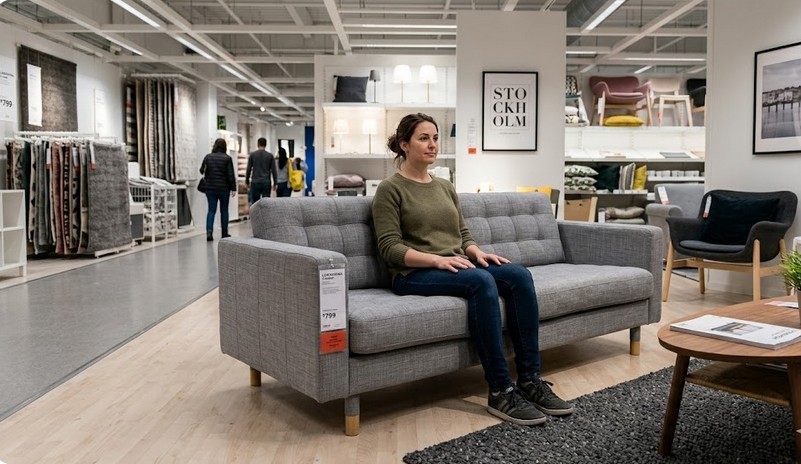
The most reliable way to avoid buying the wrong sofa is to test how your body interacts with it in real time or carefully evaluate its specifications online. Comfort is not just visual. It’s physical and small differences in dimensions can significantly affect fit for shorter legs.
Sofa fit testing is the process of evaluating whether a sofa’s dimensions, cushion structure, and support align with your body proportions. It includes both in-person sitting trials and online dimension analysis to ensure proper posture, comfort, and long-term usability.
In-Store Testing Checklist
When visiting a showroom, take a few minutes to evaluate the sofa as if you’ll use it daily. Brands like IKEA, West Elm, and Ashley Furniture often have floor models specifically for testing comfort and fit.
Feet flat?
- Sit all the way back on the sofa
- Check if your feet rest fully on the floor
- Knees should form a natural, relaxed angle
If your feet dangle or your knees feel elevated, the seat height is not suitable for your proportions.
Lower back supported?
- Your lower back should naturally touch the backrest
- No gap between your spine and the cushion
- You should not need to “force” yourself into position
This reflects proper lumbar alignment, a key principle in Ergonomics.
Comfortable after 10–15 minutes?
- Stay seated for at least 10–15 minutes
- Notice pressure points in hips, thighs, or lower back
- Check if cushions maintain support or compress too much
Short sits can be misleading longer testing reveals how the sofa behaves under real use.
Online Buying Tips
When shopping online you don’t have the advantage of physically testing the sofa. So dimensional accuracy becomes critical.
Reading dimensions properly
- Focus on seat depth and seat height, not just overall sofa size
- Compare your body measurements to listed specs
- Watch for terms like “deep seat” or “low profile,” which may signal poor fit for shorter legs
Retailers such as Wayfair, Article, and CB2 provide detailed product breakdowns that include essential ergonomic measurements.
Checking return policies
- Ensure there is a clear return or exchange window
- Look for options that allow home testing (if available)
- Check if return shipping costs are covered
This step reduces risk when buying without in-person testing. Some brands like Crate & Barrel offer more flexible return policies, which can be helpful when fine-tuning comfort at home.
How to Fix a Sofa That’s Too Deep
If you already own a sofa that feels too deep, you don’t necessarily need to replace it. You can correct the seating posture using cushions, lumbar support and foot positioning tools to reduce strain and improve alignment especially for shorter legs.
Seat depth correction refers to adjusting how a person sits on a sofa when the original seat depth is too large for their body proportions. This is achieved using supportive accessories such as cushions, lumbar pillows, or footrests to restore ergonomic alignment and comfort.
1. Using Cushions for Support
One of the simplest fixes is to modify how your body sits within the available space.
Seat cushions can reduce effective seat depth by bringing your body forward, allowing your back to stay properly supported.
How to do it:
- Place a firm cushion behind your lower back
- Use a seat pad to slightly elevate your sitting position
- Avoid overly soft cushions that compress too much
Brands like Tempur-Pedic and Purple offer high-density foam and adaptive materials that can improve seating support even outside of beds.
Why it works:
- Reduces the gap between your back and the sofa
- Improves posture without changing furniture
- Helps maintain a more upright position
2. Adding Lumbar Pillows
Lumbar pillows are specifically designed to support the natural curve of the lower spine, making them one of the most effective ergonomic adjustments.
A properly placed lumbar pillow can instantly improve posture by filling the space between your lower back and the sofa backrest.
How to use them:
- Position the pillow at the small of your back
- Adjust thickness until your spine feels naturally supported
- Combine with a seat cushion for better alignment
Benefits:
- Reduces slouching caused by deep seats
- Supports spinal curvature
- Improves long-term sitting comfort
Products from Herman Miller often highlight the importance of lumbar support in ergonomic seating, even though they are best known for office chairs.
3. Footrests and Ottomans
When seat depth is too large, your feet often lose proper grounding. Adding external support restores balance.
Footrests and ottomans help recreate proper leg positioning by ensuring your feet are supported, even when the sofa seat is too deep.
Options to consider:
- Ottomans that match sofa height
- Adjustable footrests with incline options
- Small stools placed at a comfortable distance
Brands like IKEA and CB2 offer versatile ottomans that can double as both storage and ergonomic support.
Why this matters:
- Prevents feet from dangling or sliding forward
- Reduces pressure under the thighs
- Improves overall stability while sitting
Common Mistakes Shorter People Make When Buying Sofas
Most sofa comfort issues don’t come from the furniture itself, but from a mismatch between body proportions and buying decisions. Shorter individuals often prioritize appearance or assumptions over measurements, which leads to long-term discomfort and avoidable replacements.
Sofa fit mistakes refer to common errors made when selecting seating furniture without considering body proportions, ergonomic alignment, or dimension accuracy. These mistakes often result in poor posture, reduced comfort, and inefficient use of living space.
1. Choosing Style Over Fit
One of the most frequent mistakes is selecting a sofa based on visual appeal rather than physical compatibility.
A sofa may look perfect in a showroom or online listing, but if the proportions don’t match your body, it will not feel comfortable in daily use.
Why this happens:
- Trend-driven designs prioritize aesthetics (low-profile, deep seating)
- Oversized “lounge” styles appear more modern
- Brands like West Elm and CB2 often showcase stylized setups that don’t reflect individual fit needs
Impact:
- Poor posture despite attractive design
- Reduced usability of the sofa over time
- Regret after purchase due to discomfort
2. Ignoring Seat Depth
Seat depth is one of the most important but frequently overlooked measurements.
Answer-first: Ignoring seat depth leads to sofas that are too deep for shorter legs, causing slouching and loss of back support.
Common issue:
- Many sofas exceed 22–26 inches in depth
- Shorter users require closer to 19–21 inches for proper alignment
Why it matters:
- Deep seats force you to sit forward
- Backrest becomes unusable
- Posture gradually collapses over time
This is a core concept in Ergonomics, where proportional fit is essential for comfort and health.
3. Not Testing Posture
Many buyers focus only on how a sofa feels for a few seconds instead of evaluating how it supports the body over time.
If you don’t test how your body sits in a sofa for an extended period, you may miss posture issues that only appear after sustained use.
What people often skip:
- Sitting for at least 10–15 minutes
- Checking lower back contact with the backrest
- Observing foot placement and knee angle
Better approach:
- Test posture deliberately, not casually
- Ensure feet are flat and spine feels supported
- Adjust position as if you were using it daily
Brands like IKEA often provide showroom models specifically for this type of evaluation, but the user still needs to actively test posture.
4. Assuming “One Size Fits All”
A common misconception is that sofas are universally comfortable regardless of body type.
Sofas are not one-size-fits-all products; they are built around general averages that may not suit shorter individuals.
Why this assumption fails:
- Human body proportions vary widely
- Standard furniture often targets “average” dimensions
- Cushion softness and seat height alter real usability
Reality check:
- A sofa comfortable for one person may be unsuitable for another
- Even small differences in height or leg length change comfort significantly
Brands such as La-Z-Boy offer multiple configurations, which highlights how seating comfort depends on customization rather than universal sizing.
Final Thoughts:
The most important takeaway is simple: a comfortable sofa is not defined by its size or style, but by how well it matches your body. When seat depth, height, and support align with your proportions, comfort becomes natural not something you have to adjust to.
Throughout this guide, the focus has been on moving away from assumptions and toward measurable fit. This is the core idea behind Ergonomics designing and choosing furniture based on how the human body functions, not just how it looks in a room.
Frequently Asked Questions
What seat depth is best for short people?
The ideal seat depth for shorter individuals is typically 19–21 inches.
This range allows your back to stay in contact with the backrest without forcing you to lean forward or slouch. It also helps keep your knees naturally bent and reduces pressure behind the thighs. In Ergonomics, this alignment is considered essential for maintaining comfortable posture during prolonged sitting.
Many compact seating options from brands like Article and CB2 fall closer to this range, especially in apartment-sized collections.
How do I know if a sofa is too deep?
A sofa is too deep if you cannot sit fully back while keeping your feet flat on the floor.
Key signs:
- You have to slide forward to sit comfortably
- Your lower back does not touch the backrest
- Your knees extend too far forward or feel unsupported
If any of these occur, the effective seat depth is too large for your body proportions. This is especially common with modern “lounge-style” sofas from brands like West Elm, which often prioritize relaxed aesthetics over ergonomic fit.
Are low sofas bad for short legs?
Low sofas are not inherently bad, but they can create problems if seat height and body proportions are not aligned.
A low seat height (often under 16 inches) can:
- Make it harder to stand up comfortably
- Force knees above hip level
- Reduce overall stability while sitting
However, in some cases, low-profile designs from brands like IKEA can still work well if paired with shallow seat depth and firmer cushions. The key factor is overall proportion, not height alone.
Can I make a deep sofa more comfortable?
Yes, you can improve comfort on a deep sofa using simple ergonomic adjustments.
Effective solutions include:
- Adding a firm cushion behind your lower back
- Using a lumbar pillow to support spinal curvature
- Placing an ottoman or footrest to support your legs
These adjustments help restore alignment by reducing effective seat depth and improving posture. Products from brands like La-Z-Boy often emphasize built-in lumbar support, which highlights how important this feature is for long-term comfort.
While these fixes improve usability, they do not fully replace proper sofa proportions. So they are best viewed as practical adjustments rather than permanent solutions.