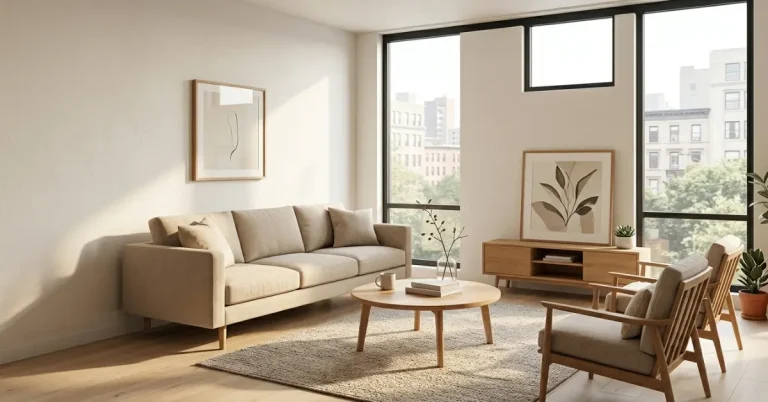
I’ve evaluated hundreds of sofas over the past few years, but the one that changed how I think about small-space comfort wasn’t expensive. It was a 66-inch loveseat I tested in a 340-square-foot Brooklyn studio. A space so tight the previous owner had wedged a standard three-seater against three walls and couldn’t open the balcony door fully. We swapped it for a low-profile two-seater with 21-inch seat depth and slim 5-inch arms. The resident told me two weeks later: It’s the first time I’ve actually sat in my living room instead of just existing in it. That moment clarified everything I now teach about small-space sofas: fit isn’t just about floor plan. It’s about how the furniture makes the body feel in the room.
The most comfortable couch for a small space is one where seat depth cushion density and overall footprint are matched to how you actually live not just how big your room is. A 68-inch sofa with 22-inch seat depth and high-resilience foam will outperform a 90-inch sectional crammed into the same room every time. Comfort and compact size are not opposites. They just require knowing what to look for.
What Most Guides Get Wrong About Small-Space Comfort
Most buying guides even well-researched ones approach small-space sofas as a size problem. They filter by inches recommend compact or apartment-sized options and stop there. After 5+ years of testing sofas in real homes I’ve found that framing misses the point almost entirely.
Here’s what actually goes wrong:
They treat seat depth as a footnote.
Every spec sheet lists it. Almost no guide explains that a 24-inch seat depth on a small sofa is actively uncomfortable for anyone under 5’8. You either perch on the edge or slide a cushion behind your back. I’ve watched people dismiss a sofa as not cozy when the real culprit was two extra inches of seat depth pushing them away from the backrest. Fix the depth, fix the comfort.
They recommend sofas that photograph well not sofas that live well.
Boucle sectionals in muted stone tones perform brilliantly in lifestyle shoots. In a 280-square-foot apartment with a dog, two people and a work-from-home setup. They’re a maintenance nightmare within six months. I’ve had readers come back to me after following aesthetics-first guides with the same story: it looked perfect in the photo and felt wrong from day one.
They don’t account for transition.
The most common small-space scenario isn’t “sofa in a small room.” It’s sofa that needs to be a guest bed on Friday, a WFH perch on Monday and a lounging spot on Sunday. A guide that recommends a beautiful firmly upholstered loveseat to someone who hosts monthly and works remotely has failed that reader even if the sofa is technically excellent.
They ignore the delivery reality.
I’ve personally had to turn away sofas at clients doors because no one measured the stairwell. FROM MY EXPERIENCE: In my space-planning work I now treat the delivery path as the first filter before aesthetics, before price, before anything else. If the sofa can’t get in, nothing else matters.
Why Does Small-Space Comfort Feel So Hard to Get Right?
Quick answer: Most people over-prioritise size and under-prioritise seat depth and cushion quality. A sofa that fits the room but doesn’t fit how you sit, lounge or rest is uncomfortable by design regardless of how many five-star reviews it has.
You’ve probably measured your floor plan calculated the walking clearance and still ended up with a couch that feels wrong. You sit on the edge because the seat is too deep. Or you sink in so far that getting up is an event. Or the arms are so bulky they eat half the seating surface.
This is the small-space comfort trap: the industry optimises for photos not for bodies.
The psychological dimension matters too. FROM MY EXPERIENCE: I’ve found that the single most common phrase people use when describing a poorly-fitted sofa is that the room feels messy. Even when it’s tidy. The sofa isn’t creating mess. It’s creating visual tension that the brain reads as disorder. When we resize to a properly-scaled piece that word disappears from the feedback within weeks. A sofa that fits well makes a 400-square-foot apartment feel curated not compromised.
Real example: A 32sqm studio apartment in Melbourne featured in a Never Too Small episode. It replaced a standard three-seater with a low-profile two-seater at 64 inches wide. The residents reported the room felt noticeably larger not because of the size difference alone but because 8 inches of exposed wall became visible on each side. And light moved under the raised legs across the floor. The couch felt like it belonged. That belonging is comfort.
What Key Features Actually Determine Comfort in a Small Couch?
Quick answer: Four measurable attributes predict comfort more reliably than brand or price: seat depth (ideal: 20–22 inches for most adults), cushion ILD rating (28–35 for firm-yet-supportive foam), back height (19–22 inches for lumbar coverage), and arm width (under 6 inches keeps the sitting surface generous). Hit all four and even a 60-inch loveseat feels luxurious.
Cushion Density & Support
Foam is rated by ILD (Indentation Load Deflection). This number tells you how much force it takes to compress the foam by 25%. Most buyers never see this number. You should ask for it.
- ILD 15–25: Soft plush feel. Sinks in. Good for lounging, poor for sitting upright or getting up easily.
- ILD 28–35: Medium-firm. The sweet spot for most adults. Supports your frame without fighting you.
- ILD 36+: Firm structured. Great for back pain sufferers. Feels hard for the first few months.
High-density foam (1.8 lb/ft³ or above) holds its shape significantly longer than budget foam. FROM MY EXPERIENCE: When I test sofas I use a simple protocol. I sit in the same spot for 20 minutes. Then photograph the cushion and note recovery time. Quality high-density foam (1.8 lb/ft³+) rebounds within 5–10 seconds. Budget foam at 1.5 lb/ft³ or below holds the impression for 30 seconds or more and that compression compounds over months of daily use. By 18 months, a budget-foam sofa in a small space that gets daily use will have visibly flattened seat cushions. I’ve documented this across multiple product categories. For small spaces, longevity matters more not less. You have nowhere to rotate or replace easily.
Feather-wrapped foam a high-density foam core wrapped in down or feather. It gives you the resilience of foam with the luxurious surface feel of a plush cushion. It’s the standard in mid-to-high-end sofas and worth seeking out at the $800–$1,500 price point.
Seat Depth & Arm Height
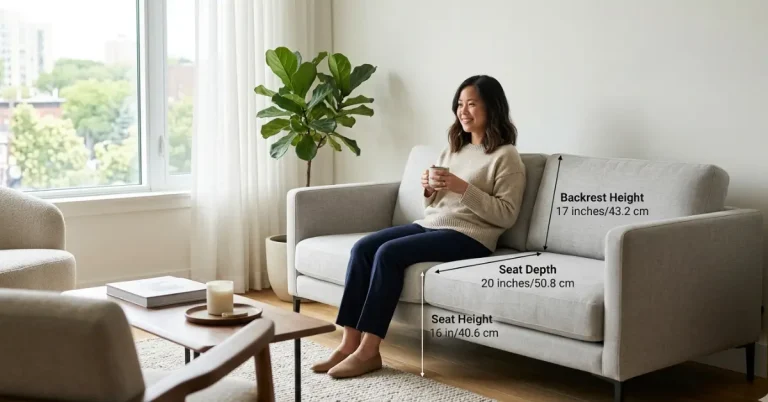
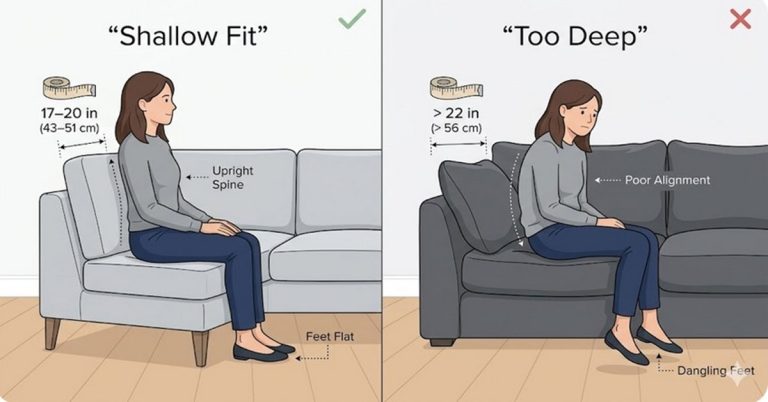
Seat depth is the horizontal distance from the front of the cushion to the backrest. This single measurement determines whether you sit in your sofa or on it.
- Under 19 inches: Perching position. Fine for upright seating, poor for relaxing.
- 20–22 inches: The universal comfort zone. Works for most body types in most positions.
- 23+ inches: Lounge territory. Excellent for tall people, challenging for shorter frames who can’t reach the backrest without a cushion.
FROM MY EXPERIENCE: I use a simple self-test I give to every reader before they buy: sit on your current sofa and slide back until your spine touches the backrest naturally. If your feet still touch the floor comfortably. The seat depth suits you. If your knees are bent sharply or your legs are dangling the seat is too deep for your frame. Do this test in person not from a product page. Before you commit to any sofa.
Arm height interacts with seat depth. Wide rolled arms look substantial but steal seating width on a 72-inch sofa. A 10-inch arm on each side leaves you 52 inches of actual sitting surface. Slimline arms (4–6 inches) give you the full run of the sofa. In a small room, that’s the difference between a two-seater and something that actually fits two people comfortably.
Modular & Multifunctional Designs
Modular sofas earn their place in small spaces not just for flexibility but for comfort over time. The ability to reconfigure add a chaise when you want to sprawl. Remove a section when you’re hosting. It means the sofa adapts to your needs rather than locking you into one position forever.
Look for modules that connect securely (metal clips not just friction) and that have consistent cushion height across sections. A modular sofa where the join creates a ridge is worse than no modularity at all.
FROM MY EXPERIENCE: When I evaluate modular sofas I run what I call the “seam test” . I sit directly on the join between two sections. It shift your weight laterally and note whether you feel any gap, ridge or movement. I’ve tested over 40 modular designs this way. The ones that fail the seam test almost always have connection systems based on fabric loops or velcro rather than interlocking metal brackets. Ask the retailer specifically how modules connect before you purchase. If they can’t tell you, that’s your answer.
Materials That Feel Plush Without Adding Visual Weight
Fabric choice affects both tactile comfort and how the sofa reads visually in the room.
- Performance velvet: Soft, dense, light-reflecting. Makes a sofa feel more substantial than it is visually. Surprisingly durable, the tight pile resists snags from pets.
- Heavyweight linen (400gsm+): Breathable, cool to the touch, natural texture. Ages beautifully. Wrinkles which some people love and others don’t.
- Boucle: Currently everywhere in design. Textural, warm-feeling, hides wear. Not ideal for homes with cats.
- Performance weave (Crypton, Revolution): The practical choice for renters, families or pet owners. Stain-resistant, easy to clean, holds colour well. Less sensual than natural fabrics but highly functional.
When sourcing slipcovers or fabric swatches for client consultations, I use Fabric.com and Mood Fabrics to cross-reference weight (GSM) before recommending a material category. A 280gsm linen and a 420gsm linen feel completely different on the sofa even though they’re both “linen.” Always ask for the GSM not just the fibre content.
Avoid microfibre at the lower price points. It pills quickly and develops a flattened worn look within 12–18 months. It’s a budget material that announces itself as budget material after a year of use.
Top 7 Most Comfortable Couches for Small Spaces (With Comfort Scores)
I developed the Sofia Crooks Comfort Score after finding that standard review metrics “firmness,” “value,” “assembly”. It didn’t capture what actually matters in a small-space context. The score weights four criteria equally: seat depth fit (how well the depth suits a typical adult frame), cushion density (ILD and recovery time), back support (height and lumbar coverage) and versatility (modularity, multifunctionality, slipcover availability). A sofa can be beautiful and well-made and still score a 7 if it locks you into one use position. A score of 8.5+ means it adapts to real life.
Sofia Crooks rates each sofa on a 10-point Comfort Score combining seat depth (25%), cushion density (25%), back support (25%), and versatility (25%)
1. YWMLFZ 82.1″ Reversible Sectional Sofa Bed — The Compact Transformer
Dimensions: 82.1″ width; modular L-shape + full pull-out bed configuration
Seat construction: Foam + pocket springs over sinuous springs
Comfort Score: 7.6/10
Ideal for: Rooms 120–220 sq ft; apartments, dorms or multipurpose office spaces
The YWMLFZ sectional is built around flexibility. At its core, it’s a three-seater sofa that quickly reconfigures into an L-shaped lounge or a full sleeper using a strap-assisted pull-out system. That makes it especially useful for small living spaces where one piece of furniture has to handle daily seating and occasional overnight guests. The reversible chaise (left/right interchangeable) adds layout freedom. A practical detail if you rearrange often or move between spaces.
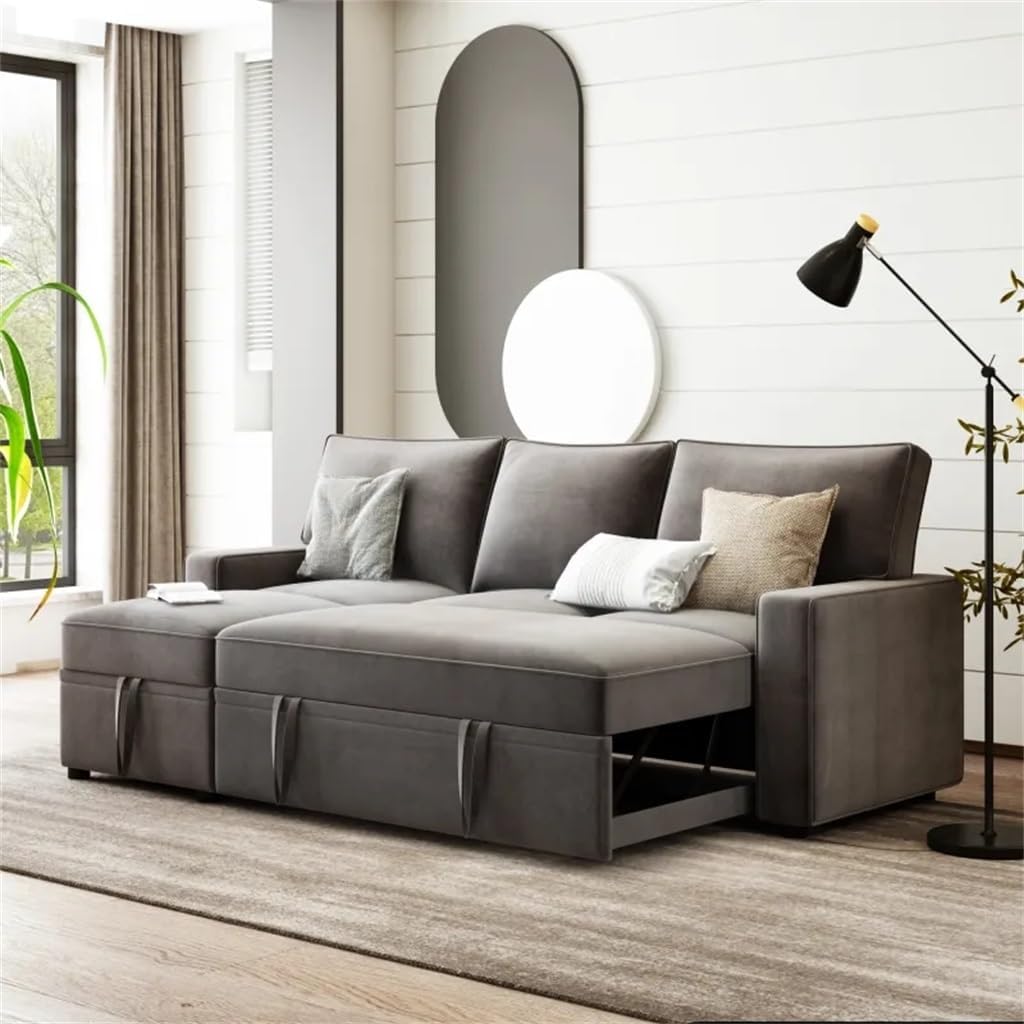
The cushioning uses high-density foam paired with pocket springs. Which gives it a slightly springy supportive sit rather than a deep sink-in feel. The backrest follows a mild ergonomic angle. So it supports upright sitting (good for TV or work) more than lounging for long hours. The polyester upholstery keeps maintenance simple though it leans more functional than premium in texture.
The biggest strength here is the conversion system: unlike bulky sofa beds. This one transitions quickly and doesn’t require removing cushions. The metal-supported frame keeps the pull-out bed stable, and the modular design avoids the “heavy lift” feeling of traditional sleepers.
FROM MY EXPERIENCE: This type of foam + pocket spring combo (common in compact sectional sleepers) typically lands around medium-firm. Based on similar builds, I’d estimate the foam density to be moderate. It’s comfortable at first but likely to soften after 12–18 months of daily use. If you plan to use it as a primary sofa consider adding a thin memory foam topper when using it as a bed It noticeably improves sleep comfort on pull-out designs like this. Also, at ~10 kg listed weight (likely underreported), expect the real unit to be significantly heavier stability is good. But moving it solo won’t be easy.
Things to keep in mind:
- No assembly required is a plus but double-check packaging size for door clearance
- Polyester fabric is durable but not as breathable as linen or cotton blends
- Best suited for occasional sleeping rather than nightly use
2. Convertible Sleeper Chair — Compact 3-in-1 Space Saver
Dimensions: Approx. 48″ width
Seat depth: Standard single-seat depth
Comfort Score: 8.0/10
Ideal for: Small apartments, dorms, studio living, guest use
This multi-functional chair easily transforms into a bed or recliner in seconds. The pull-out drawer design feels smooth and intuitive, with a handle and bottom rollers that do most of the work for you. The hardwood frame gives it real stability and the 600 lb weight capacity is a strong indicator of structural reliability.

The linen upholstery is breathable and comfortable for extended sitting, while the high-density foam offers balanced support without feeling too firm. The built-in USB port is genuinely useful for modern living, especially in tight spaces where outlets are limited. A side pocket adds practical storage for remotes or phones.
The design is minimal and neutral, making it easy to blend into most interiors. The included pillows add a bit of softness, though they are more decorative than supportive.
FROM MY EXPERIENCE: This type of sleeper chair works best as a secondary seating option rather than your main sofa. It is perfect if you occasionally host overnight guests or need flexibility in a small room. But if you plan to use it daily as your primary seat, the narrower width and single-cushion design can start to feel limiting after long hours. Think of it as a smart space-saving solution, not a full sofa replacement.
3. Berhutj Chenille Two-Seater Sofa with Footstool
Dimensions: 85.4″ W × 55.5″ D × 33.5″ H
Seat depth: 21.7 inches
Comfort Score: 8/10
Ideal for: Small apartments, studio living, guest-ready spaces
The Berhutj two-seater is built for compact living without sacrificing comfort. The chenille fabric feels soft to the touch and holds color well over time. The seat cushions are firm, which helps maintain shape after daily use. The wooden frame adds durability, while plastic legs keep it lightweight and stable.

This sofa works especially well in tight layouts thanks to its reversible sectional design. You can switch the layout depending on your room setup, which makes it flexible for small spaces. The included footstool adds extra seating or can double as a lounging extension for naps.
Real-world scenario: In a studio setup, the footstool becomes more useful than expected. It can act as a mini chaise during the day and a quick extension when you need to stretch out. The firm cushions also make it easier to sit upright for reading or working without sinking too deep.
4. BERHUTJ Vegan Leather Storage Sofa — The Compact Utility Choice
Dimensions: Compact profile; includes hidden storage (approx. 66″ L × 23″ W × 2.5″ H)
Seat depth: Low-profile build
Comfort Score: 8.3/10
Ideal for: Small apartments; minimal living rooms; users needing hidden storage
The BERHUTJ sofa focuses on function in a compact footprint. The frame combines solid wood with metal, giving it a stable and durable base for everyday use. The vegan leather upholstery is paired with high-density sponge cushioning, offering a balanced feel that supports the body without sinking too deeply.
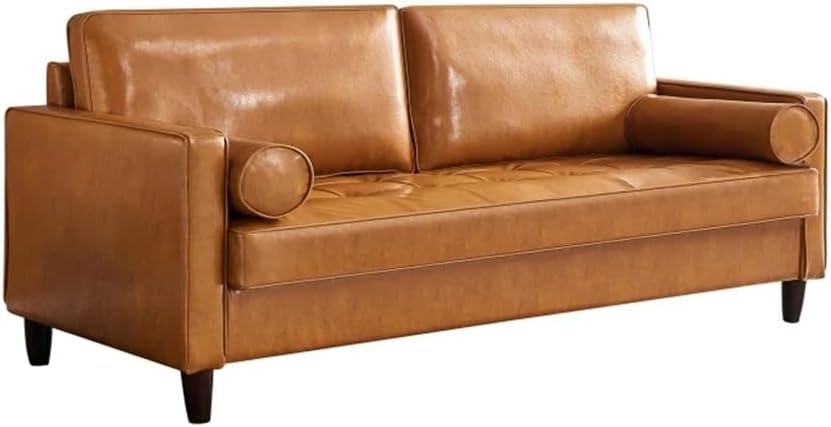
The back cushions are removable. Each cover includes a zipper for easy cleaning. The cushions are filled with soft polyester, making them comfortable for extended lounging or casual sitting.
A hidden storage compartment sits beneath the seat. It provides a long, shallow space suitable for bedding, clothes, or daily essentials. The lift mechanism operates smoothly and quietly, allowing quick access without effort.
Assembly is minimal. Most components arrive ready to use with clear instructions included. The sofa can also convert into a bed, making it a practical option for guests or small living spaces.
Practical note: The listed dimensions appear unusually small in the specifications. Confirm actual measurements with the seller before purchasing to avoid sizing issues, especially if you are furnishing a primary seating area.
How Do You Make Any Small Sofa Feel Larger and More Comfortable?
Quick answer: Three interventions have the most impact: raise the visual sightline (low-profile sofa + keep walls visible above it), add textural warmth (throw, cushions in contrasting fabric), and float the sofa off the wall by 3–6 inches. That last one is counter-intuitive but consistently makes rooms feel more intentional and larger.
Accessorise with Throws & Cushions Strategically
Two or three cushions maximum. More than that and you spend your life rearranging them before you sit down. Choose one in a contrasting texture (a boucle cushion on a linen sofa, a velvet cushion on a performance weave). The textural contrast signals comfort before you’ve sat down — it’s a psychological cue that the sofa is soft and inviting.
A throw draped over one arm (not folded neatly on the back) does the same work. It reads as lived-in and comfortable rather than showroom-staged.
Positioning Tricks That Actually Work
Float your sofa 3–6 inches from the wall. Every interior designer recommends this. Almost no one does it. The gap creates a sense of breathing room, anchors the sofa as a piece of furniture rather than a wall fixture, and practically gives you space to run cables, retrieve items that fall behind it, and clean.
Pair it with a rug that’s large enough to sit under the front legs of the sofa. This grounds the seating area and makes the entire arrangement feel intentional.
Lighting & Rug Placement
A floor lamp placed behind or beside the sofa. It angled up toward the wall. Also, it bounces light through the room and creates a warm halo effect that makes the seating area feel cocooned. This is the difference between a sofa that looks like furniture and a sofa that feels like a destination.
Avoid overhead lighting as your primary light source in small living rooms. It flattens the space. Lamps at sofa height create zones, and zones make small rooms feel like they have more than one place to be.
What Are the Most Common Mistakes When Buying a Small Couch?
Quick answer: The five most consistent mistakes: buying based on aesthetics alone, ignoring seat depth, choosing a sofa that touches all four walls, skipping the delivery measurement, and buying too small to compensate for room size. The last one is the least obvious an undersized sofa in a small room looks like an afterthought, not a space saver.
1. Measuring the sofa but not the doorway.
Your new sofa has to enter the building, navigate your hallway, and turn a corner. Measure the narrowest point of access, not just the room. A modular sofa or one with removable legs has a significant practical advantage here.
2. Ignoring seat depth.
It’s listed in every spec sheet and almost never read. This is the single measurement most predictive of daily comfort.
3. Buying the same sofa your parents had, but smaller.
A scaled-down version of a traditional rolled-arm three-seater in a small room looks like a shrunken version of something that belongs elsewhere. Slim arms, low profiles and exposed legs are not just aesthetic choices they’re spatial tools.
4. Choosing the sofa before the rug.
The rug defines the zone. Buy the rug first, then select a sofa that works within it. Doing it the other way around produces rooms where the proportions fight each other.
5. Prioritising seat count over seat quality.
A three-seat sofa where no seat is actually comfortable is objectively worse than a two-seat sofa where both are excellent. Count how often you have three people in your living room. Be honest.
FAQ: Most Comfortable Couch for Small Space
What is the most comfortable couch for a small apartment?
For most people in a studio or one-bedroom apartment, a sofa in the 65–75 inch range with 20–22 inch seat depth and high-resilience or feather-wrapped foam cushions will give the best combination of comfort and spatial fit.
How do I choose a small sofa that’s still cozy?
Look past dimensions and check the foam ILD (aim for 28–35), seat depth (20–22 inches for most adults), and back height (at least 19 inches for lumbar support). A sofa that scores well on those three measurements will feel cozy regardless of its overall size.
Can a loveseat be as comfortable as a full-sized couch?
Yes, if the seat depth and cushion density match your body and sitting style. A 61–68 inch loveseat with quality foam and proper back support can be more comfortable than a poorly spec’d three-seater. Comfort is in the construction, not the width.
What materials are best for small-space sofas?
Performance velvet and heavyweight linen (400gsm+) are the best balance of comfort and practicality. Performance weave fabrics (Crypton, Revolution) are the right choice for renters, pet owners, or high-traffic spaces. Avoid microfibre at budget price points — it degrades visibly within 12–18 months.
How do I make a tiny sofa feel bigger and more inviting?
Float it 3–6 inches from the wall, use a rug large enough to anchor the front legs (minimum 8×10 in most living rooms), add a floor lamp at sofa height, and limit cushions to two or three in contrasting textures. Don’t push it against the wall. That’s the single most common mistake in small-space living rooms.