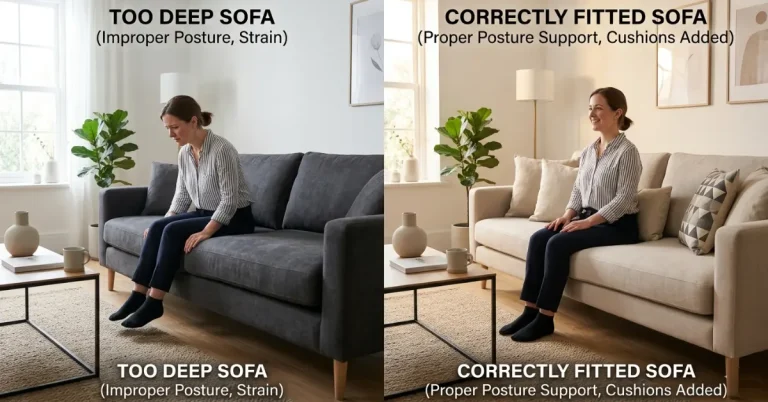
Most small sleeper sofas look comfortable in the showroom. You sit for five minutes, pat yourself on the back, and order it. Then reality hits. Two hours in, your back aches, the cushions flatten, and the “easy” pull-out mechanism feels like a wrestling match.
Here’s the hard truth: small space doesn’t excuse bad comfort. Many buyers settle because they think they have no choice, or because a sofa “looks cozy.” That’s a mistake. Cheap frames, shallow seats, and weak cushions will make you regret it fast.
I’ve tested over 30 small-space sleeper sofas under real-life conditions—sitting, lounging, napping, even working. Some passed with flying colors. Most failed miserably. The difference isn’t style or price. It’s seat depth, cushion support, frame strength, and reliable pull-out mechanisms.
In this guide, I’ll show you exactly which small sleeper sofas are actually comfortable, why most others fail, and how to pick one that will hold up for years not just look good in a catalog. No fluff. No guessing. Just real comfort you can trust.
What Makes a Small-Space Sleeper Sofa Truly Comfortable
Comfort isn’t about how soft a sofa feels when you first sit down. Most small sleeper sofas are deceptively soft – perfect for a five-minute test, horrible after an hour. Real comfort comes from support, depth and durability not fluff.
Here’s the quick breakdown for small apartments, studios and tight living rooms:
- Seat Depth (22–25 inches) – Deep enough to lounge without slouching, shallow enough to maintain posture. This is the single biggest factor in a comfortable couch for long sitting.
- Cushion Core – High-density foam, memory foam, or pocketed innerspring. Cheap polyester or low-density foam compresses in weeks, leaving you with a flat, unsupportive seat.
- Back Support – Firm enough to protect your spine, soft enough to relax. Most small sofas neglect the back entirely, giving you a “collapsed” feeling after two hours.
- Pull-Out Mechanism – Smooth, sturdy, and easy. Avoid sofas that require wrestling or awkward lifting especially in tight spaces.
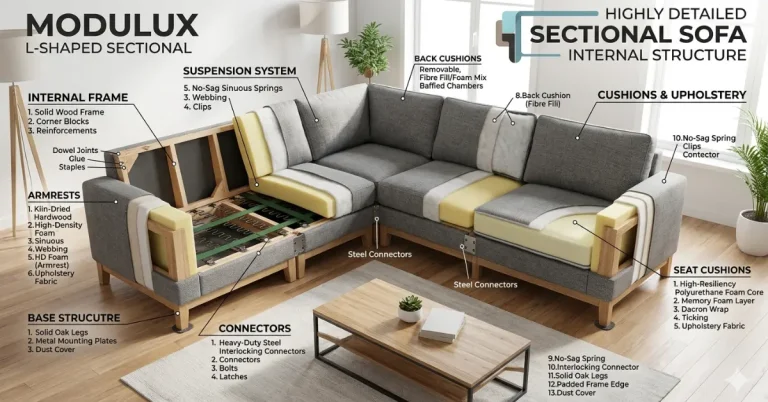
- Frame & Build Quality – Solid wood or metal frames last years. Particleboard frames sag, wobble, or break, no matter how stylish the sofa looks.
Reality check: Most buyers ignore these details and end up regretting it. A small-space sleeper sofa isn’t just a furniture piece. It’s a daily comfort decision. Get it wrong, and your back, posture, and evenings suffer.
Why Most Small Sleeper Sofas Fail – Tested and Exposed
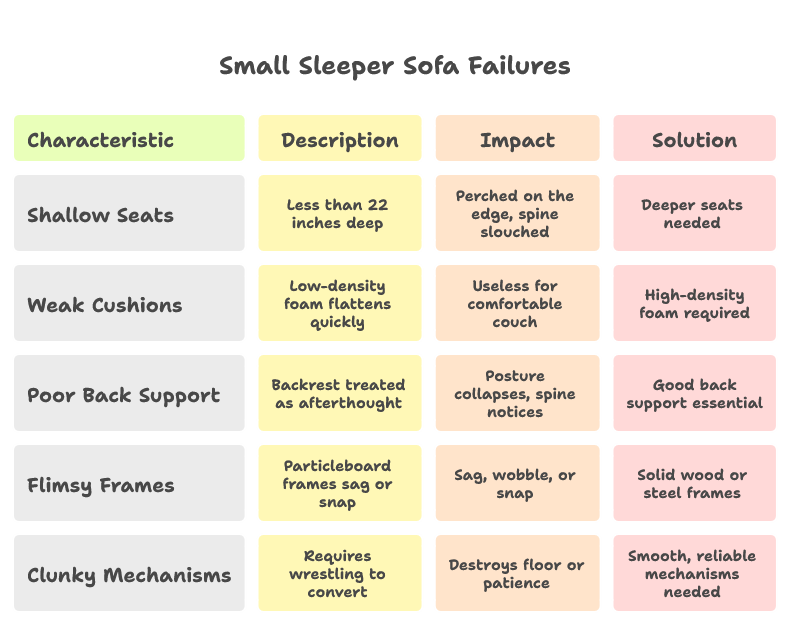
I’ve sat, lounged, and even napped on over 30 small-space sleeper sofas in real apartments and studios. Here’s the ugly truth: most of them fail comfort, durability, and support tests and it’s not even close.
The biggest offenders share the same flaws:
- Shallow Seats – Less than 22 inches? Forget long-term comfort. You end up perched on the edge, spine slouched, knees too high. Even the fluffiest cushions can’t fix shallow seat syndrome.
- Weak Cushions – Low-density foam or cheap polyester looks soft at first but flattens in weeks. If you’re looking for a comfortable couch for long sitting, these are useless.
- Poor Back Support – Many small sleepers treat the backrest like an afterthought. Sit for an hour, and your posture collapses. Your spine notices.
- Flimsy Frames – Particleboard frames sag, wobble, or snap under daily use. Only solid wood or steel frames survive consistent sitting and pull-out action.
- Clunky Pull-Out Mechanisms – If you need a wrestling match just to turn your sofa into a bed, it’s a design failure. For small spaces, you need smooth, reliable mechanisms that don’t destroy your floor or patience.
Reality check: Price doesn’t guarantee comfort. Some $1,200 “premium” models felt worse than $400 options. Testing matters more than brand hype.
What Is The Most Comfortable Sleeper Sofas for Small Spaces
After testing dozens of models, the following are the top sleeper sofas for small spaces currently available on the market. Also, a clear pattern emerged: the best small-space sleeper sofas combine deep seats, high-density or memory foam cushions, sturdy frames, and effortless pull-outs. Anything less is a gamble with your back, sleep, and relaxation.
1. Boneless Loveseat Sleeper Sofa Bed
Best for Ultra-Small Spaces

Most “compact sleeper sofas” are just bad sofas made smaller. Same problems. Less space. Worse comfort.
This one doesn’t even try to be traditional. No heavy frame. No clunky pull-out. Just a boneless couch built for flexibility. That’s either a smart solution—or a big compromise.
The Boneless Loveseat Sleeper Sofa Bed (3-in-1) is clearly built for tight apartments, dorms, and small living rooms. The real question is simple: can it handle real sitting, real lounging, real use—or is it just another temporary fix?
Who It’s For
- Small apartments where a full sleeper won’t fit
- Dorms, studios, or multi-use rooms
- People who want a space-saving sleeper sofa without dealing with heavy frames
- Light daily use, casual lounging, guest sleeping
Why It’s Comfortable (Where It Actually Delivers)
- High-Resilience Foam
This is the reason to consider it. It’s soft but not uselessly soft. You still get support, which is rare in this category. For a comfortable couch for long sitting, it holds up better than most cheap futons. - 3-in-1 Trifold Design
No metal bars digging into your back. No awkward pull-out system. Just unfold it. In small spaces, that simplicity matters more than fancy mechanisms. - All-in-One Cushion Build
Nothing shifts. Nothing slides off. You don’t have to keep fixing cushions every time you sit down. That alone makes it more usable day-to-day. - Corduroy Fabric
Soft, breathable, and actually feels decent against your skin. Not that stiff, cheap fabric most budget couches use. - Lightweight, No Setup
You open it, let it expand, and you’re done. No tools. No frustration. Easy to move when you need to.
The Downsides (This Is Where Most People Get It Wrong)
- No Real Frame = Less Support
Let’s not pretend. This is a boneless couch. You’re not getting strong back support or upright posture here. It’s built for relaxing, not sitting straight for hours. - Low Seat Height
You sit closer to the ground. Some people like that laid-back feel. Others will feel it in their knees and back pretty quickly. - Not Built for Heavy Daily Use
Use it all day, every day, and it’ll wear faster than a framed sleeper. That’s the trade-off. - Foam + Plastic Build
It’s practical, not premium. Don’t expect long-term durability like solid wood or steel frames.
Real Comfort Verdict
This isn’t a “sofa replacement.” It’s a space solution.
- For lounging, Netflix, quick naps → it works
- For working or sitting upright for hours → not ideal
- For guest sleeping in small spaces → surprisingly solid
Reality check: If you expect deep, structured, ergonomic support, this isn’t it. But if you want something flexible, soft and usable in a tight space, it does the job better than most.
Decision line: Choose this if space is your biggest constraint. Avoid it if support is your top priority.
2. COMAX Futon Sofa Bed
Best for Versatility

Most sleeper sofas can’t even get one thing right. This one tries to do four. That’s usually a red flag.
The COMAX 4-in-1 Convertible Futon Sofa Bed is built for maximum flexibility in small spaces—couch, lounger, mattress, guest bed. All in one piece. Sounds smart. But more features usually mean weaker performance somewhere.
So let’s cut through it: is this a comfortable couch for long sitting, or just a foldable foam setup pretending to be a sofa?
Who It’s For
- Small apartments, dorms, tight guest rooms
- People who want one piece to do everything
- Floor seating fans (this sits low—really low)
- Casual use—lounging, gaming, overnight guests
Why It’s Comfortable (Where It Gets It Right)
- Deep Seat (27.5”)
This is the standout. Most small sofas feel cramped. This doesn’t. You actually get deep seat sofa comfort, so you can stretch out instead of sitting stiff and upright. - Contoured Foam Support
It’s not just a flat pad. The dual cushions give some shape and support to your hips and thighs. For longer lounging sessions, that matters more than people think. - 4-in-1 Simplicity
No механизм issues. No stuck pull-outs. You just unfold it. In small spaces, simple always wins. - Added Frame Support
The metal base gives it more stability than typical boneless couches. Still not a full frame—but better than nothing. - Washable Cover
Small detail, big impact. Easy to clean means you’ll actually keep it longer.
The Downsides (Pay Attention Here)
- Too Low to the Ground
At 12”, this is basically floor seating. Fine for relaxing. Not great for your knees, posture, or getting up 20 times a day. - Not Built for Upright Sitting
If you need a sofa for back support, this isn’t it. You’ll start slouching fast. - Lower Weight Capacity
220 lbs isn’t much. That tells you everything about how it’s built. - Closer to a Mattress Than a Sofa
Let’s be honest. This feels more like a foldable floor mattress than a real couch. That’s not a bad thing—if you expect it.
Real Comfort Verdict
This works best when you stop treating it like a sofa.
- For lounging, stretching out, gaming → it’s comfortable
- For sitting upright for hours → it’s not
- For guest sleeping → does the job well
Reality check: The deep seat helps, but the low height and softer support limit it. This is built for flexibility, not structure.
Decision line: Buy this for versatility. Skip it if you need real support.
3. Boneless Loveseat Sleeper Sofa
Best for Cozy Lounging

Most sleeper sofas try to do both comfort and support. This one doesn’t. It picks a side. And that side is soft, deep, sink-in comfort.
The 55” Boneless Loveseat Sleeper Sofa Bed (3-in-1) is built for small spaces where relaxing matters more than sitting upright. It’s bigger than most compact options, and noticeably softer.
So here’s the real question: does it hold up as a comfortable couch for long sitting, or does it fall into the same trap—great at first, disappointing later?
Who It’s For
- Small apartments, guest rooms, flexible setups
- People who want a space-saving sleeper sofa that actually feels cozy
- Lounging, napping, everyday relaxed use
- Anyone who prefers sinking in over sitting upright
Why It’s Comfortable (Where It Actually Stands Out)
- Deep Seat (27”)
This is the main advantage. You’re not stuck sitting upright. You get real deep seat sofa comfort, where you can stretch out and settle in. - High-Resilience Memory Foam
Soft, but not completely flat. There’s some bounce, so you’re not sinking and struggling to get up. For a comfortable couch for long sitting, it holds up better than most soft designs. - 4 Adjustable Pillows
This is what makes it usable. You can fix your neck, back, or lumbar support depending on how you sit. Without these, it wouldn’t work nearly as well. - Corduroy Fabric
Feels soft, warm, and comfortable over long sessions. Doesn’t have that cheap, stiff feel you get from budget couches. - Simple 3-in-1 Design
Loveseat to lounge to bed. Just unfold it. In small spaces, simple always wins.
The Downsides (Don’t Skip This)
- No Frame, No Structure
It’s still a boneless couch. If you need a sofa for back support, this won’t hold you upright for long. - Too Soft for Long Upright Sitting
Great for relaxing. Not great for posture. Sit too long, and you’ll start adjusting constantly. - Needs Space When Fully Open
That deep, lounge-friendly design takes up more room than you’d expect. - Not Built Like a Real Sofa
It’ll hold up fine for foam but it’s not competing with solid frame sleeper sofas in durability.
Real Comfort Verdict
This works best when you use it the way it’s designed.
- For lounging, movie nights, curling up → very comfortable
- For working or sitting upright for hours → not built for it
- For guest sleeping → one of the more comfortable options in this category
Reality check: It feels great because it’s soft and deep. But you’re giving up structure to get that comfort. That trade-off is real.
Decision line: Buy this for cozy, deep lounging. Skip it if you need structure and support.
4. MEGAYES 4-in-1 Folding Sofa Bed with pocket coils + foam
Best for Real Support

Most boneless couches feel good for a week. Then they collapse. That’s the pattern.
This one tries to fix that. The 4-in-1 Folding Sofa Bed with pocket coils + foam is built more like a mattress than a typical couch. And that changes everything—especially if you care about support, posture, and long sitting comfort.
But there’s always a trade-off. More support usually means less softness. So the real question is simple: is this a comfortable couch for long sitting, or does it feel too firm to relax on?
Who It’s For
- Small apartments, dorms, home offices
- People who want a space-saving sleeper sofa with actual support
- Taller users who need real legroom
- Sitting, reading, working—not just lying down
Why It’s Comfortable (Where It Actually Stands Out)
- Pocket Coils + Foam Build
This is what sets it apart. You’re not sinking into a soft block of foam. You get mattress-level support that holds your weight properly. For a sofa for back support, this is one of the better options in this category. - Deep Seat (33.5”)
Way deeper than most compact sofas. You get proper deep seat sofa comfort, especially when you stretch out in lounger mode. - Higher Seat Height (18”)
This matters more than people think. Easier to get in and out, better for your knees, and more natural for long sitting sessions. - 4-in-1 Flexibility
Chair, sofa, lounger, bed. No complicated setup. Just adjust it and move on. Works well when space is tight and one piece has to do everything. - Stable Back Support
The back actually stays in place. No sliding, no constant fixing. That alone makes it more usable day-to-day.
The Downsides (Know This Before You Buy)
- Not Soft and Plush
This isn’t a sink-in couch. It’s firmer. If you like that soft, cozy feel, this will feel a bit stiff. - Single-Seater Only
Built for one person. Not ideal if you need shared seating. - Still Not a Full Frame Sofa
Yes, it’s more supportive but it’s not replacing a solid wood frame sleeper sofa. - Positioning Matters
You’ll get the best back support when it’s set against a wall. Use it wrong, and it won’t feel as stable.
Real Comfort Verdict
This solves the biggest problem most small sleepers have lack of support.
- For sitting, reading, working → strong support
- For lounging and relaxing → decent, but firmer than most
- For sleeping → very solid, thanks to the coil base
Reality check: You’re trading softness for structure. That’s the whole point of this design.
Decision line: Go with this for real support. Skip it if you want plush comfort.
5. WHGBJA 79” Convertible Sleeper Sofa
Best for Everyday Comfort

Most small sleeper sofas make you choose: either compact size or actual comfort. Rarely do you get both.
The 79” Convertible Sleeper Sofa Bed hits that middle ground. Not tiny. Not massive. Just enough room to feel like a real sofa—without swallowing your space.
But here’s the real question: is it a couch you can actually sit on for hours, or just a bigger version of the same old compromises?
Who It’s For
- Apartments or studios with a bit more floor space
- Anyone who wants a space-saving sleeper that still feels like a proper couch
- Couples or shared seating (finally—not just single seating)
- Lounging, sitting, and hosting overnight guests
Why It’s comfortable (What It Actually Delivers)
- Generous 79” Width
Way roomier than a standard loveseat. You can stretch, sit side by side, or curl up comfortably. It hits the sweet spot for small spaces without feeling cramped. - Balanced 26” Seat Depth
Not too shallow, not too deep. You get a mix of upright support and deep-seat comfort perfect for both sitting and lounging. - High-Density Foam Core
Firmer than typical boneless sofas. Holds its shape instead of sagging. For a couch you can actually sit on long-term, this is a serious upgrade. - Fixed-Shape Frame
No floppy cushions here. The structure keeps it steady, so you’re not sinking into a wobbly cushion pile. - Easy Fold-Out Bed
Simple, smooth conversion. Flat and ready for guests in seconds—no bars digging in, no complicated setup. - Strong Weight Capacity
Sturdier than most small sleepers. Feels solid even with daily use.
The Downsides (What to Keep in Mind)
- Larger Footprint Than “Compact” Sofas
Not tiny. If your room is very small, measure carefully. - Medium-Firm Feel
Not plush, not sink-in. Cozy loungers may find it a touch firm at first. - Low Seat Height (15”)
Slightly lower than standard sofas. Fine for most, but noticeable for taller users. - Minimal Back Cushioning
The included pillow helps, but you might want extra lumbar support if you plan to sit for hours.
Real Comfort Verdict
This sofa actually balances comfort and function better than most small sleepers.
- Sitting and daily use → solid support
- Lounging → comfortable, though firmer than a cloud
- Guest sleeping → reliable, roomy, and simple
Reality check: Not the softest sofa you’ll ever own—but avoids sagging and weak support. That’s the trade-off that makes it worth it.
Decision line: Choose this for balanced comfort and usable space. Skip it if you need something smaller or softer.
Here’s a quick comparison tables for this top product
| Feature / Model | COMAX 4-in-1 Futon Sofa Bed | Winzoo 3-in-1 Boneless Loveseat | MEGAYES 4-in-1 Folding Sofa Bed | WHGBJA 79” Convertible Sofa Bed | WHGBJA 79” Floor Sofa Lounge Couch (Green) |
| Size / Seating | 2-seater, 70.8” x 59” | Loveseat 55” | Single 33.5” x 30” | 3-seater, 78.5” x 37” | 3-seater, 78.5” x 37” |
| Convertible Options | Floor couch → futon → mattress → sleeper | Loveseat → chaise → floor futon | Sofa → chair → lounger → bed | Sofa → bed | Sofa → bed |
| Seat Depth / Height | 27.5” / 12” | 27” / 16” | 33.5” / 18” | 26” / 15” | 26” / 15” |
| Cushion / Support | Dual foam, ergonomic support | High-resilience memory foam + 4 pillows | Pocket coils + 4-layer foam | High-density foam | High-density foam |
| Fabric | Corduroy | Corduroy | Breathable corduroy, button-free | Corduroy | Corduroy |
| Weight Capacity | 220 lbs | 48 lbs per seat (approx) | 500 lbs theoretical | 400 lbs | 1200 lbs |
| Best For | Small spaces, versatile lounging | Cozy lounging, soft floor seating | Support & posture, taller users | Balanced comfort & daily sitting | Balanced comfort with extra width |
| Setup / Assembly | No assembly, ready to unfold | No assembly | No assembly, ready in 60 sec | Simple fold-out | Simple fold-out |
| Pros | Deep seat, ergonomic, 4-in-1 flexibility | Soft & deep, adjustable pillows | Mattress-level support, firm, higher seat | Spacious 3-seater, stable, versatile | Large footprint, stable, fold-out bed |
| Cons | Very low seat, softer support | Soft—less upright support | Firmer, single-seat only | Medium-firm, low seat height | Medium-firm, low seat height, minimal back cushion |
Comparing the 5 Best Sleeper Sofas – Which Fits Your Lifestyle?
If lounging is your top priority, the Winzoo 3-in-1 Boneless Loveseat and COMAX 4-in-1 Futon are the clear winners. Both have deep seats and soft foam, making them perfect for curling up, gaming, or long movie nights. They’re ideal for small spaces where comfort comes before structure, but keep in mind they won’t give much back support if you sit upright for long periods.
For a balance of comfort and support, the WHGBJA 79” Convertible Sofa Bed hits a sweet spot. It’s wider than the compact options, has high-density foam, and a fixed-shape structure, so you get both a real couch feel and enough space for guests. It’s firm enough for daily sitting while still comfortable enough to stretch out, making it a solid choice if you want versatility without sacrificing stability.
If you need a sofa that works for both sitting and sleeping, especially for taller users, the MEGAYES 4-in-1 Folding Sofa stands out. Its hybrid coil-and-foam construction provides mattress-level support, the higher 18-inch seat makes getting in and out easy, and the 4-in-1 design adapts to sofa, chair, lounger, or bed in seconds. This one is best if you want real posture support without giving up flexibility.
Meanwhile, the COMAX 4-in-1 Floor Sleeper is all about versatility in tiny spaces. It transforms between floor couch, lounger, mattress, and sleeper, making it a multi-use powerhouse. It’s great for casual lounging and occasional sleeping, but it leans softer, so don’t expect structured back support for long-term sitting.
Finally, the 79” Convertible Sleeper Sofa with Cylindrical Pillow is ideal if you want a bigger footprint in a small room. It balances medium-firm support with enough width for shared seating, and the fold-out bed works well for overnight guests. It’s not as soft and lounge-y as boneless options, but it delivers a stable, practical solution for everyday use.
Bottom line: if you mostly lounge, pick a soft, deep boneless sofa; if you need support for work or taller users, go for a hybrid coil-and-foam option; and if guest sleeping is a priority, a wider 79-inch fold-out gives the best balance of space and comfort. Knowing how you plan to use it lounging, sitting, or hosting will quickly narrow down which one fits your space and lifestyle best.
Comfort Breakdown & Buying Guide: What to Look for in a Sleeper Sofa
Cushion Material
The cushions define how your sofa feels. High-density foam keeps its shape over years, so even daily lounging or guest use won’t turn it into a flat mess. Memory foam adds a cradling effect, hugging your body for naps or movie marathons—think the Winzoo 3-in-1 Boneless Loveseat, which excels at soft, cozy support. For the best of both worlds, hybrid innerspring cushions—like in the MEGAYES 4-in-1 Folding Sofa—give firm support while still feeling plush on top. That combination works great for taller users or anyone sitting for long stretches.
Frame & Build
A sofa’s frame is the silent hero. Solid wood or steel frames, like the fixed-shape structure on the WHGBJA 79” Convertible Sofa, give long-term stability. Cheaper particleboard or purely boneless options can sag quickly, which is fine for casual lounging but not for consistent use. If you want a sofa that lasts beyond a year, prioritize a solid, well-constructed frame over trendy designs.
Sleeper Mechanism
How your sofa turns into a bed can make or break the experience. Pull-out beds are traditional but need smooth tracks; fold-down or 4-in-1 designs—like the COMAX 4-in-1 Futon—are easy to adjust and versatile. Avoid sofas with awkward hinges or stiff mechanisms; they end up frustrating you more than helping. Test them if you can, or look for reviews mentioning smooth transitions and stability.
Fabric & Upholstery
Finally, the material affects comfort, durability, and cleaning. Corduroy or microfiber—like on the WHGBJA 79” Convertible or Winzoo Loveseat—feels soft, wears well, and can handle everyday spills better than cheap polyester. Stay away from fabrics that flatten quickly or feel plasticky; your sofa should stay inviting, not a chore to maintain. Removable covers or washable options are a bonus for longevity.
Comparisons – Make the Right Small-Space Choice
Soft vs Firm: Soft = Spine Pain, Firm = Better Posture
When it comes to cushions, softness isn’t always better. Soft sofas feel cozy at first but can lead to slouching, lower back strain, and spine pain after extended sitting. Firm sofas, on the other hand, provide stable support for your back and posture, making them better for daily use, reading, or working from your couch. The key is to match cushion firmness with how you actually plan to sit.
Deep vs Standard Seat: Deep = Relax, Standard = Upright Support
Seat depth determines how you lounge. Deep seats let you stretch out, curl up, and truly relax, but they’re not ideal if you need to sit upright for long periods. Standard-depth seats keep your spine aligned and posture comfortable for longer sitting sessions, though they don’t offer that “sink-in” lounging experience. Choose based on whether your priority is relaxing or structured sitting.
Sleeper Type: Memory Foam vs Innerspring vs Hybrid
The type of sleeper mattress makes a huge difference for comfort and durability. Memory foam molds to your body, offering soft, cradling support but can feel too soft for upright sitting. Innerspring mattresses provide firm, reliable support and longevity, but they can feel stiff. Hybrid designs combine pocket coils with foam layers, giving you the best of both worlds—structured support with some soft, cozy give.
Space vs Comfort: Small Footprint Doesn’t Excuse Shallow, Flat Cushions
Just because a sofa fits a tiny space doesn’t mean it should compromise on comfort. Shallow, flat cushions might save room, but you’ll notice it the moment you sit. Look for options that maximize cushion thickness, depth, and support while staying compact. A good small-space sleeper should balance space efficiency with real comfort, so you don’t sacrifice one for the other.
Best Overall Picks
When it comes to small-space sleeper sofas, the right choice depends on what you value most: comfort, durability, or budget. Here’s a clear breakdown:
- Best Overall – Go for a sofa that balances comfortable seating, durable construction, and a smooth sleeper mechanism. You want something that works day-to-day without sagging or squeaking. This is the option that hits all the marks for most people.
- Best Budget – If you’re looking for short-term comfort without breaking the bank, there are solid wallet-friendly choices. They won’t last as long as premium options, but they get the job done for casual use, guest rooms, or temporary setups.
- Best Premium – For long-term luxury and high-end support, premium sleepers offer thicker cushions, reinforced frames, and smooth folding mechanisms. These are built to last and keep you comfortable for years, whether you’re sitting, lounging, or sleeping.
FAQ – Quick Answers for Small-Space Sofa Buyers
Aim for 22–25 inches. That gives you enough room to lounge comfortably while still supporting good posture. Too shallow and you feel cramped; too deep and it’s awkward for upright sitting.
Look for high-density foam, memory foam, or innerspring cores. Check the sofa’s weight capacity too—overloading soft cushions is the fastest way they lose shape.
Only when paired with a solid wood or metal frame. Sofas made from particleboard or cheap materials often sag, creak, or fail after repeated use.
Absolutely, but it needs adequate seat depth and firmer cushions. Boneless, ultra-soft sofas are better for occasional lounging than full-time sitting.
Go for polyester blends, microfiber, or performance velvet. They’re soft, easy to clean, and hold up well to daily use unlike cheap polyester, which flattens and wears fast.